
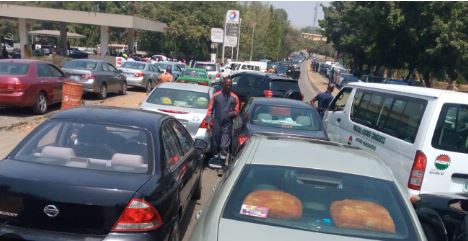
As petrol scarcity intensifies across Nigeria, motorists in Kaduna, Kano, and Katsina are grappling with exorbitant prices for the increasingly scarce commodity.
Investigations in these states reveal the harrowing experiences faced by Nigerians. Both major and independent marketers have closed their filling stations. The few that remain operational have set petrol prices between N800 and N1,000 per litre, exacerbating the already dire situation.
Black marketeers, especially roadside fuel hawkers, are thriving, selling 4-litre gallons for between N5,000 and N6,000. Motorists have expressed dismay over the situation, citing the severe impact on their daily activities.
Salisu Baso, a civil servant, lamented having to pay double the usual transport fare to reach his office at the Federal Secretariat in Kawo-Kaduna. “We don’t even know who is to blame now—whether it’s the government or the marketers. It’s very unfortunate that they are just passing the buck. An urgent action should be taken to address this situation that is jeopardizing socio-economic activities in the country,” Mr. Baso said.
Francisca Idika, a trader at the Chechnya market in Kaduna, reported that the petrol scarcity and soaring prices have severely affected their businesses. “I have to pay more now to reach the market, and we just have to increase the prices of our wares to break even,” Ms. Idika said.
Reports from Kano and Katsina reveal similar distressing conditions, with higher prices and long queues at the few operational filling stations. Alao Jaremi, an IT expert in Katsina, urged authorities to take urgent measures to ensure the availability of petrol across the country. “We need the government to swing into action and do the needful to alleviate the suffering of the hapless Nigerians,” Ibrahim Dan-Musa said in Kano.
As the scarcity persists, the Nigerian National Petroleum Corporation Limited (NNPCL) attributed the long queues across Nigeria to disruptions in the ship-to-ship loading of petrol caused by a recent thunderstorm. The national oil company stated that adverse weather conditions had also affected berthing at jetties and truck load-outs, leading to a disruption in station supply logistics.
However, marketers have countered that they are unable to access the NNPCL portal to place orders for the commodity, further complicating the situation.
The ongoing petrol scarcity continues to disrupt socio-economic activities across Nigeria, with citizens calling for swift and effective interventions to restore normalcy.

