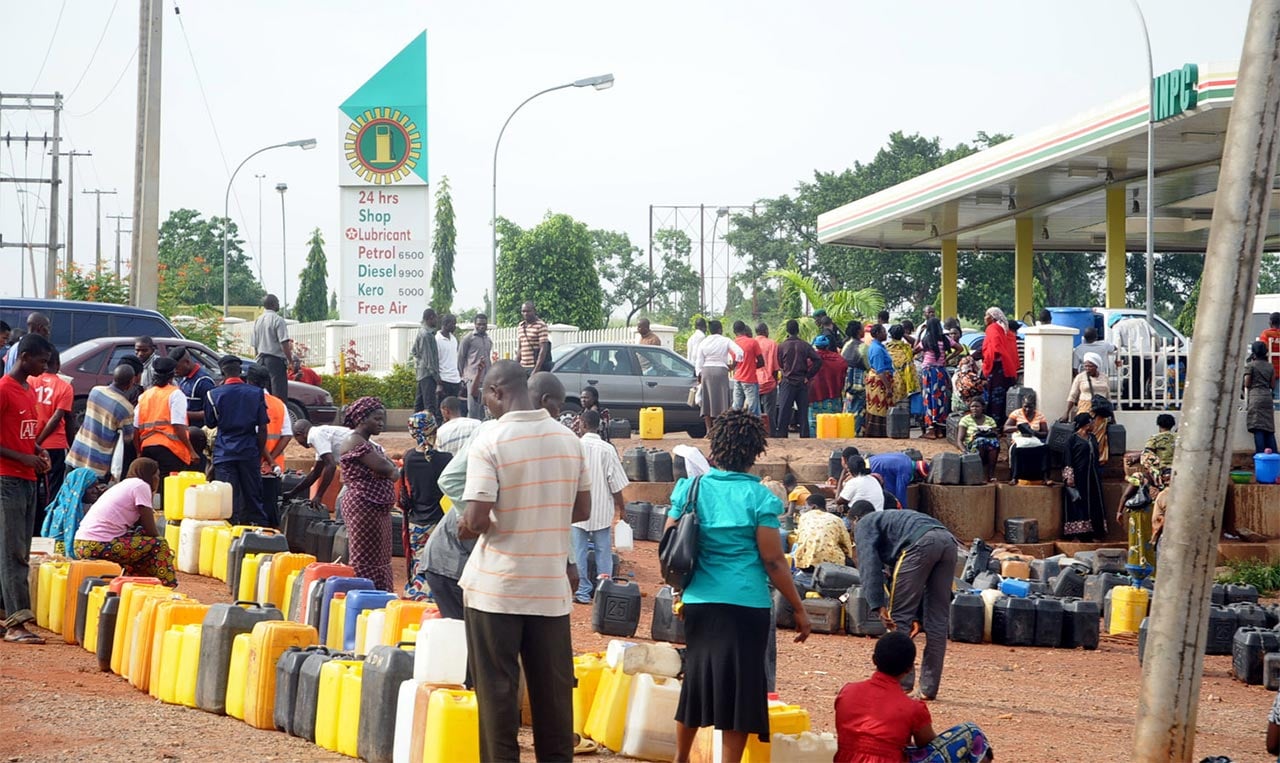
The scarcity of premium motor spirit (PMS), commonly known as petrol, has triggered panic across Nigeria, leading to the emergence of black marketers selling the product at exorbitant prices, reaching as high as N1,200 per litre in some areas.
Despite assurances from the Nigerian National Petroleum Company Limited (NNPCL) that the issues causing the scarcity had been addressed, many filling stations remained closed, and those open experienced long queues of anxious customers.
Across the country, including in the Federal Capital Territory (FCT) and various states, filling stations that were operational hiked their prices, with petrol being sold between N750 and N800 per litre. However, NNPCL outlets dispensed at a lower rate of N617 per litre, attracting longer queues.
Motorists faced significant challenges, with some forced to abandon their vehicles and resort to trekking due to the scarcity. In areas like Dutse, Jigawa State, stations were shut, and black marketers sold petrol for as high as N1,100 per litre, leaving residents stranded.
In the FCT, long queues formed at stations like NIPCO in Bwari, with many other stations selling petrol at elevated prices. In Lagos, similar scenes unfolded, with limited stations operational and black marketers capitalizing on the situation.
The Independent Petroleum Marketers’ Association of Nigeria (IPMAN) reported that most depots in Lagos were out of stock, exacerbating the scarcity. Efforts to reach normalcy were hindered by the unavailability of fuel stock for loading.
Despite assurances from the NNPCL, the situation remained dire, with commuters stranded and transport fares rising in several states, including Ogun, Ondo, Plateau, and Kwara. In Cross River, communities protested against stations selling petrol for as high as N1,200 per litre.
Ekiti State witnessed a surge in petrol prices, with many residents resorting to trekking as drivers parked their vehicles due to the scarcity. Similar situations unfolded in Kwara, where stations remained closed or sold petrol at inflated prices, leading to increased transport fares and widespread inconvenience for motorists and commuters alike.