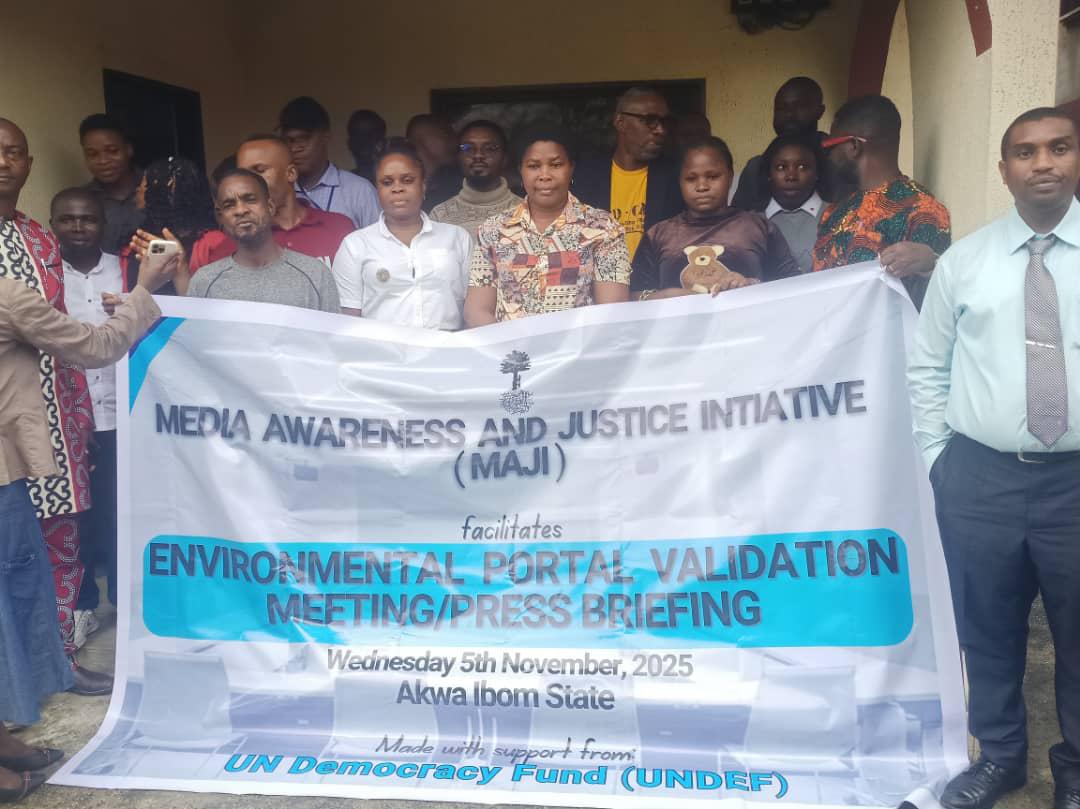
To address the damaging effects of environmental pollution in oil-producing communities in Akwa Ibom State, the Media Awareness and Justice Initiative has announced plans to deploy 20 air quality monitors across the state.
According to the organisation, the devices will be installed in communities experiencing high levels of pollution linked to oil exploration activities.
MAJI’s Project Officer for Policy and Governance, Ikechukwu Aka, disclosed the plan at the end of the organisation’s Environmental Data Validation meeting held in Uyo on Thursday. He explained that the monitors would collect real-time pollution data from targeted communities and their surroundings, providing critical information to stakeholders responsible for driving climate adaptation efforts in Nigeria.
Aka said that out of the 60 air quality monitors acquired, 40 had already been deployed in Lagos and Rivers States, with the remaining 20 scheduled for installation in Akwa Ibom once the identification of high particulate emission communities is completed. He added that the devices were procured through support from the United Nations Democracy Fund, noting that funding limitations currently restrict the expansion of the project to other states. He expressed hope that further international support would help create a comprehensive national pollution database.
He explained that the meeting was convened to build stakeholder capacity and receive input toward validating the environmental portal developed by MAJI with UNDEF support. He said the portal, which stores real-time environmental and air pollution data, would ensure that government agencies and other stakeholders have adequate information to guide climate actions, especially in areas with high pollution density. “For us, this Environmental Portal Validation Meeting is very key for stakeholders to navigate through the portal, gather information they need for informed decision-making,” he said.
Presenting an overview of the data platform known as datacab.io, Dr. Prince Eze, a senior staff member of the organisation, stressed that data sharing is essential in the fight for a pollution-free environment. He highlighted the importance of such data for informing policy direction, assessing policy impacts and engaging communities, adding that gathering reliable information remained central to addressing pollution challenges.
Dr. Eze expressed optimism that stakeholders would actively participate in validating the portal and commit to efforts that would help communities mitigate the adverse effects of pollution through proper data collection and use. The meeting also featured an interactive session where participants made inputs on creating community awareness, improving accessibility for persons with disabilities, and strengthening involvement of community-based organisations.
Stakeholders in attendance included representatives from the media, civil society organisations, persons with disabilities and officials from the Department of Climate Change of the Akwa Ibom State Ministry of Environment and Mineral Resources.