
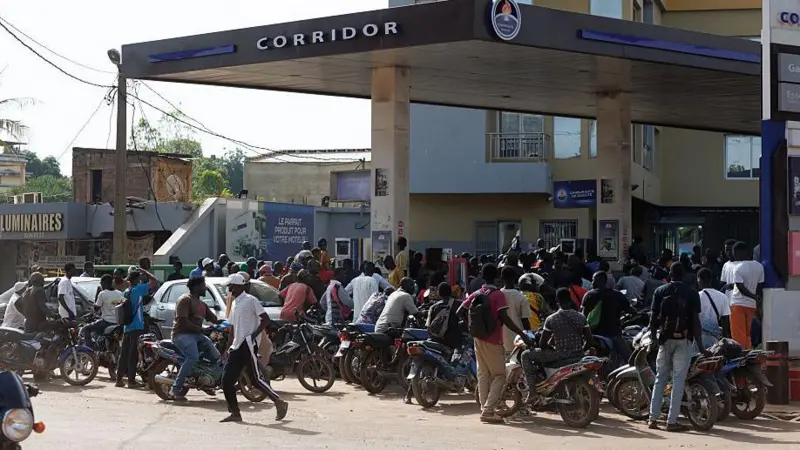
Mali has suspended all schools and universities nationwide following a crippling fuel shortage caused by Islamist insurgents blocking fuel imports into the country.
Education Minister Amadou Sy Savane announced on state television that all educational institutions would remain closed until November 9, citing the severe disruption of movement for staff and students. He assured the public that authorities were “doing everything possible” to end the crisis and that classes were expected to resume on November 10.
The fuel shortage, which has intensified in recent weeks, has hit the capital, Bamako, particularly hard. The crisis began after militants affiliated with al-Qaeda launched attacks on fuel tankers along major highways, effectively imposing a blockade on fuel deliveries. Being a landlocked nation, Mali relies entirely on road transport for fuel imports from neighbouring countries, including Senegal and Ivory Coast.
Long queues have formed around petrol stations across Bamako, while the city’s once-bustling streets have grown unusually quiet. Despite earlier assurances from the military government that the shortage would be short-lived, the crisis has deepened, disrupting daily life and critical services.
Last week, the United States Embassy in Bamako ordered the departure of non-essential staff and family members due to the worsening situation. The embassy warned that the disruptions to fuel supplies had already affected electricity generation and could “disrupt the overall security situation in unpredictable ways.”
Mali has been under military rule since 2021, when General Assimi Goïta seized power in a coup, pledging to restore security in the country’s north, where a separatist rebellion by ethnic Tuaregs had been overtaken by Islamist militants. The United Nations peacekeeping mission and French military forces, deployed in 2013 to counter the insurgency, have since withdrawn following the junta’s takeover. In their place, the military government has turned to Russian mercenaries for support.
Despite these efforts, jihadist attacks have persisted, and vast regions in the north and east remain under militant control. The latest blockade underscores the continuing instability in Mali, as the government struggles to maintain control and provide essential services amid a deteriorating security and economic environment.

