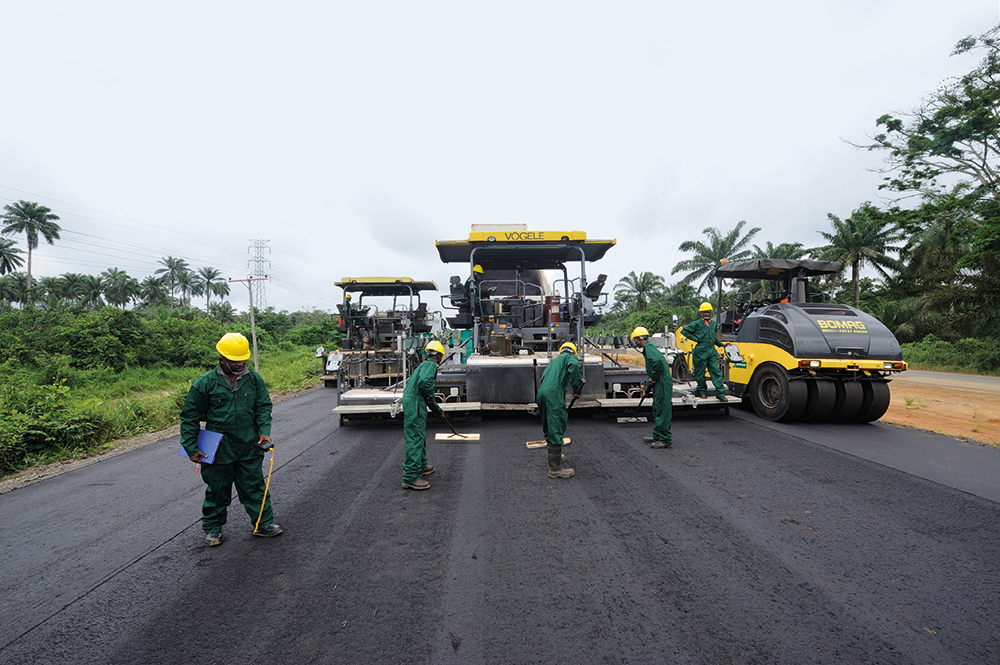
The partial commissioning of the Lagos-Calabar Coastal Highway by the Federal Government has stirred nationwide reactions, reigniting concerns over transparency, project readiness, and the broader implications for communities and the environment.
Though government officials touted the recent inauguration as a milestone in national development, critics argue it was a premature celebration of a still-unfinished venture.
Spanning 700 kilometers and valued at an estimated N15 trillion, the Lagos-Calabar Coastal Highway has been billed as a transformative infrastructure project that would link Nigeria’s southwest to the south-south and southeast corridors. However, only about 40% of the route has been completed so far. Despite the limited progress, segments of the road were officially opened in a ceremony that many view as politically timed and potentially misleading.
For some, the event signaled forward momentum. Minister of Works Dave Umahi defended the decision, insisting that Nigerians should not have to wait for the project’s full completion to begin reaping its benefits. He described the partial launch as a “phased approach to national development,” arguing that every finished kilometer reflects job creation and increased economic activity along the corridor.
Yet, outside the celebratory speeches, there is growing discontent on multiple fronts. Civil society groups have questioned the symbolism of inaugurating a road that remains largely under construction. Observers warn that such actions could set a troubling precedent, where half-finished projects are publicly presented as achievements. Infrastructure monitors have decried the optics, describing the move as a distraction from the real work that remains.
Communities along the coastal route have also raised grievances over the social cost of the project. Reports of displacement and unfulfilled compensation promises continue to emerge, especially in states like Akwa Ibom, where residents say they are still awaiting support after their homes and livelihoods were disrupted. These unresolved issues have led some affected communities to consider legal action, adding a layer of contention to the highway’s rollout.
Environmental groups, meanwhile, have flagged concerns over potential ecological damage, particularly in fragile mangrove ecosystems. With construction advancing at pace, there are fears that corners may be cut on environmental impact assessments, raising the risk of long-term harm to coastal biodiversity.
Political tensions have further complicated the project’s reception. Coming just months ahead of a new election cycle, the timing of the inauguration has drawn criticism from opposition parties, who see the ceremony as a calculated photo opportunity rather than a genuine step forward. Allegations of politicizing national infrastructure efforts are beginning to dominate the narrative.
Despite the backlash, the government maintains that the highway will meet its 2026 deadline, even as it contends with challenges ranging from difficult terrain to supply chain constraints. The National Assembly is expected to conduct oversight hearings in July to probe progress and address outstanding concerns.
With the rainy season fast approaching, construction teams now face a race against time, even as public pressure mounts for more accountability and less performance. The Lagos-Calabar Coastal Highway, once envisioned as a symbol of inter-regional unity and development, now finds itself at the center of a heated debate—caught between the urgency to showcase progress and the need to finish the job in full.