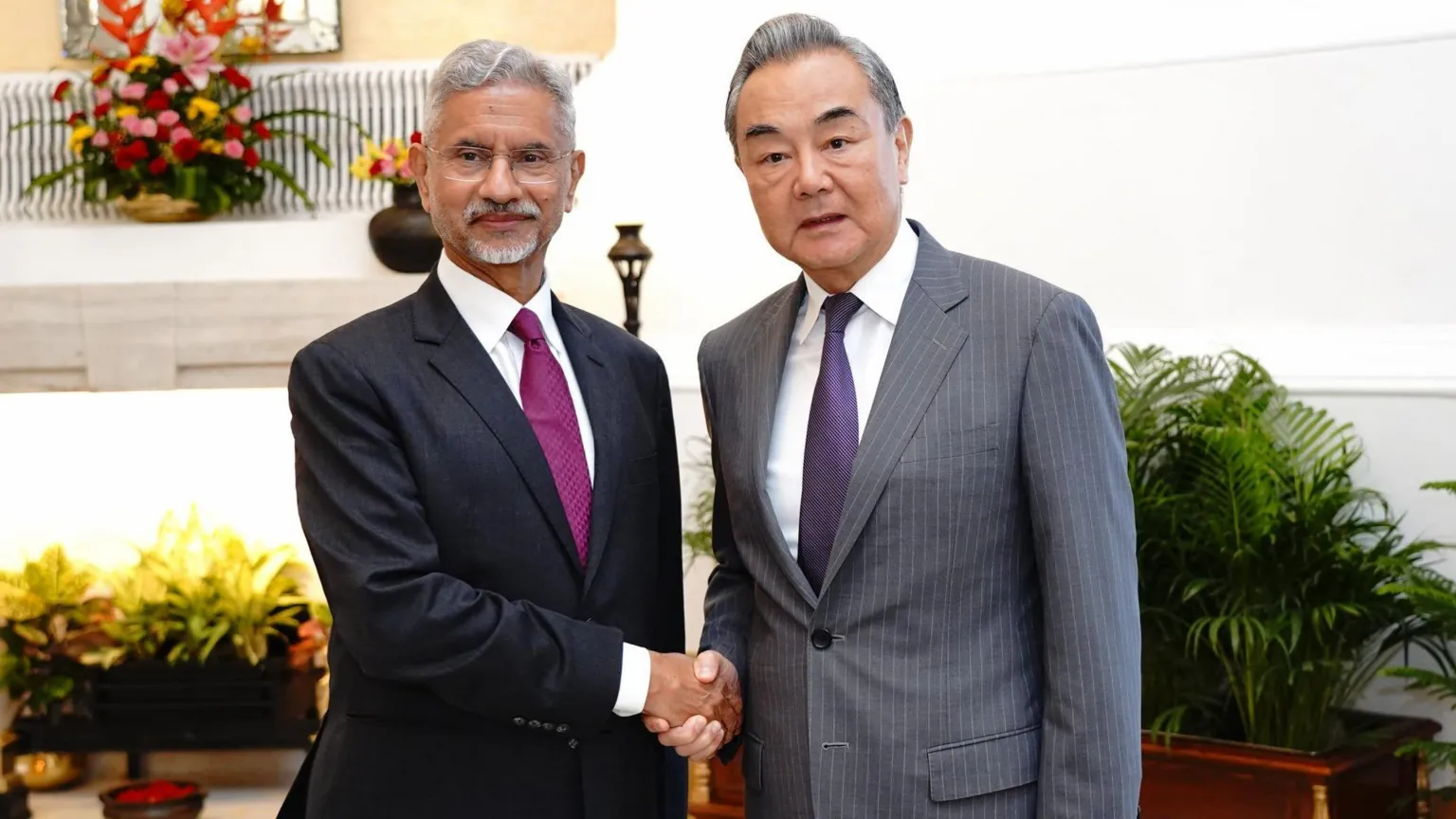
Chinese Foreign Minister Wang Yi arrived in Delhi on Monday for a two-day visit, urging India and China to view each other as “partners” rather than “adversaries or threats.”
Yi’s visit marks only the second high-level meeting between the two countries since 2020, when deadly clashes in the Galwan Valley in Ladakh, a disputed Himalayan border region, caused a complete breakdown in bilateral relations.
Ahead of his scheduled meeting with Indian Prime Minister Narendra Modi on Tuesday, Wang Yi said relations are now on a “positive trend” toward cooperation. Indian Foreign Minister S. Jaishankar echoed this sentiment, stating that India and China are seeking to “move ahead from a difficult period in our ties.”
During the visit, Yi and Jaishankar held discussions on a range of bilateral issues, including trade, pilgrimages, and river data sharing. Yi is also set to meet India’s National Security Advisor Ajit Doval to continue negotiations on resolving the longstanding boundary dispute between the two countries. The visit is being viewed as the latest sign of a thaw in relations between the nuclear-armed neighbours.
In October last year, India and China agreed on patrolling arrangements to de-escalate tensions along the disputed Himalayan border. Since then, both sides have taken steps to normalise relations, including China permitting Indian pilgrims to visit key sites in the Tibet Autonomous Region and India restarting visa services for Chinese tourists. Talks have also resumed on reopening border trade through designated passes, and reports indicate that direct flights between the two countries may resume later this year.
Wang Yi’s meetings are expected to lay the groundwork for Prime Minister Modi’s first visit to China in seven years later this month, when he will attend the summit of the Shanghai Cooperation Organisation (SCO), a regional security bloc. Reports suggest that Modi may also hold bilateral talks with Chinese President Xi Jinping, though neither side has officially confirmed this.
The rapprochement between India and China coincides with a cooling of India’s bilateral relationship with the United States. Earlier this month, US President Donald Trump imposed an additional 25% penalty on Indian imports for buying oil and weapons from Russia, taking total tariffs to 50%, the highest in Asia. White House Trade Advisor Peter Navarro criticized India in an opinion piece for “cozying up to both Russia and China,” stating that India acts as “a global clearinghouse for Russian oil” and warning that India must act like a strategic partner if it wants to be treated as one.
In response to Wang Yi’s visit, Jaishankar said that talks would also address global developments. He emphasized India’s commitment to a fair, balanced, and multipolar world order, including a multipolar Asia. “Reformed multilateralism is also the call of the day. In the current environment, there is clearly the imperative of maintaining and enhancing stability in the global economy as well,” he added.
The visit underscores efforts by both nations to cautiously reset ties while continuing dialogue on border security, economic cooperation, and broader regional stability.