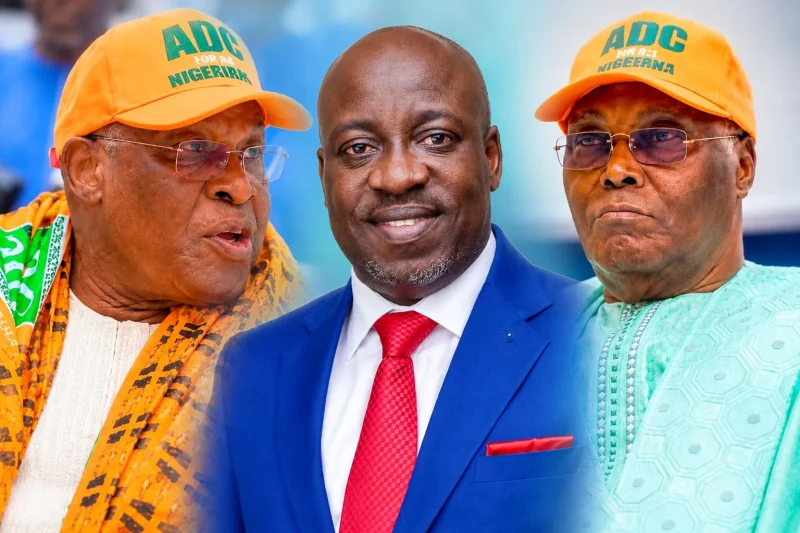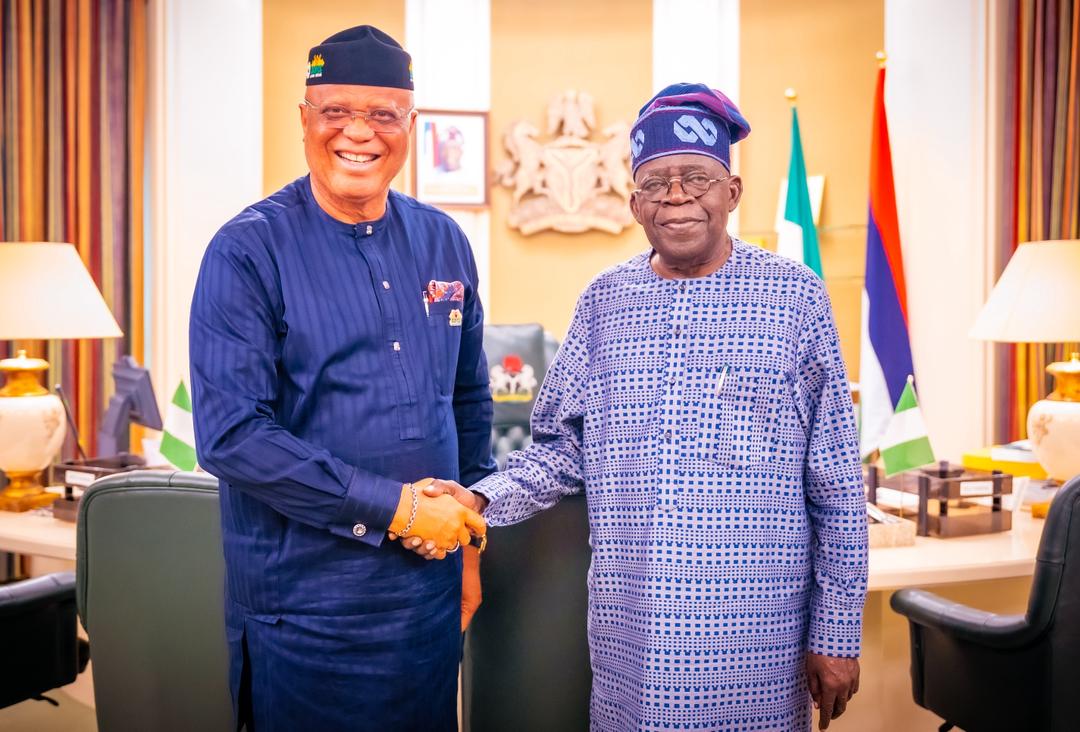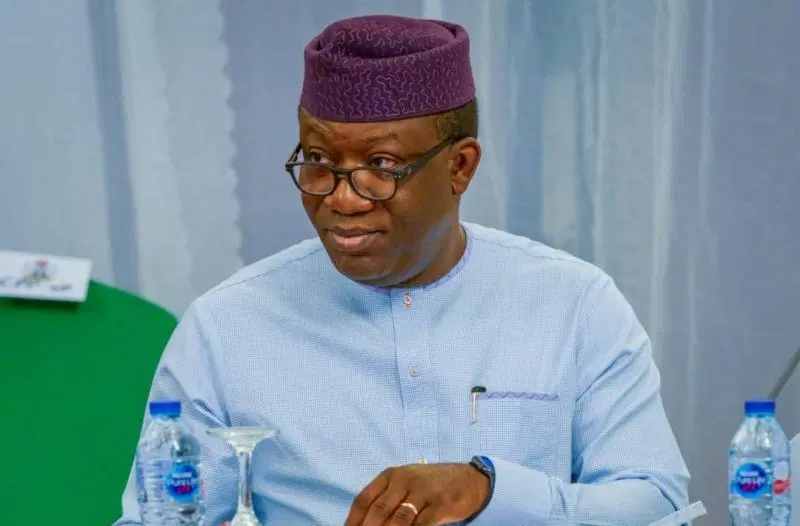
Former Ekiti State Governor Kayode Fayemi has categorically rejected allegations by ex-Transportation Minister Rotimi Amaechi that the two collaborated to form the African Democratic Congress (ADC) coalition, labeling the claims as baseless and fabricated.
In a fiery statement issued on Sunday, Ahmad Sajoh, head of Fayemi’s media office, dismissed Amaechi’s assertions, noting a complete lack of credible evidence—no videos, no reputable media reports—to substantiate the claims. Sajoh urged the public to be wary of unverified social media narratives, which he warned are often manipulated for malicious purposes or personal gain.
The controversy erupted following a Saturday discussion on X Spaces, where Amaechi alleged that the ADC coalition was born in a meeting at the home of Nasiru Danu, alongside Salihu Mohammed, a former All Progressives Congress (APC) national vice-chairman for the North-West. Amaechi claimed the gathering, initiated by Mohammed to reconcile him and Fayemi, laid the groundwork for the coalition.
He further stated that the group later grew to include prominent figures like former Sokoto State Governor Aminu Tambuwal. According to Amaechi, a committee led by former Cross River Governor Liyel Imoke was tasked with selecting a political party, ultimately settling on the ADC after exploring options like the Action Alliance (AA) and Accord Party.
Fayemi’s camp, however, was quick to set the record straight, emphasizing his unwavering loyalty to the APC. “In an era where fabricated or distorted statements are often attributed to public figures for malicious purposes, we are cautious about engaging with potentially manufactured controversies designed to provoke or profit,” the statement read. “It is possible that Hon. Amaechi did not make the statement or was misquoted. We unequivocally state that these claims lack any basis.”
Fayemi’s team underscored his steadfast commitment to the APC, pointing to his consistent public support for the party in Ekiti and nationwide. His recent endorsement of Ekiti State Governor Biodun Oyebanji for re-election on the APC ticket was cited as clear evidence of his dedication.
The statement also clarified that while Fayemi engages in cross-party discussions on national development—spanning political, religious, ethnic, and regional lines—these should not be misconstrued as a departure from the APC. “If he were to leave the APC, he would make it public and not require a third party to do so,” Sajoh asserted.
This is not the first time political rumors have swirled around Fayemi’s loyalties. In 2018, during his second term as Ekiti governor, similar speculations about a potential defection to another party surfaced amid tensions within the APC, only for Fayemi to reaffirm his commitment to the party.
Nigeria’s political landscape has long been rife with coalition rumors, particularly ahead of elections, as seen in the lead-up to the 2015 polls when the APC itself emerged from a merger of opposition parties. Amaechi’s claims, if true, would echo such historical maneuvers, but Fayemi’s swift rebuttal suggests no such plans are afoot. As Nigeria approaches another election cycle, this dispute highlights the ongoing volatility and intrigue within its political sphere.