
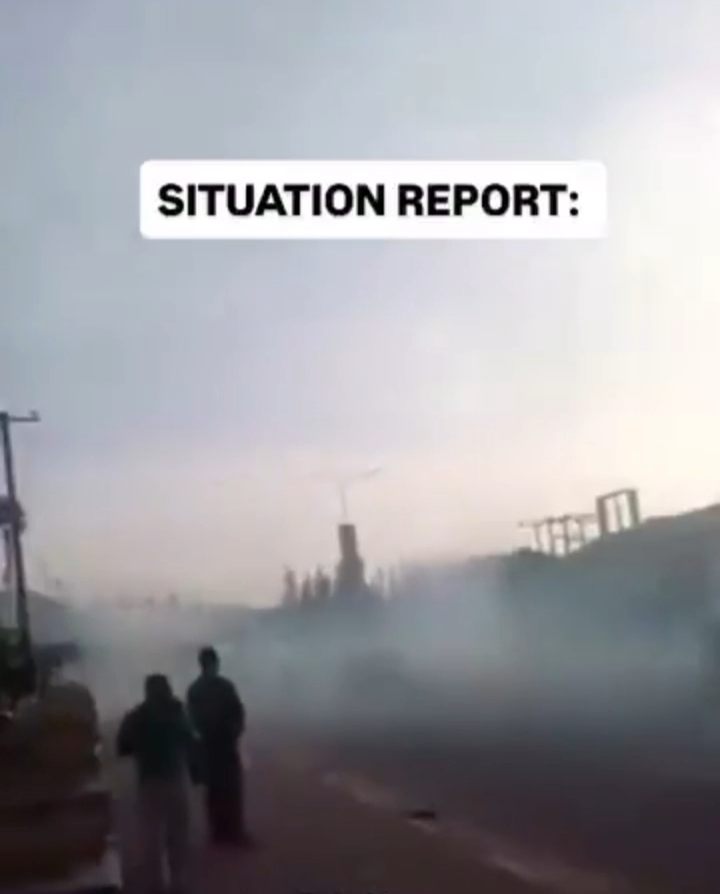
A peaceful demonstration demanding the release of Nnamdi Kanu, leader of the Indigenous People of Biafra (IPOB), descended into chaos in Abuja on Monday after security agents fired tear gas and live rounds into the air to disperse protesters.
The protest, led by activist Omoyele Sowore and members of the #RevolutionNow movement, began as a peaceful rally but quickly escalated when combined teams of the Police, Army, and Department of State Services (DSS) moved in to stop the march. Though live bullets were discharged, there is no confirmation that any were aimed directly at protesters, and as of press time, no casualties or injuries have been officially recorded.
The demonstrators had gathered in the capital to demand Kanu’s immediate release, vowing to march toward Aso Rock Villa, Nigeria’s seat of power. Defying warnings and police barricades, they insisted that their protest was lawful and peaceful. “Tear gas cannot stop us!” some could be heard shouting in videos now circulating on social media, even as they fled clouds of gas and the sound of gunfire.
Witnesses said the scene quickly turned chaotic as officers fired repeatedly into the air to scatter the crowd. Sowore and several others were seen running for cover while trying to maintain calm among the protesters. The sudden use of force caused panic in parts of the city, with traffic gridlocks and restricted movement reported across several areas of Abuja.
In the days leading up to the protest, government officials had issued stern warnings. Dada Olusegun, a media aide to the Presidency, declared that security agencies would not tolerate any action capable of destabilizing the country. The Nigerian Correctional Service also warned protesters to stay clear of correctional centers, declaring them “red zones.”
The government described the planned protest as a ploy to incite unrest, accusing Sowore of hiding behind activism to provoke instability. However, human rights organizations condemned the threats. Amnesty International labeled them an unlawful restriction of the right to peaceful assembly, while the National Human Rights Commission (NHRC) urged security operatives to exercise restraint and pursue dialogue rather than force.
As of October 20, 2025, reports from the capital confirm that the protest has been forcefully dispersed. Heavy security presence remains across strategic parts of Abuja, with lingering traffic disruptions and heightened tension. Despite the show of force, protesters maintain that their demand remains unchanged — the unconditional release of Nnamdi Kanu and respect for citizens’ right to peaceful demonstration.

