
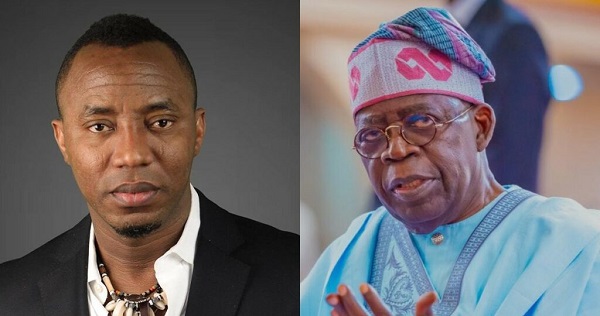
Human rights activist and political commentator, Omoyele Sowore, has criticised President Bola Tinubu’s recently released ambassadorial nomination list, arguing that the public is focusing on the wrong issue.
Sowore said national debate has centred on the individuals selected rather than on the process and criteria behind the appointments.
Speaking in a recent commentary, Sowore said he was not surprised by the list, noting that political appointments typically reflect the inner circle of the appointing authority. He argued that ambassadorial positions in Nigeria have historically been awarded based on political loyalty rather than merit, and that citizens should pay more attention to the system that produces such nominees.
According to him, it is unrealistic for the public to expect ambassadorial selections to come from outside the president’s established network. He likened the situation to a class teacher choosing a class captain, stressing that the appointing authority will naturally select from within his own circle. Sowore said the real concern should be the governance model that allows such patterns to persist.
He also referenced earlier controversies surrounding presidential pardons, noting that previous decisions had prompted strong public reactions. Sowore said such instances highlight the need for consistent scrutiny of appointment processes, especially for sensitive national positions.
Sowore further argued that the intensity of public reactions to specific names has overshadowed broader issues of accountability and institutional reform. He cited examples of nominees who attracted significant attention online but maintained that appointments often mirror long-standing political alliances.
He also added that leadership decisions in security and public institutions deserve equal examination, stressing that reforms are necessary to strengthen public confidence in government actions.
Sowore’s remarks have added to the growing national discussion on transparency, merit, and political patronage in Nigeria’s appointment system. Many observers continue to call for clearer selection criteria and stronger oversight mechanisms to ensure that key national positions reflect competence and national interest.

