
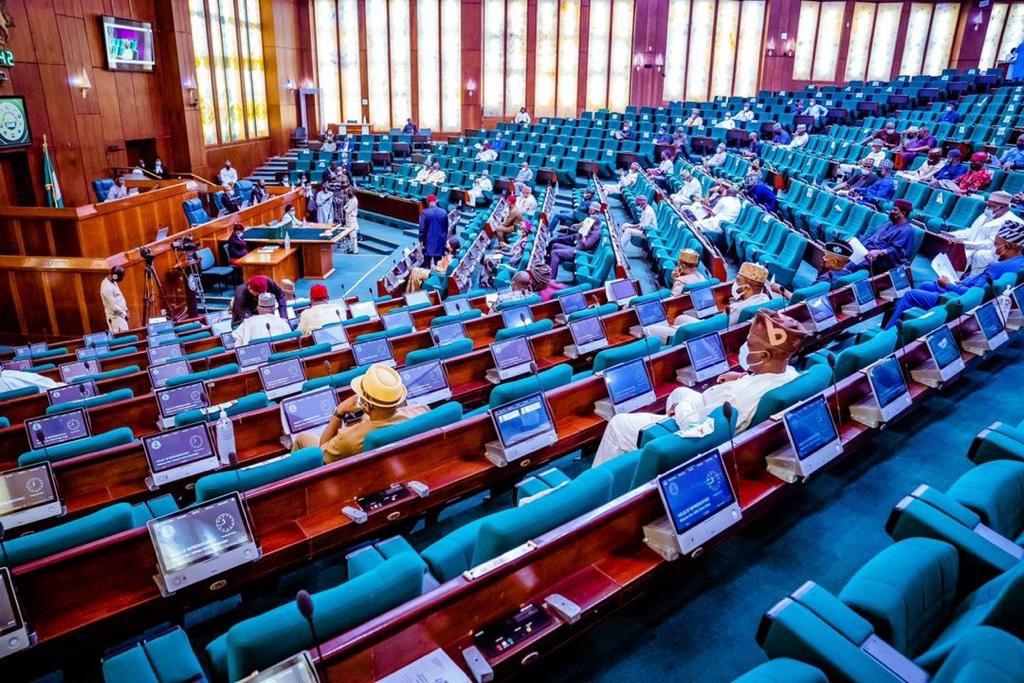
Lawmakers in the House of Representatives on Tuesday expressed deep sorrow over the worsening insecurity across the country as the chamber dedicated its plenary to a comprehensive deliberation on national security.
The session, aimed at identifying causes, effects and proposing solutions, is expected to produce resolutions to be transmitted to the executive at the conclusion of the exercise on Wednesday. Officials from the United States Embassy, the Speaker of the Parliament of Saint Kitts and Nevis, Hon. Lanien Blanchette, members of Parliament and cabinet ministers observed the special sitting, which featured presentations from security-related committees and regional caucus leaders.
In his opening address, Speaker Abbas Tajudeen said recent events revealed a troubling escalation in violence across several states. He said the attacks were coordinated, designed to destabilise the country and intended to create the impression that violent groups could operate without restraint while targeting soft and vulnerable populations. “Their purpose is to instill fear, weaken public confidence, and give the illusion of being everywhere at once. Nigeria must reject this tactic. We must resist fear and stand firm against those who rely on cruelty and spectacle to advance their evil ideologies. The last few weeks have been difficult for our country. Communities have suffered severe attacks, including killings and multiple abductions targeting civilians, security personnel and other vulnerable groups. These incidents occurred in rapid succession and affected different parts of the country, underscoring the scale and coordination of the threat we face. The attack in Kebbi State shocked the nation. The abduction of students in Niger State caused deep distress. The kidnapping of worshippers in Kwara State brought fear to many communities. Families are grieving. Citizens are anxious. These incidents remind us of the scale of the threat we face and the seriousness of the work before us,” he said.
The speaker urged Nigerians not to be discouraged by the recent activities of terrorists and bandits but to remain united in resolving the security crisis. He said the decision to suspend all other matters to focus exclusively on national security was neither symbolic nor procedural but reflected the seriousness of the moment and the responsibility of the House to speak for its constituents. Referencing the designation of Nigeria as a Country of Particular Concern by the United States, he stated that the government of Nigeria does not and will never support or sponsor violence against its citizens. He stressed that while Nigeria’s sovereignty remains non-negotiable, partnerships based on good faith could help both countries confront shared threats. “We conveyed our resolutions to the United States Congress, the Department of State and the United States Commission on International Religious Freedom. It is true that in some communities, Christians have been targeted, just as Muslim communities have suffered similar attacks in others. These acts have been carried out by violent groups pursuing their own agendas. They do not reflect the policy or practice of the Nigerian state. Terrorism, banditry, communal clashes and extremist violence have brought suffering to Nigerians of all faiths. Our Constitution guarantees freedom of religion, and every institution of government remains committed to protecting that right.”
Deputy Speaker Benjamin Kalu acknowledged the severity of the security challenges and said addressing them required structural legislative reform rather than reactive military measures. He noted that the Nigerian Police Force was constrained by a centralised command, inadequate funding and lack of accountability, stressing the need to move policing from the exclusive to the concurrent list. He said that despite strong anti-kidnapping laws, kidnapping persisted because it was alleged that government entities negotiated with bandits and paid ransom. Kalu called for a legal prohibition of ransom negotiation and for mandating criminal justice processes over amnesty programmes. He said legislation was needed to provide criminal penalties for government officials who negotiate ransom or authorise unstructured amnesty deals.
House Leader Hon. Julius Ihonvbere said the country faced multifaceted security threats that had displaced families and communities while the number of deaths remained high, reaching up to 9,500 in 2024. Citing the global terrorism index, he said Nigeria ranked as the sixth most impacted country globally, with over 24,000 violent incidents recorded between December 2023 and November 2024. He said the legislature had responded through countless motions and bills to restructure the police force, amend the Nigeria Army Act and pursue other reforms.
Minority Leader Hon. Kingsley Chinda said insecurity was ravaging the entire country and argued that the government was not doing enough to address the situation. He urged the House to immediately propose a bill establishing the National Border Patrol Force to secure national borders and reduce the influx of criminal elements, adding that the ongoing constitutional amendment should be used to establish community or state police.
Leader of the northern regional caucus, Hon. Alhassan Ado-Doguwa, expressed deep worry over insecurity and called for a legislative emergency by shutting down the House. He said the government and security agencies were trying but not achieving adequate results. “…I want to say that yes, the government is doing its best. The security agencies are doing their best. But I want to say with every sense of responsibility and without any fear of equivocation that their best is not good enough. It is not good enough because Nigeria today, Mr Speaker, it is horrific. Mr Speaker, our security situation is tragic. Mr Speaker, the security situation, especially in the north where I come from, is devastating. Mr Speaker, our situation in Nigeria today in the area of security is unspeakable. It is unspeakable because our people are left ravaged in serious tension, fear and desperation, all because we are lacking and reneging in our institutional and collective responsibility as a government,” he added.
Leader of the South South caucus, Hon. Victor Nwokolo, said the security architecture had failed entirely. He said the challenges faced in the north were mirrored across the south, arguing that there was no part of southern Nigeria that could be described as safe except Lagos. He proposed that community vigilantes be funded directly from local government allocations and that the private sector be involved in major road repairs to help reduce highway abductions.

