
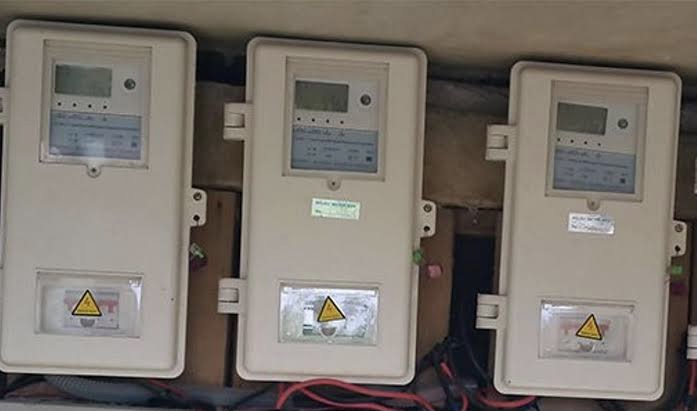
The Federal Government has disclosed that Nigeria’s electricity metering rate has increased to about 57 per cent following the deployment of hundreds of thousands of new meters across the country, as part of ongoing efforts to strengthen the power sector and improve service delivery.
The Special Adviser to the President on Energy, Olu Verheijen, made the disclosure during the Nigerian-British Chamber of Commerce Energy Day 2026, where she highlighted progress recorded under the administration’s energy reform agenda.
According to Verheijen, the increase in metering was achieved through two major programmes — the Presidential Metering Initiative and a World Bank-supported metering programme. She added that both initiatives are expected to deliver several million additional meters in the coming years, further reducing the number of unmetered electricity consumers nationwide.
“Metering protects consumers, reduces estimated billing, and builds the commercial discipline investment requires,” she said.
Nigeria’s metering gap has remained one of the major challenges in the electricity sector, with millions of customers historically subjected to estimated billing due to the absence of meters. The government has repeatedly identified mass metering as a key requirement for improving transparency, revenue collection and consumer confidence within the power industry.
Verheijen also disclosed that the Federal Government is implementing electricity tariff reforms in a gradual and pragmatic manner. She said approximately 45 per cent of the electricity market is now operating on cost-reflective tariffs linked to service quality.
According to her, reforms to the subsidised segment of the market have been designed to better protect vulnerable households while significantly reducing the fiscal burden associated with electricity subsidies.
She stated that the redesigned framework has cut the projected subsidy burden by more than $1 trillion.
Speaking on the broader energy landscape, Verheijen said Nigeria possesses abundant energy resources but has historically struggled to translate them into tangible economic outcomes.
“We have oil. We have gas, and we have sunlight, water, land, talent and skills. What we have lacked is conversion—the discipline to turn resources into results,” she said.
She noted that the country had failed for decades to convert its vast energy reserves into production, revenue and economic growth, adding that gas resources had not been effectively transformed into power generation, while available power had not translated into the productivity required to drive industrial development.
According to Verheijen, President Bola Tinubu’s administration has prioritised changing that narrative by moving the energy sector from unrealised potential to measurable performance.
“Energy is not simply a sector. It is the foundation of national competitiveness. When energy works, factories run, farms process, transport gets cheaper, and governments can invest in their people. When energy fails, every Nigerian pays—in diesel costs, food prices, lost jobs and pressure on the naira. That is why energy reform is economic reform,” she said.
She stressed that the reforms being implemented extend beyond investors, power companies and oil operators, directly affecting the daily lives of ordinary Nigerians.
“Energy reform is not an elite conversation. It is a national development conversation. We are speaking of the price of food, the cost of transport, the survival of small businesses, the strength of the naira, and jobs for young Nigerians.
“We have done the foundational work. The directives were issued, the decisions were taken, the structures were designed, and the agreements were negotiated and signed,” she said.
Verheijen urged the current leadership of the sector to build on the foundations already laid and focus on improving service delivery, expanding access to electricity and providing the reliable power supply needed to support Nigeria’s industrialisation ambitions.
She also highlighted the role of the Nigerian-British Chamber of Commerce in supporting energy sector development, noting that stronger collaboration between Nigeria and the United Kingdom could accelerate investment and project delivery.
According to her, while the UK brings finance, legal expertise, engineering capabilities, insurance services and institutional capital, Nigeria contributes resources, market demand, scale and reform momentum.
“The opportunity is to connect these strengths around bankable projects and to move partnership beyond goodwill into financing structures, skills transfer and measurable outcomes.
“Nigeria is no longer presenting potential alone. We are presenting a reform pathway, a project pipeline, and evidence that disciplined execution changes outcomes,” Verheijen said.

