Nigeria’s inflation rate, measured by the consumer price index (CPI), has reached 28.92% in December 2023, marking the twentieth consecutive increase during the year.
This figure reflects a rise from 28.20% in the previous month, as reported by the National Bureau of Statistics (NBS) in its December CPI report.
The NBS revealed that the December 2023 headline inflation rate increased by 0.72% points compared to November 2023. On a year-on-year basis, the inflation rate was 7.58% points higher than in December 2022, reaching 21.34% at that time.
The month-on-month basis indicated a 2.29% inflation rate in December 2023, 0.20% higher than the rate recorded in November 2023 (2.09%). This indicates a higher rate of increase in the average price level in December compared to the previous month.
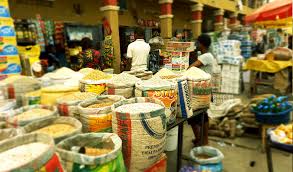
The NBS also reported that the food inflation rate for December 2023 was 33.93% on a year-on-year basis, marking a 10.18% increase compared to December 2022 (23.75%). On a month-on-month basis, food inflation in December 2023 was 2.72%, which was 0.30% higher than November 2023 (2.42%).
The rise in food inflation was attributed to increases in the prices of bread and cereals, oil and fat, potatoes, yam and other tubers, fish, meat, fruit, milk, cheese, and eggs. The average annual rate of food inflation for the twelve months ending December 2023 was 27.96%, indicating a 7.02% points increase from the average annual rate recorded in December 2022 (20.94%).
In December 2023, Kogi (44.73%), Kwara (41.33%), and Imo (39.54%) recorded the highest food inflation on a year-on-year basis, while Bauchi (27.49%), Jigawa (27.98%), and Sokoto (28.72%) experienced the slowest rise in food inflation. On a month-on-month basis, Bayelsa (4.42%), Ogun (4.11%), and Enugu (4.03%) had the highest food inflation, while Nasarawa (1.48%), Delta (1.65%), and Niger (1.67%) recorded the slowest rise in inflation.