
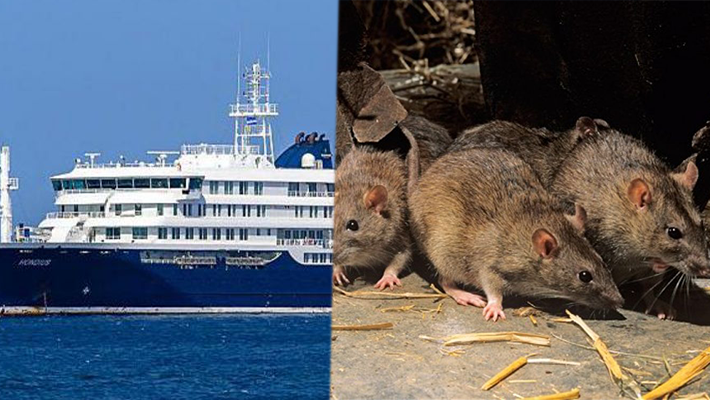
A rare hantavirus outbreak aboard the MV Hondius, a cruise ship travelling from Argentina to Cape Verde, has triggered global concern as health authorities across several countries intensify monitoring efforts.
The affected vessel, carrying 88 passengers and 61 crew members from 23 nationalities, had previously stopped at South Georgia, Tristan da Cunha and St Helena before it was barred from disembarking in Cape Verde following reports of an infectious outbreak onboard.
The World Health Organisation, in an April 4 update, disclosed that suspected passengers on the cruise ship reported symptoms including “fever, gastrointestinal issues, pneumonia and acute respiratory distress syndrome”.
Barely four days later, the WHO confirmed that “a total of eight cases (six confirmed and two probable cases), including three deaths (two confirmed and one probable)” had been recorded.
“Four patients are currently hospitalised, one in intensive care in Johannesburg, South Africa, two in different hospitals in the Netherlands and the other in Zurich, Switzerland,” the WHO stated.
The outbreak has drawn international attention due to concerns over the potential spread of the virus beyond the cruise ship environment.
A travel vlogger and passenger aboard the vessel, James Rosmarin, shared an emotional TikTok video describing the uncertainty faced by passengers during the outbreak.
“We are not just a story, we are not just headlines, we are people, people with families, with lives, with people waiting for us at home,” Mr Rosmarin said.
“There is a lot of uncertainty, and that is the hardest part. All we want right now is to feel safe, to have clarity and to get home.”
The outbreak has also heightened concerns in African countries, particularly Nigeria, due to the continent’s ongoing battle against rodent-borne diseases such as Lassa fever.
The Nigeria Centre for Disease Control and Prevention, in its Epidemiological Week 11 situation report covering March 9 to 15, disclosed that Nigeria recorded no fewer than 146 Lassa fever deaths between January and mid-March.
The development prompted Nigerian health authorities to respond swiftly to growing public concern over the hantavirus outbreak.
The Africa Centres for Disease Control and Prevention, in a statement issued on the penultimate Tuesday, stated that there was “no evidence of transmission within Africa”, adding that the infection risk to the general public remained low.
“The clustering of cases among travellers in a confined environment warrants heightened vigilance and further investigation to determine the source and mode of exposure,” the statement said.
“At this time, the outbreak appears confined to the cruise ship, with no evidence of transmission within African countries. The risk to the general public remains low,” Africa CDC added.
Similarly, the NCDC, in a public advisory issued on Saturday, confirmed that Nigeria had not recorded any case of hantavirus.
The Director-General of the NCDC, Jide Idris, stated that disease surveillance efforts had been intensified while assuring Nigerians there was no cause for alarm.
“The event involves a limited number of confirmed and suspected cases associated with the cruise ship, with investigations and contact tracing ongoing. Current reports indicate that the risk to the general public remains low,” Mr Idris said.
Health experts who spoke on the development advised Nigerians to avoid practices that could increase the risk of contracting the virus and similar rodent-borne diseases.
Ezekiel Adebowale, a lecturer at the Faculty of Veterinary Medicine, University of Ibadan, urged Nigerians to prioritise awareness and preventive measures instead of panic.
He described hantavirus as “a group of viruses carried by rodents such as rats and mice”, noting that infection mainly occurs through “inhaling tiny particles from rodents’ urine, droppings, or saliva, especially when cleaning dirty areas or disturbing rodent nests”.
According to him, effective rodent control remains critical in preventing hantavirus, Lassa fever and related infections.
“The current risk to the average Nigerian is very low. The ship outbreak is being managed internationally and has not reached Nigeria. However, rodents are common in our environment, so strong rodent control protects us from Lassa, hantavirus, and other diseases,” Mr Adebowale said.
He advised Nigerians to keep homes and surroundings clean and rodent-proof, disinfect rodent droppings before cleaning, wash hands regularly after possible contact with rodent-infested areas, seek medical attention early for flu-like symptoms and breathing problems, and follow updates from health authorities.
Tayo Fasuan, founder of MicroBiotics, also stated that Nigeria possesses the capacity to contain any possible hantavirus outbreak, citing the country’s experience in controlling Lassa fever and its adoption of a one-health approach linking human, animal and environmental health systems.
“I believe Nigeria is well-equipped and prepared. For instance, we have been able to restrict the spread of Lassa beyond its endemic locations for a long time,” Mr Fasuan said.
“The public health system of the country has been actively adopting the one-health approaches in recent years, merging human health with animal and environmental health successfully.”
He noted that such coordinated systems would help authorities quickly detect and respond to any suspected hantavirus cases nationwide.
Mr Fasuan also highlighted the role of poor waste management in increasing exposure to rodents associated with the virus.
“While rats like Norway rats, Black rats and Bandicoot rats are usually living closer to human homes, rats like deer rats, cotton rats and rat rice are more of wild rats, interacting only with humans occasionally. Hence, the risk factors are slightly different,” he explained.
“In urban areas, the odds of people living close to waste disposal sites getting infected with hantavirus-carrying peridomestic rats are high. In rural areas, the odds are different. The proximity to forests makes the wild rats more likely to spread the virus more.”
He urged Nigerians to avoid contact with rodent droppings and urine, especially those living close to bushes, forests and waste disposal sites.
“Hantavirus is primarily an airborne threat and is being transmitted via the inhalation of aerosolised rodent excreta. So steps should be taken to prevent what I will call the aerosolisation of the potentially infectious materials,” he added.
Lateef Adebisi, a research officer at the Global Emerging Pathogens Treatment Consortium, warned that although hantavirus remains uncommon in Nigeria and Africa, international travel could facilitate its introduction into the continent.
“The world is now a global village, and an infected individual from regions such as Europe or South America could travel to Africa, including Nigeria. This could potentially trigger an outbreak or even an epidemic under the right conditions,” Mr Adebisi stated.
He also raised concerns about the close interaction between humans and rodents in Nigeria, as well as the unregulated hunting and consumption of wild animals.
“When individuals are exposed to any of the bodily fluids of an infected rodent, they can become infected. Rodents often live in close proximity to humans, especially in homes and markets where environmental hygiene is not adequately maintained,” he explained.
According to him, previous research conducted in Nigeria showed that some rodent species, including the multimammate rat and African wood mouse, may have been previously exposed to the virus, based on antibodies detected in earlier studies.
Mr Adebisi further noted that both Lassa fever and hantavirus share similarities as zoonotic diseases and could be tackled through improved laboratory capacity, enhanced surveillance systems, stronger infection prevention measures and increased public awareness.
He warned Nigerians against poor food storage practices that attract rodents into homes and markets.
The researcher also called on the federal government and other authorities to strengthen collaboration across the human, animal and environmental health sectors through a coordinated one-health framework.
“This will allow all these sectors to work together and share data to support informed public health decision-making, prevent the spillover of zoonotic diseases from animals to humans, build an early warning system, and ensure epidemic and pandemic preparedness to prevent outbreaks in humans,” he said.

