The Lagos State Water Regulatory Commission (LASWARCO) has announced plans to strictly enforce water quality and safety standards across the state, cautioning that unsafe practices by service providers pose serious risks to public health and the environment.
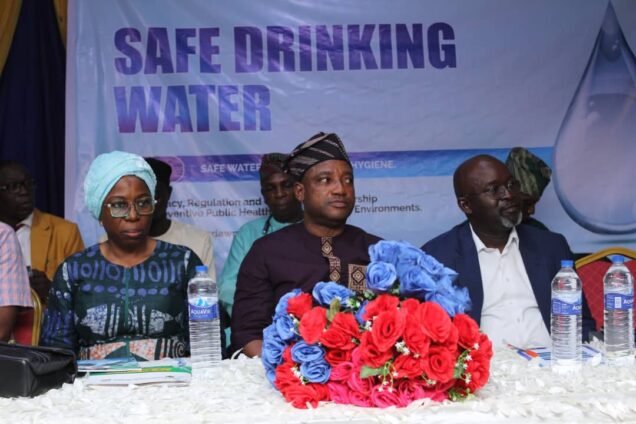
The warning was issued on Monday by LASWARCO Executive Secretary, Oluwabukola Khadijah Adeyemo, during a community sensitisation and public engagement with water stakeholders in Epe.
Adeyemo stated that the engagement marked a decisive shift from awareness creation to full regulatory compliance, adding that enforcement measures would be applied against operators who fail to meet required standards. She highlighted Lagos’ rapid population growth, urbanisation, and climate pressures as factors making strict regulation unavoidable.
“As regulators, we are committed to enforcing standards that ensure water is properly treated, purified, packaged and distributed,” Adeyemo said. “However, regulation alone cannot achieve this goal. Compliance must be driven by a shared sense of responsibility and professional ethics among all water service providers.”
She noted that many residents rely on alternative water sources such as boreholes due to limited access to pipe-borne water, warning that drilling close to septic tanks and sewage systems significantly increases the risk of waterborne diseases, including cholera, typhoid fever, and diarrhoea.
Beyond health concerns, Adeyemo raised the environmental impact of unregulated groundwater extraction, cautioning that excessive abstraction could lead to land subsidence and soil instability. “One of the most alarming consequences is land subsidence caused by over-extraction of underground water and abandoned boreholes without proper decommissioning,” she said, noting that damaged aquifers are difficult to restore once depleted.
She emphasised that the enforcement drive aligns with the Lagos State Government’s THEMES+ Agenda, particularly the Health and Environment pillar, as well as Nigeria’s commitments under Sustainable Development Goal 6 on clean water and sanitation. Adeyemo disclosed ongoing and planned infrastructure projects, including the commissioning of Akilo Water Works in Ogba, rehabilitation of Adiyan Phase 1, near completion of Adiyan Phase 2, and upgrades to water works in Epe to reduce dependence on unsafe private sources.
Adeyemo said LASWARCO would intensify monitoring of borehole drillers, sachet and bottled water producers, tanker operators, and household water managers, noting that all operators are subject to regulation. “LASWARCO stands ready to partner with stakeholders to guide and support them, but we equally expect full compliance, ethical practices and a shared commitment to health and environmental safety,” she said, urging operators to view regulation as a protective measure that builds public trust and strengthens the sector.
The engagement aimed to clarify responsibilities, encourage voluntary compliance, and send a clear message that Lagos State will enforce water safety standards to safeguard present and future generations.