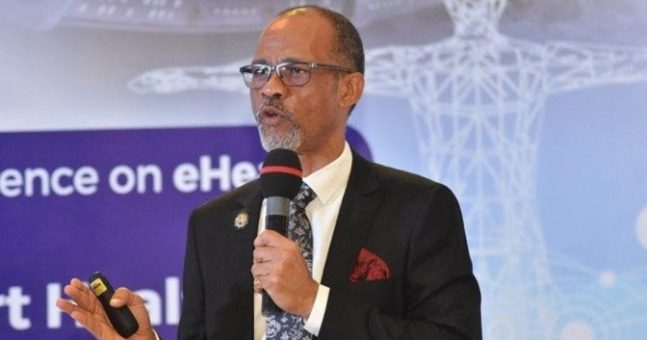
Prof. Akin Abayomi, the Lagos State Commissioner for Health, has disclosed a significant shortfall of 30,000 medical doctors needed to adequately service the state’s healthcare demands.
This revelation was made on Wednesday during the ongoing 2024 Clean-Air Forum in Lagos.
According to Abayomi, the shortage of medical doctors has placed immense pressure on the existing healthcare workforce, exacerbating the doctor-to-patient ratio crisis. He attributed the deficit primarily to brain drain, where trained professionals leave for better opportunities abroad.
The forum, themed “Advancing Collaborations and Multi-regional Partnerships for Clean Air Actions in African Cities,” is organized by the University of Lagos, AirQo, and Makerere University in Uganda, with support from the Lagos State Government. It aims to raise public awareness about air quality and the detrimental impact of pollution on health.
In his address, Abayomi highlighted the severe effects of air pollution on the health sector and emphasized the state’s ongoing efforts to facilitate inter-agency collaborations to mitigate these issues. He pointed out the additional healthcare challenges posed by Lagos’ rapid population growth, which increases annually by six to eight percent.
“Lagos’ annual population growth rate of six to eight percent presents significant challenges, with the health sector being no exception,” Abayomi stated. “The state’s complex tuberculosis index is a particular concern, and we are making considerable efforts to mitigate its spread.”
He stressed the importance of improving air quality and reducing environmental pollution through collaborative agency efforts. “The state government is committed to supporting initiatives that sanitize the air in Lagos, thereby reducing airborne and waterborne diseases that negatively impact residents’ health.”
Abayomi also addressed public concerns regarding the shortage of bed spaces in state health centers. He assured that the government is actively working to expand and modernize healthcare facilities to alleviate this issue.
“With the construction of modern facilities and the establishment of a medical research institution, we aim to bridge the gap within 18 months and provide the public with the healthcare services they deserve,” he added.