
The Lagos State Government has expressed determination to check and control what it described as rising unregulated activities on open spaces, commonly referred to as informal spaces, as part of renewed measures aimed at ensuring maximum regulation through effective compliance interventions.
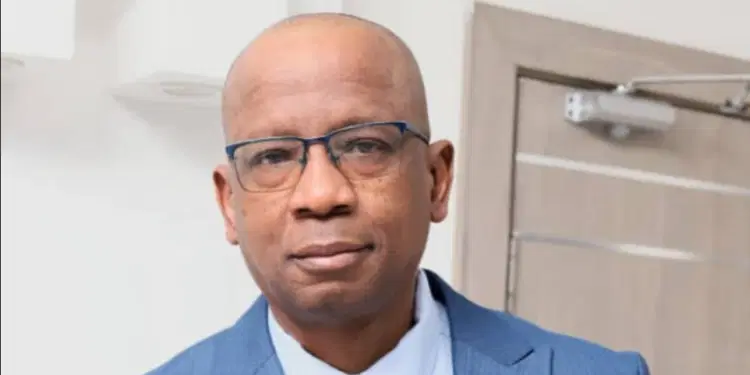
The Commissioner for Physical Planning and Urban Development, Dr Oluyinka Olumide, stated this on Wednesday, noting that such activities pose serious challenges to orderly urban development in the state.
Olumide explained that one of the most visible signs of rapid urban growth in Lagos is the increasing pressure on available space, driven by population growth, expanding commerce, and rising mobility demands.
He identified informal spaces to include road setbacks, walkways, drainage corridors, spaces under bridges, road medians, and undeveloped government land, noting that these areas were never intended for permanent commercial or residential use.
Over time, many of these spaces have been occupied for trading, parking, storage, and the erection of temporary structures without planning approval. While such activities may offer short-term livelihood opportunities, the commissioner said their uncontrolled expansion has long-term consequences for the city.
According to him, “As the city expands in population, commerce, and mobility, public open areas that were originally planned for movement, safety, drainage, aesthetics, and environmental balance are gradually being taken over by unregulated activities.
“These areas, commonly referred to as informal spaces, now pose serious challenges to orderly urban development.
“Across Lagos, the effects of unregulated spaces are evident: pedestrian walkways blocked by stalls, drainage channels obstructed by makeshift structures, traffic congestion worsened by roadside trading, and public spaces losing their aesthetic and environmental value.
“These developments undermine mobility, increase safety risks, worsen flooding, and weaken the effectiveness of urban infrastructure.
“Physical planning exists to balance competing needs within limited space. It ensures that land is used in a way that supports safety, functionality, environmental sustainability, and economic growth.
“When informal use of space grows unchecked, that balance is lost. What emerges is not a city that works for everyone, but one where disorder becomes normalised and public interest is gradually eroded.”
Olumide said the state government’s renewed focus on administering and regulating informal spaces should be understood within this broader context of protecting the city’s long-term functionality and liveability.
“The Lagos State Government’s renewed focus on administering and regulating informal spaces must, therefore, be understood within this broader context.
“It is not an attempt to deny livelihoods or punish vulnerable groups, but a necessary step toward restoring order, protecting public infrastructure, and ensuring that the city remains liveable for present and future generations.”
He noted that the Lagos State Urban and Regional Planning and Development Law, 2019, as amended, provides the legal framework for the government’s actions in this regard.
“The Lagos State Urban and Regional Planning and Development Law, 2019 (as amended) provides a clear legal foundation for this responsibility.
“It assigns the Ministry of Physical Planning and Urban Development the mandate to manage land use, coordinate development, and regulate spatial activities across the State. Informal spaces, being part of the urban fabric, naturally fall within this scope.”
The commissioner, however, stressed that regulation must be balanced with understanding, warning that enforcement without engagement often leads to resistance and conflict.
“However, regulation alone is not enough. Experience has shown that enforcement without understanding breeds resistance, mistrust, and conflict.
“When road setbacks are blocked, emergency response is delayed. When drainage corridors are encroached upon, flooding worsens. When walkways disappear, pedestrians are forced onto highways, increasing accidents.”

