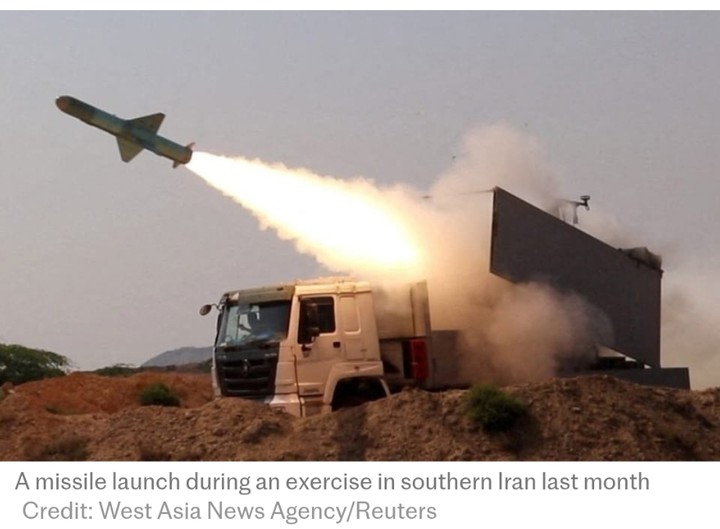
Iran’s ability to launch large-scale missile attacks against the United States and Israel appears to have weakened, as the number of rockets fired by Tehran over a 24-hour period has significantly declined during the ongoing conflict.
Recent analysis indicates that the Islamic Republic has reduced the number of ballistic missiles it launches daily, a development observed by countries currently under attack from Iranian forces. Military experts believe the decline may be linked to the destruction of Iran’s ground-based missile launch platforms during strikes carried out by the United States Armed Forces and Israel Defense Forces.
These launch systems, known as transporter erector launchers, are used to transport and fire ballistic missiles. Their destruction is believed to have severely limited Tehran’s capacity to sustain large missile salvos.
Iran is reported to have fired significantly more missiles in the early days of the present conflict than it did during the 2025 Israel–Iran War in June last year.
Before the conflict began, Iran was believed to possess substantial stockpiles of short-range ballistic missiles. Conservative estimates suggested the country held between 2,000 and 2,500 missiles.
Since Saturday, Tehran has launched an estimated 500 to 750 ballistic missiles, targeting mainly Israel and several Gulf states hosting American military bases.
Countries including the United Arab Emirates and Kuwait have been releasing daily counts of Iranian missiles and drones launched toward their territories.
During the first two days of the conflict, Iran fired an average of 58 ballistic missiles per day at the United Arab Emirates. However, by the fourth day of fighting, the number had dropped sharply to only 10 missiles.
Defence analyst Colby Badhwar described the decline as possible “preliminary evidence that Iran is running out of ballistic missiles”.
Meanwhile, Bahrain reported that its defence systems successfully intercepted a total of 70 missiles on Tuesday. A day later, authorities said the figure had increased to 74.
Kuwait reported engaging 97 ballistic missiles during the first 24 hours of the war but has not released updated figures since then.
In Qatar, the defence ministry announced on Wednesday that the country had been targeted by two ballistic missiles. One of the missiles struck the Al Udeid Air Base but caused no casualties.
The figure represents a decline from Monday, when seven ballistic missiles were fired toward Qatar.
Overall, Qatari authorities say the country has been targeted with at least 101 ballistic missiles since the conflict began, with the majority launched during the first two days.
Military operations by the United States have largely focused on destroying Iran’s offensive capabilities, including the elimination of multiple missile launch systems.
“We’re focused on shooting everything that can shoot at us,” said Brad Cooper during a briefing.
Satellite imagery has also revealed damage to missile facilities across Iran. One affected site is located in the central city of Isfahan, where a ballistic missile installation was struck again between February 27 and March 1.
The facility had previously been partially rebuilt following American strikes during the 12-day war in June.
Missile technology expert Fabian Hoffmann noted that the current conflict poses a significant threat to Iran’s leadership and that a higher level of missile usage would normally be expected.
“Given that the present conflict is far more existential from a regime perspective and that short-range ballistic missiles are viable, one would expect significantly greater ballistic missile use unless Iran’s missile and launcher capabilities have been heavily degraded – which evidently they are,” he said.
He added that concerns about shortages of missile interceptors in the Gulf remain valid only if Iran had been able to sustain the high intensity of attacks seen during the first two nights of the conflict.
“At present, with the possible exception of Bahrain, no Gulf state appears to be in a particularly alarming position,” he said.
At the same time, reports indicate that the United States is also consuming large quantities of precision weapons during the conflict. Sources told the Wall Street Journal that the country could be days away from needing to prioritise which incoming targets to intercept as its stockpiles decline.