
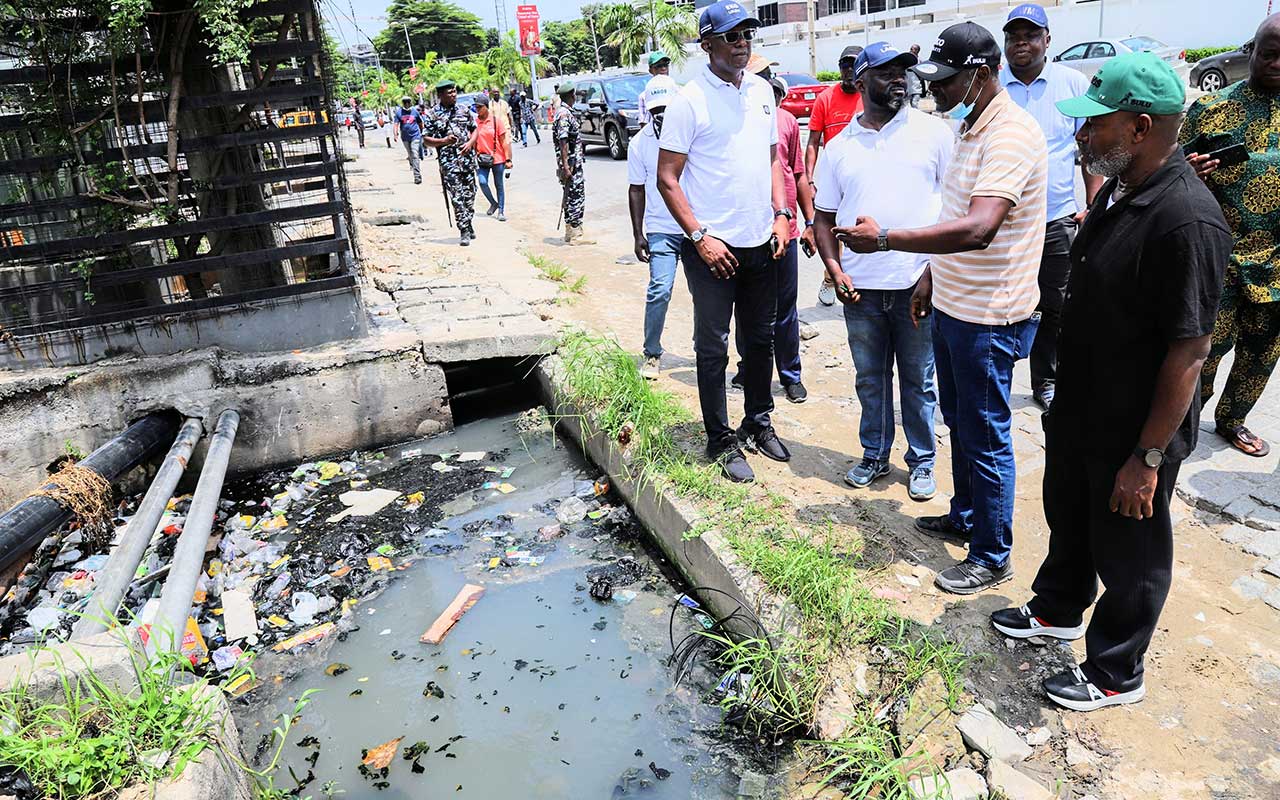
The Lagos State Government has reiterated its unwavering commitment to delivering resilient infrastructure as a robust response to the recurrent threat of flash floods across the metropolis.
The state’s Commissioner for Environment and Water Resources, Tokunbo Wahab, offered this assurance following the recent wave of intense rainfall that battered parts of the state.
According to Wahab, the state has been making concrete investments in climate-adaptive infrastructure to safeguard lives and property against extreme weather. Among the most commendable interventions is a year‑round maintenance programme that ensures all primary and secondary drainage channels are cleared of silt and refuse. As part of these efforts, over 666 kilometres of drainage across the state have received attention—including the recent completion of the Ilubirin Pumping Station, a first-of-its-kind facility in West Africa designed to channel stormwater directly into the lagoon.
He further highlighted the effectiveness of the Emergency Flood Abatement Gang, a rapid-response unit deployed to fix emerging flood hotspots as soon as they appear. To date, this unit has desilted and maintained more than 166 kilometres of drains, focusing its efforts on areas most prone to flooding.
Wahab also acknowledged the critical role that waste management plays in flood prevention. He explained that improper disposal of refuse—especially plastic and sachets that choke drains—remains a major challenge. In response, over 15,000 street sweepers have been deployed across Lagos, supported by door‑to‑door waste collection operators and the Lagos State Waste Management Authority. These efforts are bolstered by public education campaigns encouraging citizens to avoid disposing of waste into drainage systems.
On the technological front, Lagos has installed a network of automatic weather stations and river gauging systems in strategic locations across the state. These systems supply real-time data on rainfall intensity, tidal movements, and water levels, enabling authorities to issue early warnings and coordinate preventive actions before floodwaters escalate.
Alongside these interventions, enforcement remains strong. Environmental officers, alongside taskforces such as the Lagos Environmental Sanitation Corps and Kick Against Indiscipline, actively patrol and sanction offenders who obstruct drainage systems. The state also fully implemented a ban on single-use plastics, reducing one of the major causes of drain blockage.
Wahab cautioned, however, that despite these efforts, flood events—especially during high tides or prolonged rain—cannot be entirely eliminated. He explained that when tidal surges block river channels, floodwaters may temporarily accumulate. But thanks to improved infrastructure and rapid drainage, such floodwaters now recede far more quickly than they did in the past.
He urged Lagosians to remain vigilant and actively engaged, stressing that climate resilience requires both government action and citizen cooperation. Behaviours such as littering into drains continue to threaten the work being done across the state.
In a recent televised address, Wahab extended sympathy to those affected by the latest flood events, emphasising that the state’s investments have significantly bolstered its ability to respond rapidly to such crises. He assured residents that the disruptions experienced during extreme rainfall were not due to negligence, but rather the natural forces of weather—forces against which Lagos is now far better prepared.
As climate change intensifies the frequency and severity of extreme weather, the Lagos State Government is reinforcing its resolve to work with communities, private sector partners, and international collaborators, ensuring that the city remains on a steady path toward becoming a resilient, climate-safe megacity.

