
Security experts have expressed differing views on Nigeria’s ability to independently sustain counterterrorism operations following the recent withdrawal of United States troops from parts of the country, with many stressing that intelligence capabilities will remain the defining factor in the fight against insurgency.
The withdrawal follows the May operation that resulted in the killing of Abu-Bilal al-Minuki, the second-in-command of the Islamic State in the Lake Chad Basin (ISWAP), after which the United States reduced its military presence in Nigeria while maintaining intelligence cooperation with the country.
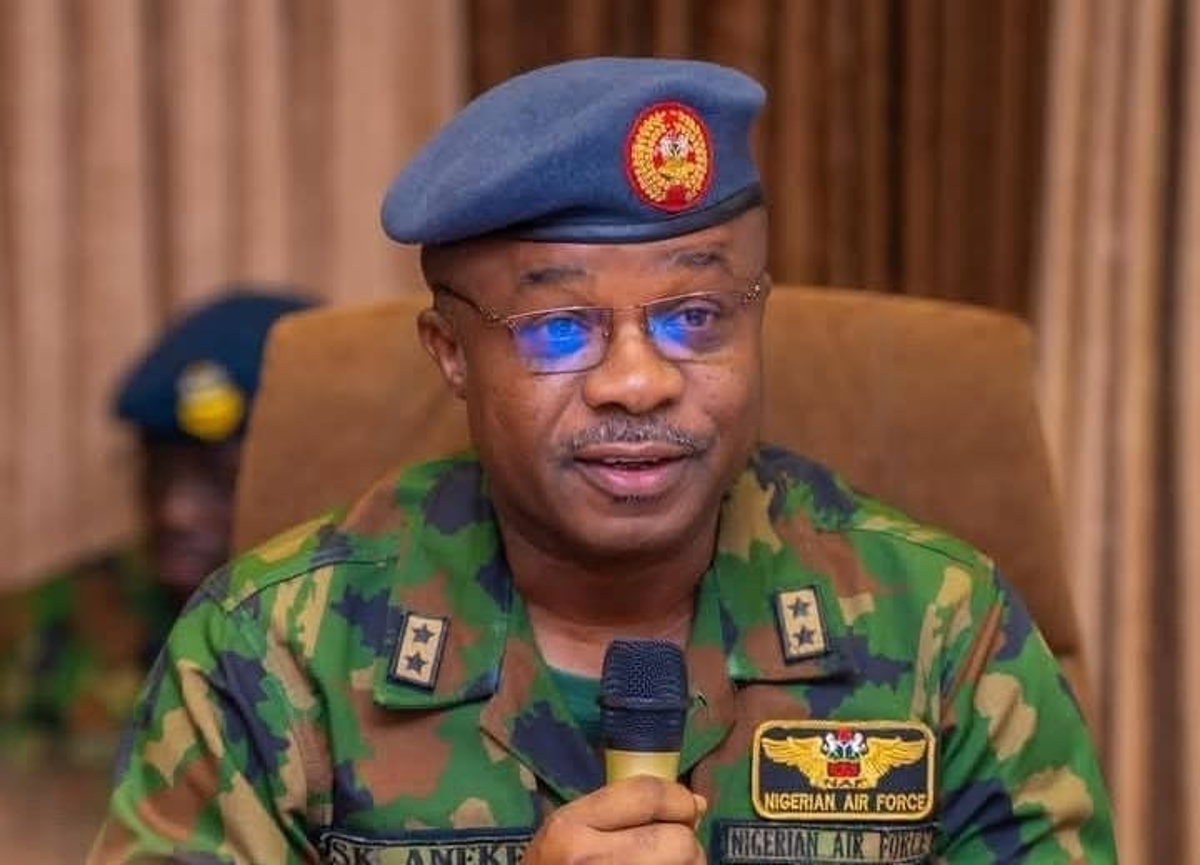
The development comes as the Chief of the Air Staff (CAS), Air Marshal Sunday Kelvin Aneke, called for stronger integration of air power, intelligence gathering and joint military operations, warning that Nigeria’s increasingly complex security challenges cannot be addressed by any single security agency acting alone.
The Commander of the United States Africa Command (AFRICOM), Dagvin Anderson, announced the troop drawdown during a press briefing in Luanda, Angola, after the 2026 African Chiefs of Defence Conference. He said although troop numbers had been reduced, the United States would continue intelligence collaboration with Nigeria.
Security analysts said the withdrawal could indicate growing confidence in the Nigerian military’s combat capabilities but cautioned that battlefield success alone does not equate to complete operational independence.
They argued that intelligence remains the backbone of modern counterterrorism operations and that despite notable military gains against insurgents, persistent attacks across parts of the country reveal weaknesses in intelligence gathering, coordination and technological integration.
The experts called for comprehensive reforms to Nigeria’s intelligence architecture, including enhanced surveillance capabilities, improved inter-agency intelligence sharing, stronger technological infrastructure and increased investment in human intelligence to support more proactive and targeted security operations.
Former Director of the Department of State Services (DSS), Mike Ejiofor, described the withdrawal as premature, arguing that US forces should have remained longer given the continuing terrorist threat.
He warned that insurgent groups often exploit any reduction in military pressure to reorganise and intensify their operations.
Ejiofor also suggested that public disclosure of such withdrawals could generate unnecessary anxiety, noting that troop movements are usually handled discreetly. However, he maintained that operational cooperation between the United States and Nigerian Armed Forces remains intact.
He further stated that under the leadership of the current Director-General of the DSS, Oluwatosin Ajayi, there has been improved coordination, inclusiveness and collaboration among Nigeria’s security agencies.
Professor Attah Pine of the Department of Political Science and International Relations at Benue State University, Makurdi, said the deployment of about 200 US troops to support counterterrorism operations in the Lake Chad region initially reflected American confidence in Nigeria’s Armed Forces.
He suggested that the withdrawal may have been influenced by the perceived weakening of ISIS activities in the Sahel following the reported killing of one of the group’s senior commanders.
Pine stressed the central role of intelligence in military operations.
“Intelligence is the engine room of any military operation. Remove intelligence, and everything else becomes guesswork. For there to be positive results, intelligence must precede combat operations. In any case, intelligence and kinetic action are mutually inclusive to the success of any operational endeavour,” he said.
Retired Commissioner of Police, Dr. Emmanuel Ojukwu, said Nigeria’s decision to invite US military support was driven by strategic interests shared by both countries and noted that the troop withdrawal could also be in line with the bilateral agreement governing the deployment.
He observed that intelligence gathering has become increasingly technology-driven and said Nigeria continues to build capacity to generate, process and utilise actionable intelligence, although significant work remains.
Director-General of the Institute for Peace and Conflict Resolution (IPCR), Dr. Joseph Ochogwu, said the troop withdrawal demonstrates confidence in the professionalism and growing capabilities of the Nigerian military, particularly its adoption of modern technologies in joint operations.
He noted that intelligence processes are often slowed by bureaucratic procedures that delay operational responses.
According to him, intelligence assessments can either be dismissed as false alarms or validated for action depending on analysis, making timely decision-making critical.
Ochogwu called for the removal of unnecessary bureaucratic bottlenecks and advocated greater operational autonomy for frontline commanders, arguing that empowering field personnel to act promptly on credible intelligence would significantly weaken criminal and terrorist networks.
Meanwhile, Air Marshal Aneke, speaking during a lecture titled “Air Power and National Security: The Nigerian Air Force in Perspective” at the National Defence College in Abuja, emphasised that Nigeria’s evolving security environment requires a whole-of-government approach supported by integrated military operations.
According to a statement by the Director of Public Relations and Information of the Nigerian Air Force, Air Commodore Ehimen Ejodame, the Air Chief said the country’s security landscape has evolved beyond conventional warfare, with terrorists, bandits, separatist groups, transnational criminal organisations and other non-state actors increasingly exploiting emerging technologies, difficult terrain and civilian populations to evade detection.
He said addressing these adaptive threats requires seamless integration of intelligence from air, land, maritime, cyber and human sources to provide a comprehensive operational picture for timely decision-making.
Aneke described air power as a strategic enabler of national security, citing its ability to provide speed, precision, flexibility and extensive operational reach for intelligence, surveillance, reconnaissance, rapid troop deployment, border security, protection of critical national infrastructure and precision strikes while minimising civilian casualties.
He stressed that effective national security depends on closer collaboration among the Armed Forces, intelligence agencies and other security institutions.
“No single Service can secure the nation alone,” he said.
He added: “Decisive air power delivers its greatest effect in synergy with surface forces.”
The Air Chief also identified cyber threats, the proliferation of unmanned aerial systems, information warfare, piracy, arms trafficking and other transnational crimes as emerging security challenges confronting Nigeria.
He warned that hostile actors are increasingly exploiting cyberspace and social media to spread disinformation, fuel divisions and undermine public confidence in government institutions, making cyber resilience and strategic communication essential components of national security.
Reflecting on the Nigerian Air Force’s six decades of operations, Aneke said its experiences in defending Nigeria’s sovereignty, supporting regional peace missions and confronting evolving security threats have reinforced the importance of indigenous capacity development, innovation, logistics resilience and continuous force modernisation.
He reaffirmed the Nigerian Air Force’s commitment to strengthening its operational capabilities through indigenous innovation, advanced intelligence systems, emerging technologies and strategic partnerships to sustain effective air power in support of Nigeria’s national security objectives.

