
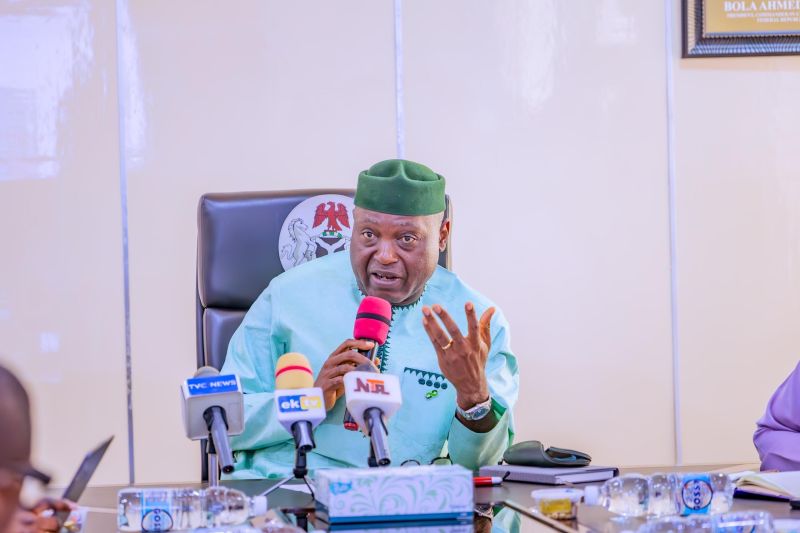
Ekiti State Governor Biodun Oyebanji has announced a dramatic dissolution of the State Executive Council, effective immediately, signaling a significant restructuring of his administration.
The move, which reshapes the state’s political landscape, was made public by the Secretary to the State Government, Prof. Habibat Adubiaro, in a statement released on Sunday night.
The outgoing Commissioners and Special Advisers have been directed to hand over their responsibilities to the Permanent Secretary or the most senior civil servant in their respective Ministries, Departments, and Agencies (MDAs). Governor Oyebanji expressed gratitude to the departing council members for their service and extended his best wishes for their future endeavors.
However, the dissolution is not universal. The State Attorney General and Commissioner for Justice remains unaffected, ensuring continuity in the state’s legal framework. Additionally, several critical portfolios have been spared, including the Commissioner for Health and Human Services, Commissioner for Agriculture and Food Security, Commissioner for Education, Commissioner for Works, Commissioner for Trade, Investment, Industry and Cooperatives, Special Adviser on Special Education and Social Inclusion, and Special Adviser on Lands, Survey, and e-GIS. Directors General who serve on the State Executive Council, such as those overseeing the Office of Transformation and Service Delivery (OTSD), SDGs and Project Monitoring, and the Bureau of Public Procurement (BPP), will also retain their positions.
This strategic reshuffle is not the first of its kind in Ekiti’s political history. In 2011, former Governor Kayode Fayemi dissolved his cabinet to realign his administration’s priorities midway through his first term, a move that sparked both praise for bold leadership and criticism for disrupting governance. Similarly, in 2019, Fayemi again reshuffled his cabinet to inject fresh perspectives into his second term. Oyebanji’s decision echoes these past maneuvers, reflecting a recurring strategy among Ekiti governors to recalibrate their teams in response to evolving political and economic challenges. The retention of key commissioners, particularly in health, education, and agriculture, suggests a focus on maintaining stability in sectors critical to Ekiti’s development, especially in light of Nigeria’s ongoing economic pressures and food security concerns, which have intensified since the 2023 fuel subsidy removal.
By preserving roles tied to transformation, procurement, and sustainable development, Oyebanji appears to be prioritizing accountability and project continuity, areas that have historically been flashpoints for public criticism in Ekiti’s governance. The decision to keep the Attorney General and select commissioners also signals an intent to balance change with stability, ensuring that critical governance structures remain intact during this transition.
As Ekiti navigates this bold restructuring, the governor’s next steps will be closely watched, particularly how new appointments might address longstanding issues like infrastructure deficits and youth unemployment, which have plagued the state for decades. For now, Oyebanji’s selective dissolution sets the stage for a refreshed administration poised to tackle Ekiti’s challenges with renewed vigor.

