
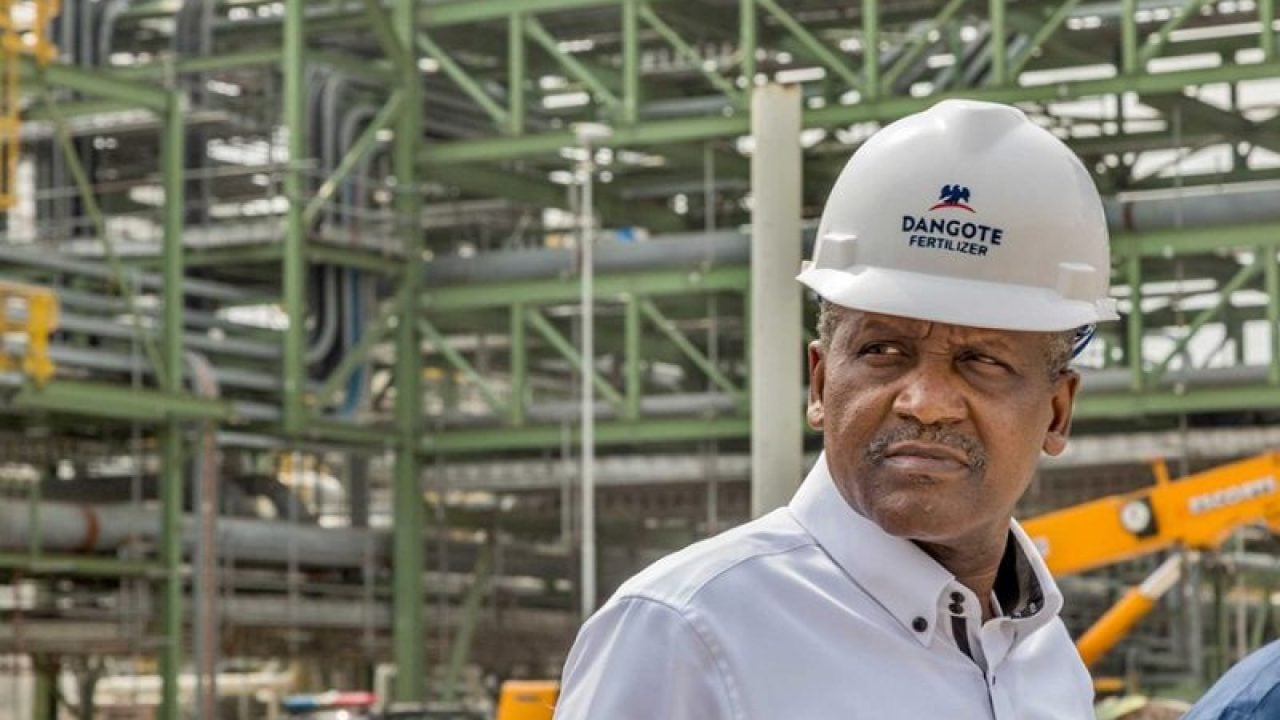
Devakumar Edwin, Vice President of Oil and Gas at Dangote Industries Limited (DIL), has confirmed that the Dangote Oil Refinery and Petrochemicals company will commence production of Premium Motor Spirit (PMS), also known as petrol, this month.
This announcement was made during an onsite visit to the refinery in Ibeju-Lekki, Lagos, by S&P Global, as part of its sovereign credit ratings assessment of Nigeria.
Edwin emphasized that the refinery’s production will harness Africa’s crude oil resources to produce refined products locally, fostering industrial development, job creation, and economic prosperity. He noted that the products from the $20 billion facility meet international standards and can fully satisfy Nigeria’s demand for petrol, diesel, kerosene, and aviation jet fuel, with surplus available for export.
S&P Global praised the refinery, which has a capacity of 650,000 barrels per day, as a potential solution to Nigeria’s foreign exchange issues and a catalyst for economic development. The facility, the largest single-train refinery complex in the world, is expected to transform Nigeria into a net exporter of petroleum products, boosting revenue generation and easing pressure on the country’s foreign exchange reserves.
Ravi Bhatia, Director and Lead Analyst for Sovereign and International Public Finance Ratings at S&P Global Ratings, highlighted the refinery’s potential economic benefits. After a comprehensive tour of the facility, he noted that local refining of crude oil would save money and stabilize the country’s foreign exchange.
Currently operating at 350,000 barrels per day, the refinery plans to scale up to at least 500,000 barrels per day by July/August, refining petrol and ultra-low sulphur diesel. The refinery is designed to process a wide range of crude oils, including those from Africa, the Middle East, and the US, and complies with Euro V specifications and various international emission norms.
Edwin expressed pride in the fact that a Nigerian company designed and built the world’s largest single-train refinery complex, acting as its own Engineering, Procurement, and Construction (EPC) contractor. The refinery includes a self-sufficient marine unit capable of handling the world’s largest vessels and is highly automated and energy-efficient.
Nigeria, despite being a leading oil-producing country, exports its crude oil for refining and imports refined products due to a lack of operational refineries. The National Bureau of Statistics (NBS) reported that Nigeria spent approximately ₦12 trillion on the importation of petroleum products in 2023, an 18.68% increase from the ₦10 trillion spent in 2022.
The Dangote refinery’s commencement of petrol production marks a significant step towards reducing Nigeria’s dependency on imported refined products and is expected to have a substantial positive impact on the country’s economy.

