
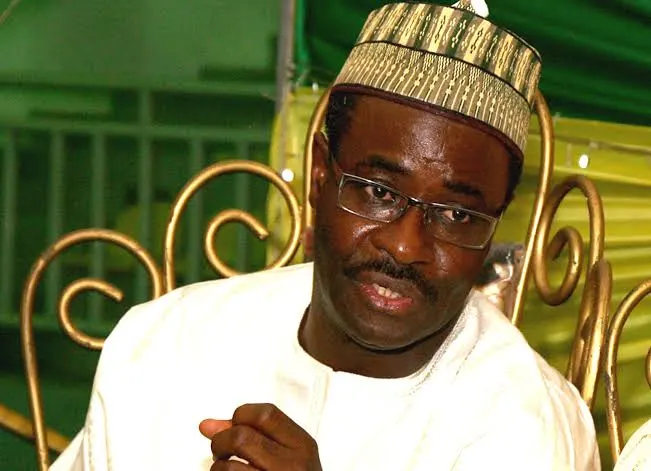
The Director General of the Budget Office of the Federation, Tanimu Yakubu, has defended President Bola Tinubu’s foreign engagement strategy, describing recent criticisms by former Anambra State Governor, Peter Obi, as a “populist simplification” of Nigeria’s economic realities.
Yakubu, in an article titled “Foreign Engagements and the Dangers of Populist Simplification: Peter Obi’s Ignorance,” argued that Obi failed to appreciate the complexities involved in rebuilding investor confidence and restoring economic stability in a country emerging from fiscal and monetary challenges.
On May 16, Obi had criticised the value of recent foreign state visits by Nigerian leaders, arguing that such engagements must translate into measurable economic benefits for citizens rather than ceremonial trips.
“State visits by leaders are not tourism, and diplomacy is not a fashion parade,” Obi said.
Yakubu, however, said the Tinubu administration inherited an economy burdened by structural weaknesses, including fuel subsidy costs, exchange-rate distortions, mounting debt-service obligations, dwindling investor confidence, and heavy reliance on Central Bank of Nigeria financing to sustain government operations.
He said under such conditions, international engagements should not be viewed as ceremonial trips but as strategic efforts to rebuild sovereign credibility, strengthen diplomatic relations, restore investor confidence, and attract long-term capital.
“No serious analyst disputes that foreign engagements should ultimately produce measurable economic outcomes. The real issue, however, is whether Mr. Obi properly understands the sequence through which nations emerging from fiscal and monetary instability rebuild investor confidence, restore credibility, and reposition themselves within global capital markets,” Yakubu said.
He added that President Tinubu inherited an economy facing severe structural stress, including an unsustainable fuel subsidy regime, multiple exchange-rate distortions, collapsing fiscal buffers, mounting debt-service pressures, dwindling investor confidence, and dependence on Ways and Means financing.
Yakubu maintained that international engagements under such circumstances function as instruments for restoring credibility and repositioning Nigeria within global economic networks.
He also faulted Obi’s comparison of Nigeria’s situation with the United States under former President Donald Trump, saying both countries operate under entirely different economic structures and global positions.
According to him, the United States engages China from the position of the world’s dominant reserve currency issuer, the largest consumer market, and a mature industrial economy with deep capital markets and technological dominance, unlike Nigeria, which he described as a reforming emerging economy stabilising after years of fiscal distortion.
Yakubu further argued that benefits from foreign engagements often take time to materialise, noting that investments, infrastructure partnerships, and financing commitments typically follow sustained diplomatic and policy engagement.
He said it was contradictory for critics to oppose reforms such as fuel subsidy removal and exchange-rate unification while simultaneously demanding immediate foreign investment inflows.
“More importantly, many of the benefits of state engagements do not materialize instantly in the form of dramatic headline announcements. Serious investments, infrastructure partnerships, manufacturing relocations, energy financing arrangements, and sovereign investment commitments often emerge gradually after sustained diplomatic engagement, policy stabilization, and investor confidence-building,” he said.
Yakubu also said Nigeria was approaching a fiscal crisis before the current administration’s intervention, adding that ongoing reforms by the government and the Central Bank of Nigeria were beginning to stabilise the economy.
He concluded that rebuilding the economy requires difficult decisions, policy credibility, institutional stabilisation, and patience for long-term reforms to take effect.

