
The Bayelsa State government has formally requested an equity stake in the Brass Fertiliser and Petrochemical Company project, which is set to commence on Brass Island within the state.
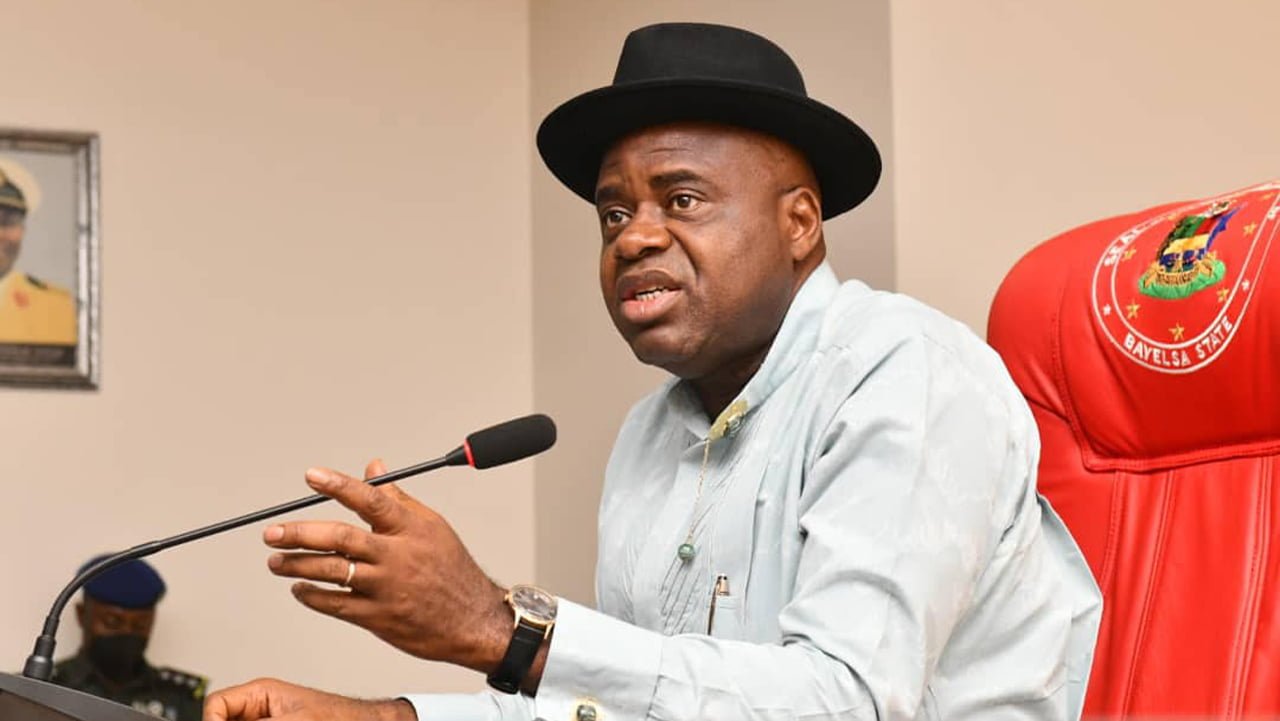
The request was made by Governor Douye Diri when the company’s management team paid a courtesy visit to the Government House in Yenagoa. The governor emphasized that the state’s involvement was necessary in light of the adverse consequences of excluding oil-producing states and local governments in the implementation of the Petroleum Industry Act (PIA).
According to a statement by his Chief Press Secretary, Mr. Daniel Alabrah, Governor Diri argued that the implementation of the PIA has been hampered in host communities due to an anomaly in the legislation. He noted that the disregard in the PIA for the Nigerian Constitution, which vests control of land in the state government, was a flaw that had necessitated calls for its review.
He said: “Let us ensure that the state is not totally excluded from being partners in progress in this whole process. The PIA is one good example.
“When it was in its formative stages as a bill, we made a presentation through the Attorney General and Commissioner for Justice. We did that after consulting with our people, communities and chiefs. But at the end of the day, our inputs were ignored and thrown overboard as the PIA excluded the oil producing states and their local governments.
“The federal government now interacts directly with the communities and that is an affront on the Nigerian Constitution. The Constitution says the land belongs to the state government and not the federal government.
“The Constitution recognises communities as under the local government and the state government. These anomalies in the PIA have made the law a time bomb. Today, because of the PIA, there are intra and inter-communal conflicts and litigations. So even funds that have been realised for their development cannot be disbursed to the communities. If anybody thinks the state is not very important, we will then wash off our hands.”
The governor further expressed hope that the petrochemical project would be different and urged the management to partner with the state government to correct the imbalance and avert conflicts in its host communities. He commended the administration of President Bola Tinubu for resuscitating the project, noting that it was long overdue. The governor explained that the Brass Fertiliser and Petrochemical Company had been conceptualized in 2009, gained some traction during the tenure of his predecessor, and later fizzled out, until its revival by the current administration.
Earlier in the visit, the Managing Director of the Brass Fertiliser and Petrochemical Company, Chief Ben Okoye, informed the state government that work on the $3.5 billion project was scheduled to begin in October. He explained that the project, designed to produce 10,000 metric tonnes of methanol per day, had been delayed due to the absence of an agreement on the gas component. However, he noted that President Tinubu had directed the Minister of State for Petroleum (Gas) to ensure commencement of the project, and that the agreement was signed in January of the current year.
He assured the state government that the necessary steps had been taken to fully implement the project. He also expressed gratitude to the governor for facilitating the construction of the Nembe-Brass road, which he said would save the company up to $100,000 in logistics costs when transporting equipment and materials by river to the project site.
The Project Coordinator, Mr. Cyril Akika, then presented the anticipated benefits of the project, including economic transformation, with the creation of over 15,000 jobs during the construction phase and more than 5,000 permanent positions thereafter. He highlighted that the initiative would increase tax revenues, royalties, internally generated revenue, and bolster Bayelsa State’s SMEs through project supply chains and equity dividends.
He also pointed out additional benefits such as infrastructure and community impact, positioning the Brass Free Zone as a global petrochemical hub, as well as the development of port and jetty facilities, a logistics base, and a 300 MW gas-fired power plant to ensure energy security.

