The Federal Capital Territory (FCT), Abuja, has grown rapidly, with modern infrastructure and a burgeoning population. Along with this urban expansion comes the challenge of traffic congestion, prompting residents to seek cost-effective public transportation solutions.
The Abuja Light Rail has emerged as a key alternative, offering much-needed relief and marking an important milestone in Nigeria’s quest for efficient urban transit.
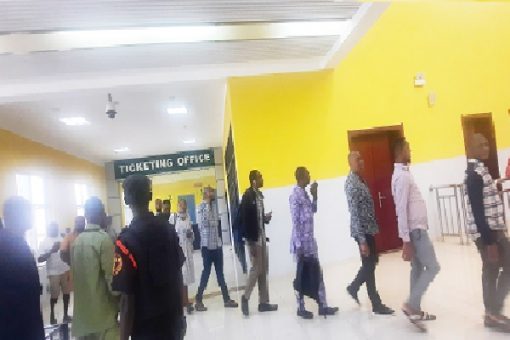
Residents and visitors are already benefiting from the free rides on the Abuja Metro Rails, a system that links 13 communities with 12 stations, including notable stops like Abuja Metro, Stadium, Kukwaba 1 and 2, Wupa, Idu, Bassanjiwa, Airport, Gwagwa Dei-Dei, Kagini, and Gbazango. To capture the experience, our correspondents took a ride through these communities and stations, sharing the excitement of both locals and visitors.
The 35-minute journey from Abuja’s Metro Station in the Central Area to Nnamdi Azikiwe Airport offers a unique glimpse of the capital. Passengers, ranging from excited families on a free outing to commuters enjoying the calm, take in the beauty of the FCT’s often-overlooked landscapes. The clean, comfortable ride, combined with modern security features, adds to the overall positive experience for those returning from the airport.
The Abuja Rail Mass Transit (ARMT), or Metro Line, traces its roots back to a vision set by former President Olusegun Obasanjo. Launched on November 30, 2006, as part of an $8.3 billion rail project, the initiative aimed to develop intermodal and multimodal transport systems across the country. The project progressed slowly over the years, with the contract awarded in 2007 and former President Muhammadu Buhari inaugurating the system on July 12, 2018.
Trial operations, initially planned for September 2018 to March 2020, were delayed due to vandalism, low ridership, and other obstacles. However, with President Bola Tinubu’s *Renewed Hope Agenda*, the project was revived, reflecting the administration’s commitment to making Nigeria a global investment hub and improving public welfare.
As part of Tinubu’s vision, FCT Minister Nyesom Wike inaugurated the rehabilitated ARMT system during the celebration of Tinubu’s first year in office. Wike described the relaunch as a practical demonstration of the *Renewed Hope Agenda*.
Though a $30 million contract for rehabilitation was awarded in 2018, funds were not disbursed until Tinubu took office. In September 2023, Tinubu directed key government agencies to expedite funding for the project, leading to the completion of the 12 train stations at a cost of N21.4 billion.
In addition, Wike renegotiated a $128 million contract for manpower training, reducing it to $75 million, which saved $53 million in public funds. The ARMT system now boasts 12 diesel multiple units (DMUs), each capable of carrying around 1,000 passengers, positioning the Abuja Light Rail as a cornerstone of urban mobility in the FCT.