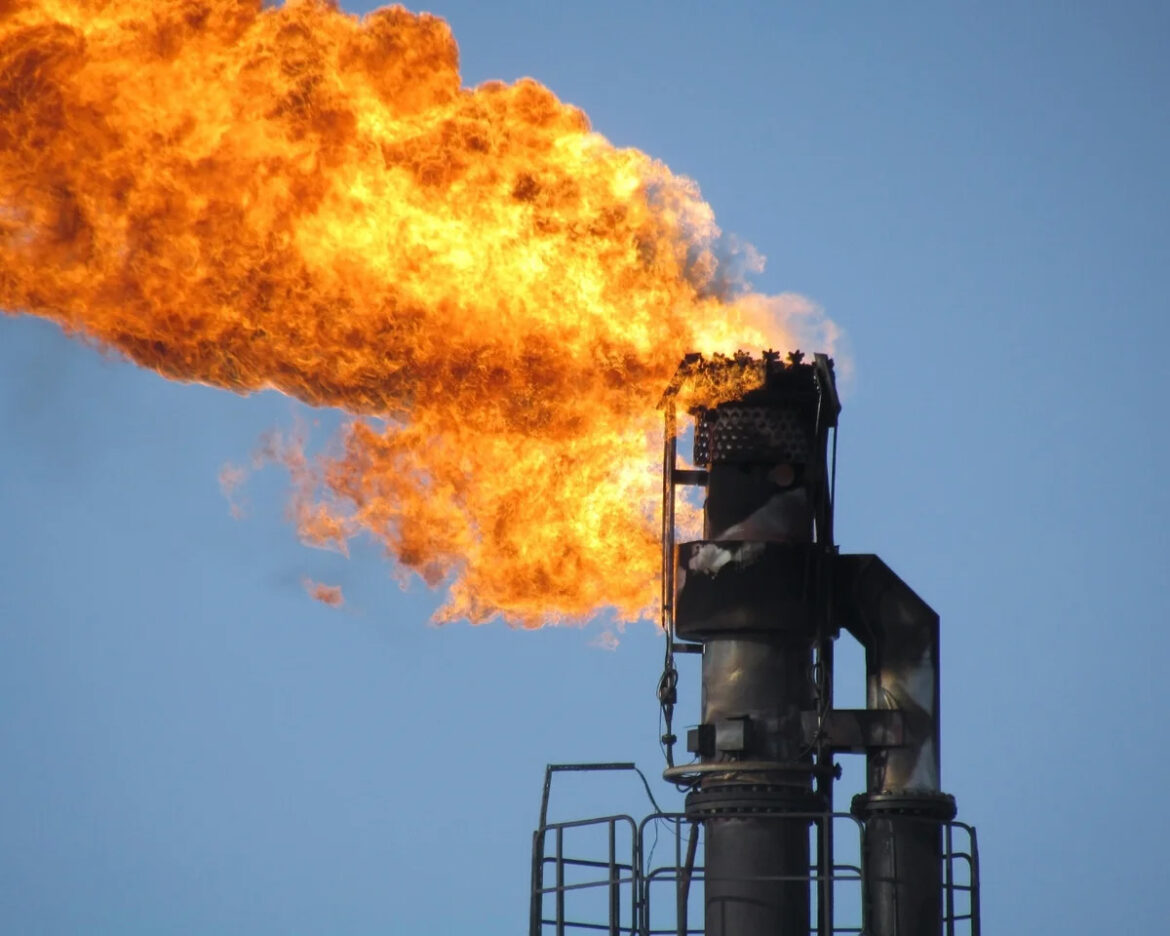
Nigeria continues to incur staggering losses from gas flaring, with the Federal Government estimating a cost of ₦63 billion in the first five months of 2025 alone.
According to data from the Nigerian Upstream Petroleum Regulatory Commission and OPEC, more than 301 million cubic feet of associated gas was flared between January and May—a four‑year high. That volume translated into roughly $1.1 billion in lost value, underscoring the economic burden of the unchecked practice.
The root of the problem is clear: weak enforcement of Nigeria’s flaring ban laws. Although the Gas Flaring (Prohibition and Punishment) Act of 1984 prohibits routine flaring, repeated exemptions and minimal fines—just $2 per 1,000 cubic feet—mean operators treat penalties as a manageable cost rather than investing in gas capture infrastructure.
This failure carries huge opportunity costs. Nigeria Extractive Industries Transparency Initiative warns that if current rates persist, the country may lose over N3.43 trillion ($2.29 billion) in the next five years. That is the equivalent of billions in forgone revenue that could fund education, healthcare, and infrastructure.
The environmental and health effects are no less dire. Gas flaring emits precursors to climate change and pollution, including methane, sulfur dioxide, benzene and carcinogens. It contaminates drinking water, corrodes roofs, destroys vegetation, and has been linked to elevated cancer rates in communities across the Niger Delta.
While global flaring rose just 2% in 2024, Nigeria saw a 12% jump, making it the second‑highest increase globally. Flaring intensity rose as oil output remained steady—proof that the crisis comes from neglect, not growth.
Efforts to monetize flared gas, like the Gas Flare Commercialisation Programme, have lagged. Meanwhile global gas spot prices and modular capture technologies make flaring increasingly indefensible, both economically and environmentally.
Unless policy incentives, regulatory teeth, and thriving infrastructure converge, gas flaring in Nigeria will remain a costly waste—and a national liability.