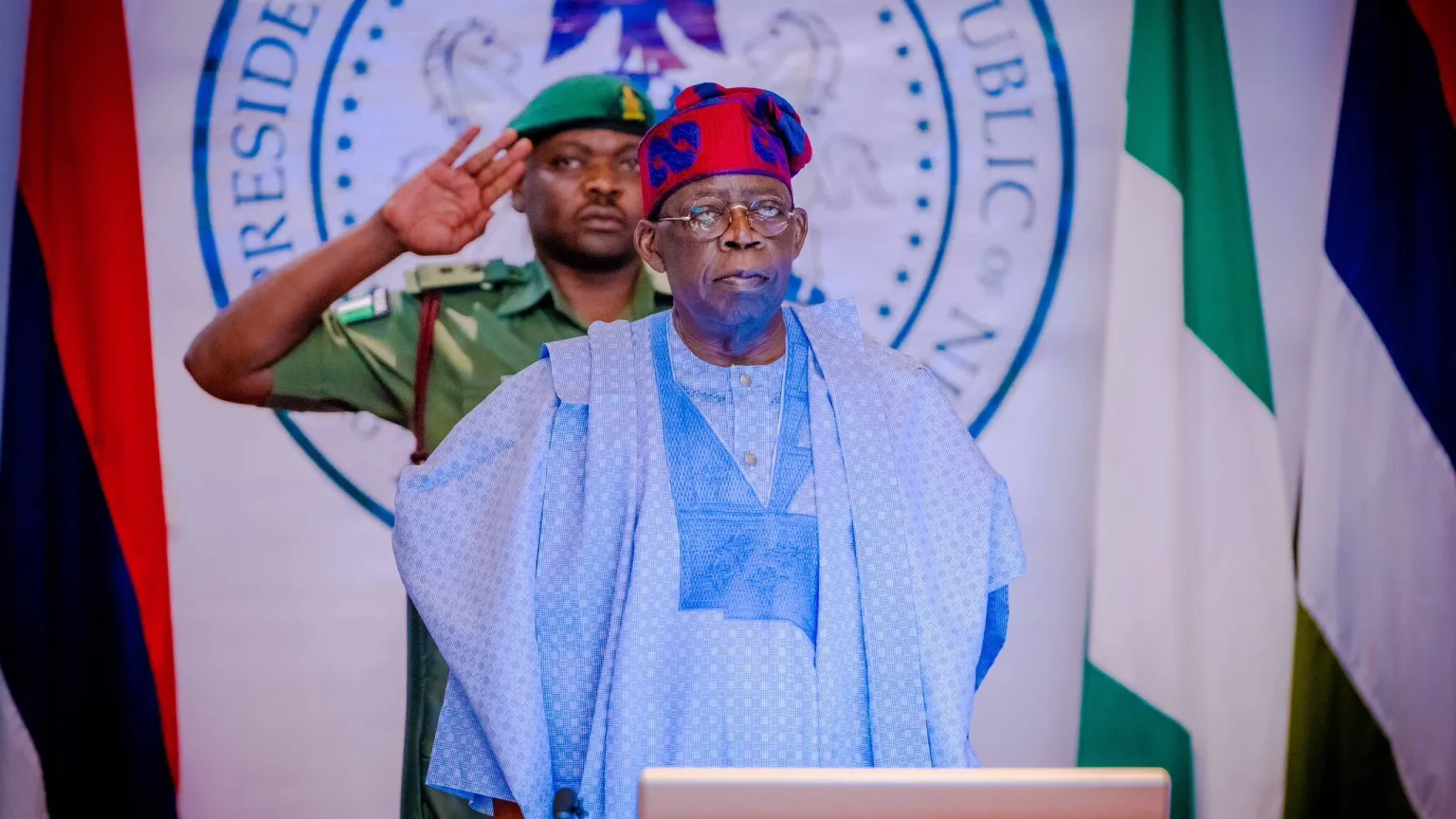
Nigeria’s total public debt could increase by N40.61tn to about N193tn if all of President Bola Tinubu’s 2025 loan requests to the National Assembly are approved and fully disbursed.
The proposed borrowings, representing about 26.6 per cent of the current debt stock as of June 2025, come amid intensifying fiscal pressures and mounting foreign-currency exposure.
According to figures from the Debt Management Office, Nigeria’s total public debt as of June 30, 2025, stood at N152.4tn, comprising N71.85tn in external and N80.55tn in domestic debt. The DMO used an official exchange rate of N1,529.21 per dollar for the June report. However, based on the Central Bank of Nigeria’s official rates as of November 10, 2025—N1,437.29 to the dollar, N1,662.66 to the euro, and N9.33 to the yen—Tinubu’s borrowing plans could push the total debt to about N193.01tn, equivalent to roughly $134.3bn at the prevailing rate. This would lift the external debt share to more than 57 per cent of the total, deepening Nigeria’s foreign-exchange exposure.
In May, Tinubu sought legislative approval for a $21.5bn external loan package, €2.19bn, and ¥15bn, alongside a N758bn domestic bond to fund the 2025–2026 borrowing plan, infrastructure projects, and pension liabilities. “In light of the significant infrastructure deficit in the country and the paucity of financial resources needed to address this gap amid declining domestic demand, it has become essential to pursue prudent economic borrowing to close the financial shortfall,” the President said in one of his letters to the National Assembly. The Senate approved the request in July, following a report by the Senate Committee on Local and Foreign Debt chaired by Senator Aliyu Wamako.
Senator Olamilekan Adeola, Chairman of the Senate Committee on Appropriations, said the borrowing had already been incorporated into the Medium-Term Expenditure Framework and the 2025 budget. “The borrowing is already embedded in the 2025 Appropriation Act. With this approval, we now have all revenue sources, including loans, in place to fully fund the budget,” he explained. Senator Sani Musa, Chairman of the Senate Committee on Finance, defended the borrowing, stating, “There’s no economy that grows without borrowing. What we are doing is in line with global best practices.”
Senator Adetokunbo Abiru, who chairs the Committee on Banking, Insurance and Other Financial Institutions, said the loans were concessional and compliant with the Fiscal Responsibility and Debt Management Acts. “These loans are long-term, some with tenors ranging from 20 to 35 years, and they are strictly tied to capital and human development projects,” he noted.
However, Senator Abdul Ningi expressed concerns over transparency and fairness, warning that Nigerians deserve to know the specifics and intended impact of the loans. In October, Tinubu made another request seeking $2.3bn in external loans and a $500m debut sovereign sukuk to part-finance the 2025 budget deficit and refinance maturing Eurobonds. The National Assembly approved the request on October 29, bringing total external funding requests to about $24.8bn. Senator Sani Musa said the additional funding was essential to ensure the 2025 Appropriation Bill’s smooth implementation, while Senator Adams Oshiomhole argued that loans, when properly channelled into productive sectors, could boost growth and create jobs.
A third request, submitted in early November, sought approval for a N1.15tn domestic borrowing programme to close the unfunded portion of the N59.9tn 2025 budget and pay local contractors. Tinubu said the fresh borrowing would “bridge the funding gap and ensure the full implementation of government programmes and projects” under the 2025 fiscal plan. The proposal is still before the relevant Senate committees.
If all requests are executed, total public debt would rise from N152.4tn in mid-2025 to about N193.01tn, with external obligations climbing by about N39.6tn to N111.45tn and domestic debt rising by about N1tn to N81.56tn.
Data from the DMO show that Nigeria’s total debt increased by about N65.02tn within two years of Tinubu’s administration, driven largely by exchange rate depreciation and persistent deficit financing. The total public debt rose from N87.38tn in June 2023 to N152.40tn in June 2025, marking a 74.4 per cent rise. While fresh borrowing contributed, most of the increase stemmed from the sharp devaluation of the naira, which nearly doubled the naira value of foreign loans.
In June 2023, external debt stood at $43.16bn, valued at N33.25tn at the then-official rate of N770.38 per dollar, while domestic debt was N54.13tn, bringing the total to N87.38tn. By June 2025, external debt had risen modestly to $46.98bn, but its naira equivalent had surged to N71.85tn due to the naira’s depreciation to N1,529 per dollar.
Domestic debt also grew by N26.42tn in the same period, reflecting continued borrowing through bonds, Treasury bills, and the securitisation of the Central Bank’s Ways and Means overdraft. In May 2023, the National Assembly approved the conversion of N22.7tn in CBN overdrafts into long-term debt instruments, immediately increasing the domestic debt profile.
Speaking at the 31st Nigerian Economic Summit, DMO Director-General Patience Oniha maintained that Nigeria’s debt remains sustainable, with a debt-to-GDP ratio of about 40 per cent, below the 70 per cent benchmark for emerging economies. She said the debt level was not excessive by global standards.
However, economists warn that while new loans may fund infrastructure and budget shortfalls, Nigeria’s debt service obligations—already among the highest relative to revenue in Africa—could worsen without strong revenue growth and tighter spending controls. The Chief Executive Officer of the Centre for the Promotion of Private Enterprise, Dr Muda Yusuf, cautioned that debt service already exceeds capital expenditure and could cripple essential government functions if unchecked. “Debt service is already far more than the appropriation for capital spending,” he said, urging the government to prioritise revenue generation and fiscal discipline.
Yusuf added that while economic reforms and improved oil performance could eventually enhance revenue, all new borrowings must be carefully evaluated for cost and necessity. The Deputy Country Director at BudgIT, Vahyala Kwaga, also warned against breaching Nigeria’s debt threshold and criticised the government for inadequate transparency. “The federal government needs to demonstrate far more transparency and accountability in how it has spent previous debt,” he said.
Auwal Rafsanjani, Executive Director of the Civil Society Legislative Advocacy Centre, condemned the government’s continued reliance on borrowing without clear accountability. He said previous loans, including the $3.4bn IMF facility obtained during the COVID-19 pandemic, remain unaccounted for. “The government continues to borrow, and it cannot prove to Nigerians what they are doing with the borrowing,” he said, accusing the National Assembly of complicity through inflated constituency projects. “They will do everything possible to approve the loan from the president because they are beneficiaries of this,” he alleged, warning that funds could be diverted for political purposes ahead of the 2027 elections.
The National Coordinator of the Human Rights Writers Association of Nigeria, Emmanuel Onwubiko, also condemned the borrowing plans, describing them as reckless and harmful to the nation’s future. “There is no valid reason why the president wants to drag the country into these debts,” he said, accusing the National Assembly of being a “rubber-stamped” institution. “Nigerians should hold President Tinubu and the rubber-stamped National Assembly responsible for this vicious circle of dragging the country into a bottomless pit of foreign loans,” he added.