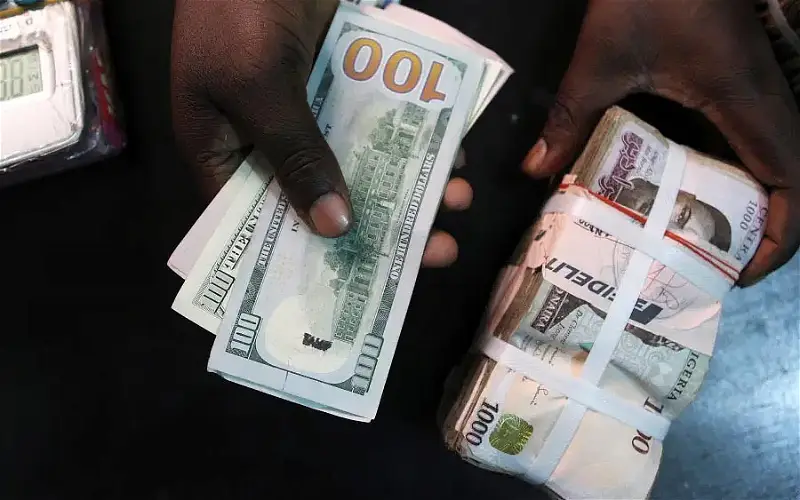
The Nigerian currency weakened in the foreign exchange market after rising global tensions in the Middle East triggered increased dollar demand and the exit of some foreign portfolio investors from Nigeria.
Data from the Central Bank of Nigeria (CBN) showed that the naira depreciated to ₦1,425 per dollar on Monday, March 9, down from ₦1,398 recorded the previous weekend. The ₦27 decline marks the weakest level the currency has reached in about two months.
The depreciation comes after a period of relative stability and appreciation in the official market. Since February 17, the naira had strengthened gradually and reached ₦1,337 per dollar earlier in the month before beginning a fresh slide.
Overall, the local currency has lost about ₦88 in value over the past three weeks as pressures mounted in the foreign exchange market. Analysts attribute the reversal largely to increased demand for the US dollar and capital outflows linked to heightened geopolitical risks.
The naira also weakened in the parallel market, further widening the gap between official and unofficial exchange rates to around ₦15.
Currency traders confirmed the trend in the open market. One bureau de change operator, Abdullahi, said the dollar was sold at ₦1,430 and bought at ₦1,407, while the British pound traded between ₦1,845 and ₦1,880, and the euro ranged between ₦1,600 and ₦1,630.
The renewed pressure on the naira is occurring against the backdrop of escalating tensions in the Middle East, which have unsettled global markets and prompted investors to move funds into safer assets such as the US dollar.
Financial analysts say emerging markets like Nigeria are often vulnerable to such shifts because foreign portfolio investors tend to withdraw funds during periods of global uncertainty, increasing demand for hard currencies and placing additional pressure on local currencies.