In a bold move aimed at tackling the rampant inflation plaguing the nation, the Central Bank of Nigeria (CBN) has announced a significant increase in the Monetary Policy Rate (MPR) by 400 basis points, raising it to 22.75 per cent from 18.75 per cent.
Additionally, the bank has adjusted the asymmetric corridor around the MPR and raised the Cash Reserve Requirement (CRR) to 45 per cent from 32.5 per cent, while retaining the Liquidity Ratio at 30 per cent.
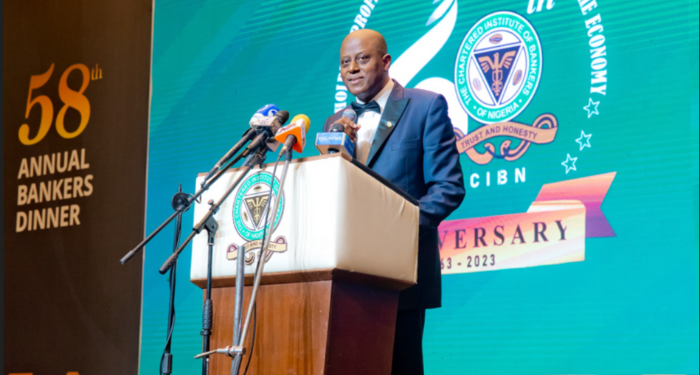
CBN Governor Olayemi Cardoso unveiled these measures during the two-day meeting of the Monetary Policy Committee (MPC), marking the committee’s first session under his leadership. The magnitude of the rate hike surpassed analysts’ expectations, reflecting the bank’s commitment to curbing headline inflation, which soared to 29.90 per cent in January.
The MPR serves as a benchmark for commercial banks’ borrowing from the central bank, influencing the economy’s cost of funds. Cardoso emphasized that the substantial policy rate hike aims to significantly alleviate inflationary pressures.
Moreover, the CBN governor disclosed that the bank disbursed $400 million to settle part of the outstanding foreign exchange commitments, vetted for authenticity. He justified the CBN’s recent crackdown on cryptocurrency platforms, particularly Binance, citing concerns about speculative activities against the naira. Cardoso highlighted the platform’s significant transaction volumes, raising suspicions of illicit inflows and undermining monetary policy efforts.
The MPC’s decisions were driven by the prevailing inflationary and exchange rate challenges, along with projections and rising inflation expectations. Members acknowledged the trade-off between stimulating output growth and curbing inflation, emphasizing the necessity of low and stable inflation for sustainable economic expansion.
Furthermore, the MPC deliberated extensively on distortions in the foreign exchange market, particularly speculative activities driving upward pressure on FX and inflation. The ongoing reforms, including unifying the FX market and promoting transparency, aim to restore stability and enhance supply.
Despite the CBN’s efforts, concerns have arisen regarding the impact of the MPR hike and CRR adjustment on the real sector. The Centre for the Promotion of Private Enterprise (CPPE) cautioned that these measures could constrain banks’ capacity to support economic growth and investment, particularly in manufacturing. Dr. Muda Yusuf, CEO of CPPE, underscored the need for tailored policy responses considering Nigeria’s economic peculiarities, highlighting the limited transmission effects of monetary policy.
Meanwhile, the Manufacturers Association of Nigeria (MAN) urged the government and CBN to provide single-digit credit facilities to manufacturers, emphasizing the sector’s pivotal role in economic development. MAN President Francis Meshioye called for deliberate efforts to prioritize forex and credit allocation to manufacturers, advocating for policies that foster manufacturing growth and boost exports.
As the CBN implements stringent measures to combat inflation, balancing short-term stabilization with long-term economic growth remains a formidable challenge requiring concerted efforts from policymakers and stakeholders alike.