The Narcotics Control Bureau (NCB) has reported that 660 foreign nationals were arrested across India last year on charges of drug trafficking, with Nepalese (203), Nigerians (106), and Myanmarese (25) topping the list.
The agency’s annual report, released during the 2nd national conference of heads of anti-narcotics task force (ANTF) of various states and Union Territories, also revealed arrests of 18 Bangladeshi nationals, 14 from Ivory Coast, 13 from Ghana, and 10 from Iceland for drug-related crimes.
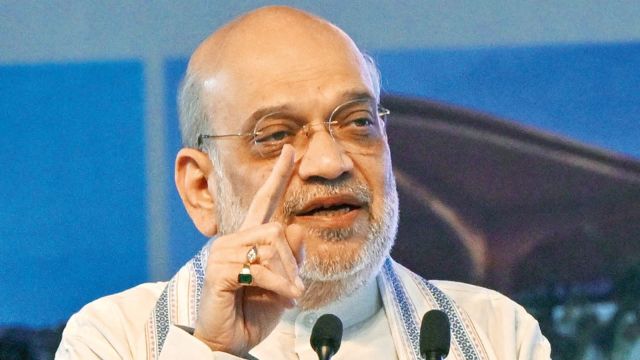
Union Home Minister Amit Shah unveiled the report at the two-day conference organised by the NCB. According to the data, Punjab recorded 163 cases of drug trafficking through drones, leading to the seizure of 187.149 kg of heroin, 5.39 kg of methamphetamine, and 4.22 kg of opium. In Rajasthan, 15 drone-related cases resulted in the recovery of 39.155 kg of heroin, while Jammu and Kashmir reported one drone case with 0.344 kg of heroin recovered.
Director General of NCB, Anurag Garg, noted that India’s geographical position between the “Death Crescent” — Afghanistan, Pakistan, Iran — and the “Death Triangle” — Myanmar, Thailand, Laos — places the country in a vulnerable spot as these regions are major drug-producing zones. He explained that Punjab, Rajasthan, and Jammu and Kashmir are prone to heroin smuggling from Pakistan, while the north-eastern states, including Manipur, Mizoram, Nagaland, Assam, and Arunachal Pradesh, are impacted by proximity to Myanmar. Additionally, coastal states such as Mumbai, Gujarat, Kerala, and Tamil Nadu are increasingly being exploited for smuggling synthetic drugs and precursors.
Home Minister Shah stressed the need to bring drug lords operating from abroad under the ambit of Indian law, stating that the government is determined to wipe out narcotics. “The CBI has done very good work on this. I appeal to all heads of ANTF that with the help of the CBI, they should make the arrangement for the extradition of fugitives. This will not only help in breaking the narcotics gangs but also the terrorism gangs. Action is also being taken against those involved in the retail trade of drugs,” he said.
Shah emphasised that the battle has moved beyond arresting small-scale peddlers to dismantling three categories of cartels: those controlling entry points, those distributing from entry points to states, and those selling within smaller areas. He urged states to adopt high-level strategies against all three, employing advanced tools such as darknet analysis, cryptocurrency tracking, communication pattern analysis, logistics and financial flow tracking, metadata analysis, and machine learning models.
Highlighting the global context, Shah said some nations have recognised the link between drug abuse and development challenges. He warned that India’s proximity to two of the world’s major drug supply regions makes it imperative to intensify the fight. “Unfortunately, two of the regions from where drugs are supplied globally are very close to us. So this is the time that we fight against it strongly,” he said.