Nigeria’s oil sector is accelerating efforts to capitalise on crude prices nearing $100 per barrel, as the Nigerian Upstream Petroleum Regulatory Commission (NUPRC) moves to fast-track approvals and boost exploration activities across the industry.
The development comes as the Commission granted a three-year Petroleum Exploration Licence (PEL) No. 5 to SeaSeis Geophysical Limited, in partnership with the Commission and TGS, to acquire and process new 3D seismic and gravity data aimed at strengthening exploration outcomes.
The agreement, officially executed at the Commission’s headquarters in Abuja, also authorises the partnership to issue data-use licences, with revenues to be shared between SeaSeis and the Commission. The project covers an offshore area of 11,700 square kilometres in the Eastern Niger Delta, spanning water depths of 400 to 2,800 metres.
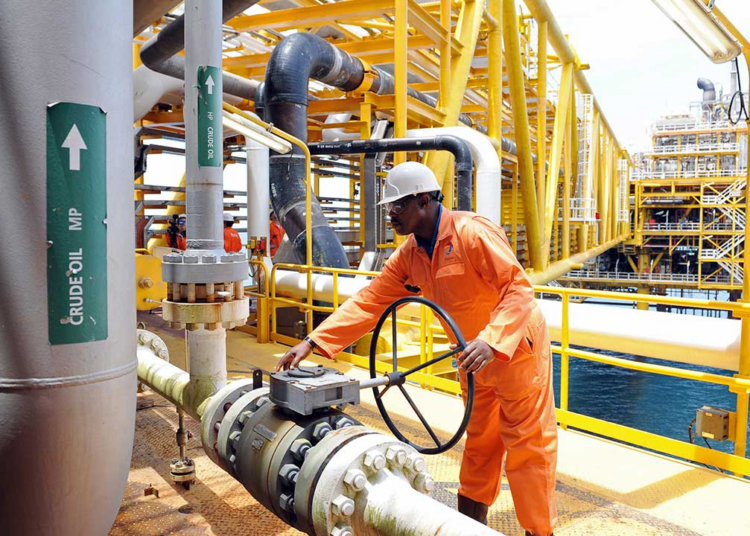
In parallel, the NUPRC has significantly reduced approval timelines for reviving idle wells, cutting processing periods from weeks to hours, according to individuals familiar with the process. The regulator is also expediting approvals for evacuations and barge operations at production facilities and export terminals, as part of broader efforts to increase output.
A spokesperson at the Commission noted that “speedy approvals” are now being granted for all activities capable of boosting production. The surge in applications has largely come from indigenous oil companies seeking to re-enter dormant wells, supported by a streamlined approval system that previously took between two and six weeks.
Repairing suspended or ageing wells has been identified as a cost-effective alternative to drilling new ones, which typically require years of planning. Crude from rehabilitated wells can also reach the surface within an average of four weeks, providing a quicker path to increased output.
Nigeria’s crude production declined to 1.31 million barrels per day in February, the lowest level in 17 months, largely due to maintenance work at a 225,000 barrels-per-day facility operated by Shell Plc. Output has yet to return to levels above 2 million barrels per day, limiting the country’s ability to fully benefit from rising global oil prices compared to peers such as Angola.
The country, a member of the Organization of the Petroleum Exporting Countries (OPEC), averaged 1.34 million barrels per day in 2022 when oil prices surged to as high as $130 per barrel following the Russian invasion of Ukraine. The government has set a production target of 1.84 million barrels per day for the current year, a benchmark that has remained difficult to achieve.
The regulator approved 500 permits to reopen dormant wells in 2024, including for companies such as Heirs Energy, owned by Tony Elumelu, and Seplat Energy Plc, as part of efforts to ramp up production.
The PEL No. 5 project is expected to unlock stronger exploration prospects, improve subsurface understanding, and support more efficient development of Nigeria’s hydrocarbon resources, in line with provisions of the Petroleum Industry Act (PIA) 2021.
Speaking at the signing ceremony, the Chief Executive of NUPRC, Oritsemeyiwa Eyesan, said the issuance of the licence reflects the Commission’s commitment to data-driven exploration, transparency, and long-term value creation for the oil and gas sector.
Eyesan emphasised that exploration is driven by confidence in data and processes, noting that the PEL No. 5 initiative highlights the importance of credible partnerships in achieving national production and reserves growth targets.
“The PIA recognises that we assign licenses on non-exclusive acreages to contractors who are willing to carry out exploration activity, and as the chief superintendent of the industry, we also ensure that we maintain our production targets, including reserves, and the only way we can achieve that successfully is if we have partners who are willing to explore,” the CCE said.
She further stated that the execution of the PEL No. 5 licence signals a growing appetite for exploration within the sector.
In his remarks, the Managing Director of SeaSeis Geophysical Limited, Goke Adeniyi, described the project as the company’s largest in Africa, underscoring the scale of opportunity within Nigeria’s upstream oil sector.
“We are pleased to be here, not just as SEASEIS but in partnership with TGS,” Adeniyi said.
He added that the PEL 5 area was carefully selected, covering approximately 11,700 square kilometres in the Outer Fold and Thrust Belt of the eastern Niger Delta, widely regarded as Nigeria’s most prolific but geologically complex hydrocarbon region.
“Using TGS GeoStreamer dual-sensor tech with long offsets, wide tow and triple-source – broadband acquisition technology.
“We are confident that the resultant high-fidelity 3D seismic data will provide operators with the data quality needed to evaluate prospects with greater confidence,” he stated.