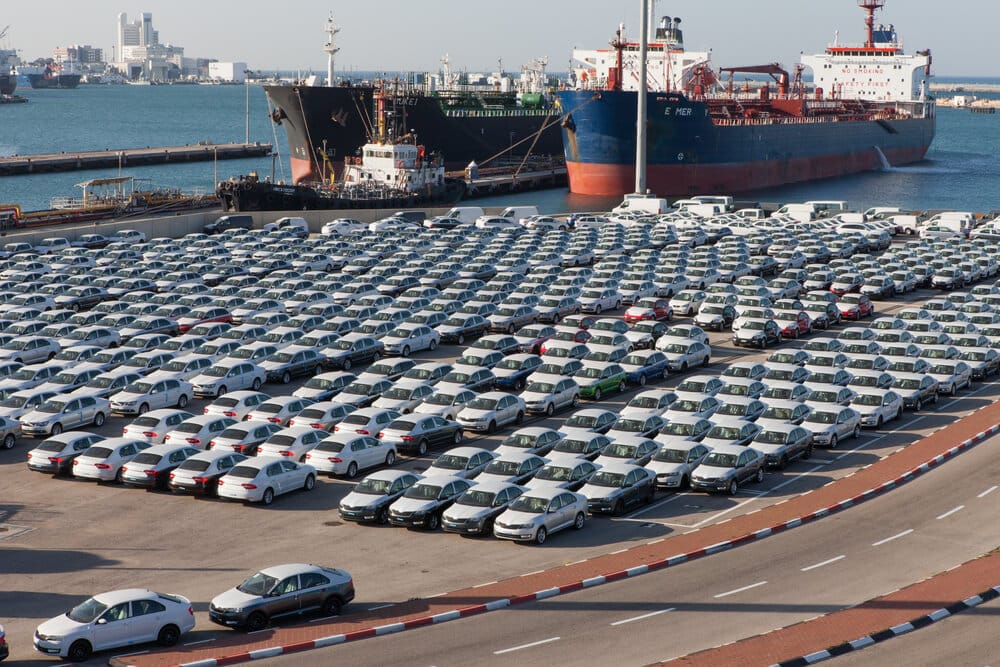
Nigeria’s import bill for vehicles, aircraft, vessels and related transport equipment rose sharply to N1.75 trillion in the first quarter of 2026, reflecting sustained domestic demand despite ongoing policy efforts to strengthen local production.
Data from the National Bureau of Statistics (NBS) Foreign Trade in Goods Statistics showed that imports under the category “Vehicles, Aircraft and Parts Thereof; Vessels etc.” increased from N1.22 trillion in the corresponding period of 2025 to N1.75 trillion in Q1 2026.
The figure also represents a significant jump from N850.63 billion recorded in Q1 2024 and N396.99 billion in Q1 2023, underscoring a steady upward trajectory in Nigeria’s spending on transport-related imports over the past three years.
The data indicates that Nigeria’s reliance on imported transport equipment continues to deepen, even amid government initiatives aimed at promoting local manufacturing and reducing import dependence.
Within the breakdown, passenger motor car imports rose sharply under the Broad Economic Categories classification, increasing by 145.94 per cent year-on-year to N552.34 billion in Q1 2026, compared to N224.58 billion recorded in the same period of 2025.
The sustained rise reflects growing demand for both commercial and private vehicles as economic activities gradually expand across key sectors of the economy.
Industry analysis shows that the United States remained the dominant source of passenger and used vehicle imports into Nigeria in 2025 and early 2026, accounting for more than 80 per cent of total import value in that segment. Other key suppliers include the United Arab Emirates, Canada, South Africa, as well as European countries such as Germany, Italy and the United Kingdom.
Beyond road transport, imports of aircraft, marine vessels and associated spare parts also contributed significantly to the overall increase in transport equipment expenditure during the period.
Stakeholders attribute the rising import volumes to expanding commercial transportation needs, recovery in economic activities, and limited domestic capacity to fully meet demand for vehicles and specialised transport equipment.
Despite ongoing government interventions, Nigeria continues to rely heavily on imports to bridge supply gaps in the automotive sector.
The Federal Government has implemented policies such as the National Automotive Industry Development Plan, designed to encourage local assembly and attract investment into domestic vehicle production.
Several assembly plants currently operate in the country, producing a range of passenger and commercial vehicles for the local market, while broader transport reforms have also promoted the adoption of alternative fuel and electric vehicle technologies.
However, imported vehicles and transport equipment continue to dominate the market, highlighting the persistent structural challenges facing Nigeria’s automotive industry and its long-standing dependence on foreign supply chains.