
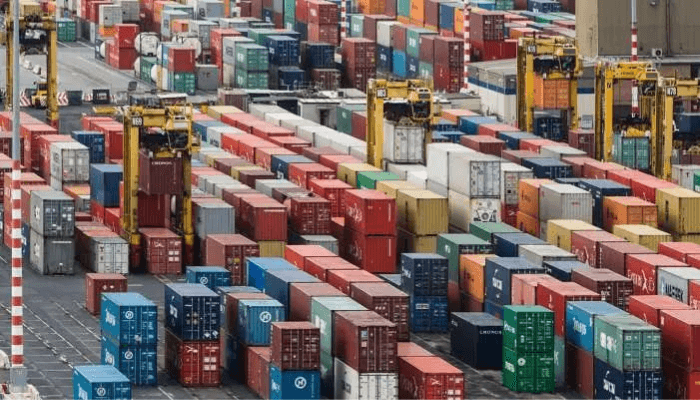
In 2023, Nigerian seaports experienced a fluctuation in key metrics, as revealed in the recent port performance report presented at the Nigerian Port Consultative Council meeting in Lagos.
The report indicates a decline in container traffic, with 1,566,162 Twenty Equivalent Units (TEUs) recorded, marking a 6.8% decrease from the previous year’s 1.68 million. Vessel calls also saw a downturn, down by 4.5% to 3,778 compared to 2022’s 3,957.
Cargo throughput, excluding crude oil, amounted to 70.47 million metric tons, reflecting a 6.4% decrease from 2022’s 75.27 million metric tons. However, the volume of cargo entering Nigerian ports saw a slight uptick, reaching 122.87 million metric tons, up by 2.1% from 2022’s 120.37 million metric tons.
Import container traffic dominated at 55.85%, totaling 874,683 TEUs, while export container traffic stood at 684,586 TEUs, representing 43.71% of the total. Notably, a significant portion of export container traffic comprised empty containers, making up about 80% of the total.
The report highlights a noteworthy improvement in vessel turnaround time, averaging at 4.0 days compared to 5.1 days in 2022. This improvement is attributed in part to the impact of the Lekki Deep Seaport, which achieved an impressive turnaround time of just one day.
Furthermore, an increase in Gross Registered Tonnage (GRT) was observed despite fewer vessel calls, indicating the berthing of larger vessels, particularly at Lekki Port. The average GRT of vessels at Lekki Port is noted to be 45,185, surpassing Apapa’s 30,565 GRT. This underscores the significance of deep-sea ports in Nigerian maritime and port development efforts.

