The newly constructed bridge linking Festac Town and Alakija in Lagos is facing growing security and environmental concerns, with critical infrastructure vandalised and the area beneath the bridge allegedly taken over by illegal structures, refuse dumps and activities associated with metal scavenging.
Beyond the stripping of iron rods, steel reinforcements, cables and other materials critical to the bridge, the environment underneath the structure has become increasingly unsafe, raising concerns over public safety, environmental violations and the apparent absence of sustained government enforcement.
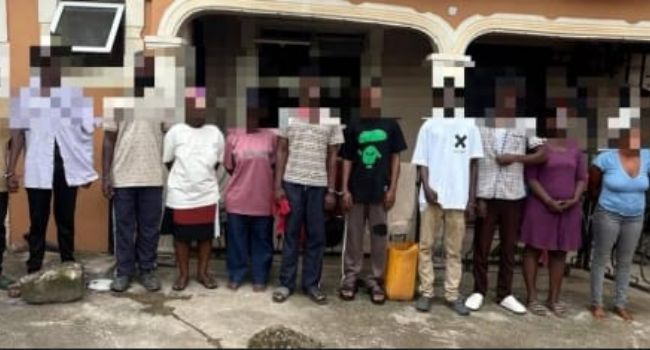
On Friday, August 7, 2026, the Lagos State Government arrested 27 people in the area for allegedly vandalising the newly constructed bridge.
The Commissioner for the Environment and Water Resources, Tokunbo Wahab, described the incident as a serious threat to public safety and government infrastructure.
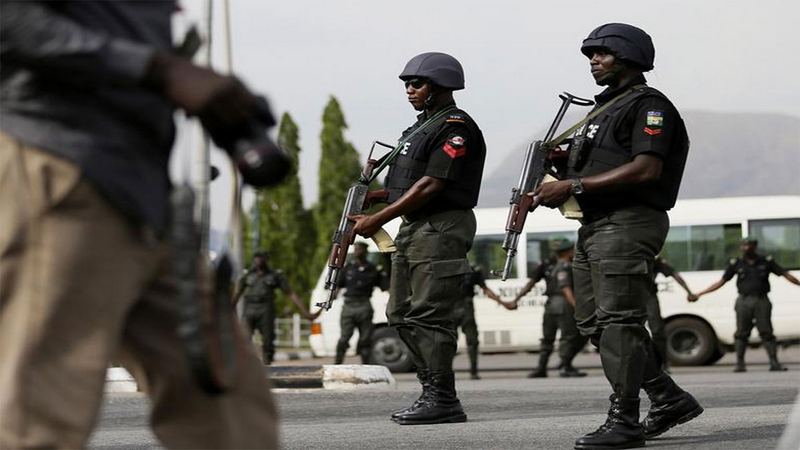
According to Wahab, the suspects were arrested during a joint overnight operation involving operatives of the Rapid Response Squad (RRS) and the Kick Against Indiscipline (KAI) task force.
He said the state government would continue to clamp down on vandalism and other offences threatening public infrastructure.
Governor Babajide Sanwo-Olu, who spoke through the Commissioner for Information and Strategy, Gbenga Omotoso, directed security agencies to apprehend those responsible for the vandalism.
“Lagos will not tolerate any act of vandalism because it is barbaric and criminal,” Sanwo-Olu said.
He added: “I have been informed by officials of the Office of Infrastructure who visited the bridge that the structural integrity of the bridge is intact and remedial work will be executed immediately to protect the columns.
“Anyone who is found to be culpable in this horrendous, shameful and condemnable incident will surely face the law. Lagos has no place for such barbarism and acts of violence against our critical infrastructure and other facilities.
“Lagosians are enjoined to keep an eye on public facilities to protect them against senseless attacks.”
However, a visit to the area shortly after 11 a.m. on Saturday, August 8, painted a disturbing picture of the environment beneath the bridge.
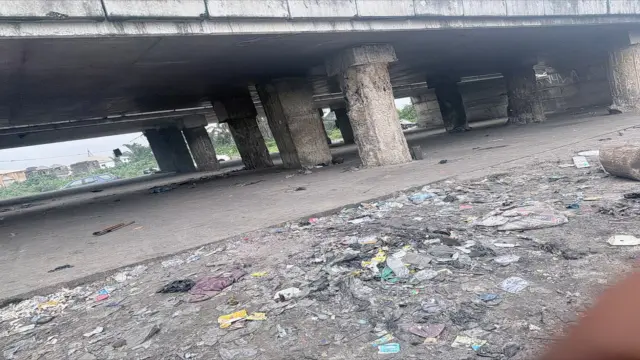
The area appeared largely uncontrolled, with makeshift structures, refuse dumps and activities suggesting that the location had become a haven for scavengers and other potentially criminal activities.
Both sides of the bridge on the Festac end were being used as refuse dumps, with fires reportedly set regularly to burn materials and extract metals. Several shanties had also been erected on the left-hand side.
The Alakija end of the bridge, located on the left side of the Mile 2-Badagry Expressway, was similarly overgrown, with destitute persons reportedly sleeping beneath the structure.
The section of the bridge from which critical materials were allegedly stripped is bounded by a creek on the left and an illegal dumpsite operated by cart pushers on the right when descending the bridge towards Festac.
The area underneath the bridge was also observed to have been repeatedly set ablaze by men removing materials and scavengers who have turned the location into a makeshift settlement.
A prolonged observation of the area showed little evidence of ordinary public use despite the presence of churches and residential estates nearby.
The atmosphere also raised concerns about the security risks associated with entering or passing through the area.
A man approached during the visit and offered to guide the visitor through the area for a fee. As the journey progressed deeper beneath the bridge, several men began paying closer attention, with suspicious glances and conversations conducted in Hausa.
The increasingly tense atmosphere made the area appear unsuitable for ordinary public movement.
The concerns were further heightened by the apparent absence of residents or commuters passing through the location during the period of observation.
The situation has raised questions over how the area became occupied by scavengers, illegal structures and refuse collectors despite the strategic importance of the bridge and its proximity to residential communities.
When contacted on why the men remained in the area and why enforcement had yet to completely clear the location, Omotoso said the government was already taking action.
“The clearing is ongoing. The governor has spoken and what he said is final on the matter,” he said.
Asked why KAI officials had been deployed and why shanties were being removed, Omotoso said the state government had commenced a broader programme to clear bridges and other public spaces across Lagos.
“Don’t bother yourself, we have a programme we are doing. We cleared Obalende and Ijora Bridges and other bridges will be cleared,” he said.
The development underscores the wider challenge of protecting critical infrastructure in Lagos, where vandalism, illegal settlements, indiscriminate dumping and metal scavenging continue to pose risks to public facilities and urban safety.