The National Cashew Association of Nigeria (NCAN) has sounded an alarm over the severe exploitation of cashew farmers at the farm gate, significant distortions within the industry’s value chain, and the damaging impact of unregulated foreign involvement in the nation’s cashew market.
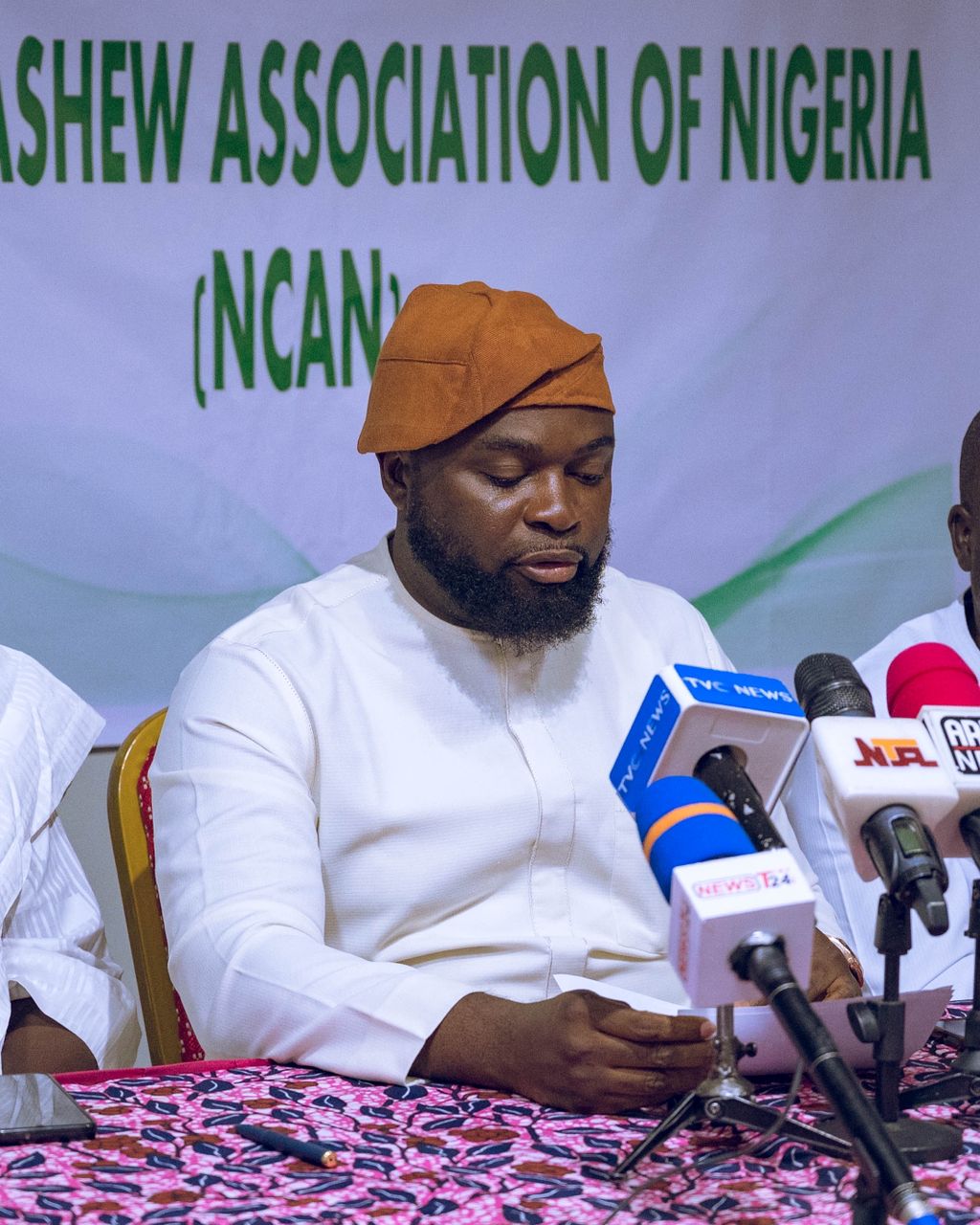
During a stakeholders meeting held in Abuja on Monday, the National President of NCAN, Ademola Adesokan, stated that the sector has been plagued by widespread exploitation at the farm level, emphasizing an urgent need for structural reforms to address the crisis.
“Our farm gates are being exploited. That’s one of the major issues in the industry. What we are doing now is to try to create some kind of a body that can help bring maybe customs, immigration into the system so that it can help us protect our farm gates,” he explained. “Those are one of the issues. We are getting exploited at the farm gate level. We need to put structure in the supply chain of the cashew industry in Nigeria,” Adesokan added.
Elaborating on these challenges, the National General Secretary of the Association, Olarotimi Ayeka, detailed how the unchecked activities of exporters and middlemen have severely disrupted the industry’s established value chain.
“These past few years, there has been a distortion of the value chain in the Nigerian cashew industry. What do I mean by value chain? The cashew industry is run by farmers. Unfortunately, for the past few years, there has been a distortion, because most of the so-called processors and exporters beat every other value chain and deal directly with the farmers, causing some distortion,” he noted.
He lamented that these exporters often unilaterally dictate prices to farmers, a practice that makes it impossible for local traders to compete and survive. “How this thing affects us negatively is that these so-called exporters will go directly to the farmers, and they give me a price of N1m delivered to Lagos. They will go directly to the farmers and buy N850,000. So we’ve been buying N900,000 from farmers. And the moment they give out the price, it will be difficult for me to even be able to trade and make money. At the end of the day, they only trade in Nigeria for two months.”
Ayeka further explained the transient nature of these foreign buyers, stating, “They only trade in February and March. The first thing that happens in the first week of April every year is that they run and leave the country. They push a lot of people to go and buy cashews at a very high price. But when they leave, they tell you they are going to Tanzania, going to Guinea-Bissau, the Ivory Coast, Benin Republic, and other countries, leaving our cashew here. As we speak now, there are lots of cashews in Nigeria today that the farmers are even discouraged. The traders are discouraged.”
The NCAN secretary also leveled serious accusations against certain individuals within the sector, claiming they are colluding with foreign buyers to deliberately undermine reform efforts. “We’ve tried several times to look at how this thing can be resolved. But unfortunately, they have some kind of arrangement with these exporters that is benefiting them personally. So they’ve been blocking all our efforts because they go to Indians, Lebanese, and the Chinese who are coming here to distort our value chain. They collect money from them. At the end of the day, they make our effort to be useless,” he alleged.
Faced with these internal obstacles, Ayeka stressed that the association had no choice but to turn to the Federal Government for urgent intervention to restore order and implement international best practices. “Then again, we went to the government and said they should play a role in the industry. We went to the government, for the government to come and regulate the industry, help out in reforming the industry for more profitability and growth. We don’t want our farmers to be frustrated. Our farmers, after the Indians come, only buy for one month or two months, and then they run away.”
He continued, “We now went to the government and said the government should come and help us regulate the industry. Because we realised that the problem we have is that we are not following the international best practices of doing this business.” According to him, the government has now responded by establishing an interim structure specifically designed to address these deep-seated challenges.
“Unfortunately, some individuals tried to block the effort of the federal government through the Ministry of Trade and Investment and the Ministry of Agriculture and Rural Development. But today we are happy. The government finally listened to us. And they have to constitute an interim government that will run the affairs of the association in collaboration with the government and all government agencies and bring more efficiency, bring more accountability, bring more growth and progress to all the value chain members in the industry,” Ayeka revealed.
He also strongly emphasized the critical need for value addition within Nigeria’s cashew industry as a key strategy to boost domestic job creation and increase foreign exchange earnings. “We want value addition. We are tired of exporting our prosperity. We are tired of exporting our jobs and employment. We are tired of exporting raw cashew nuts that are not benefiting us as much as they could. But now we are asking the government for value addition so that we can add value to what we produce. Then we can sell and make more money for ourselves and make money for the government in terms of forex.”
Speaking directly on the issue of foreign encroachment, he stated, “On the issue of encroachment, we have to stop it. The idea that a foreigner will come to Nigeria and go directly to the farm gate is not done anywhere in the world.” Ayeka concluded with a stern warning that continued unchecked foreign dominance, if left unaddressed, has the potential to completely cripple the sector. He said, “In those countries, because there is a respect for the value chain, they follow the international market. They buy at any price. They only trade for a maximum of two months in Nigeria. They will destroy the industry and go to other African countries.”
Nigeria ranks among Africa’s top producers of raw cashew nuts, with an annual output estimated to be between 300,000 and 500,000 metric tonnes. The crop is cultivated across major producing states such as Kogi, Enugu, Oyo, Kwara, and Niger, and it employs over 600,000 people in farming, processing, and trading activities. Cashew has solidified its position as one of the country’s leading non-oil exports, ranking as Nigeria’s third-largest export product by early 2025.
Despite this significant potential, the industry continues to face profound structural challenges. Reports from the Nigerian Export Promotion Council indicate that about 85 per cent of Nigeria’s cashew exports are in the form of raw nuts, which are mostly shipped to India and Vietnam for processing, while only a small fraction is processed within the country. Nigeria’s installed domestic processing capacity is around 25,000–35,000 tonnes annually, but currently, only about one-third of that capacity is being utilized. This underutilization means the country continues to lose billions of dollars in potential earnings from value addition. In 2022, Nigeria exported over 315,000 tonnes of raw cashew worth about $252 million, while in the first half of 2025 alone, cashew nut exports surged to $398.1 million, marking an 81 per cent increase compared to the same period in 2024.