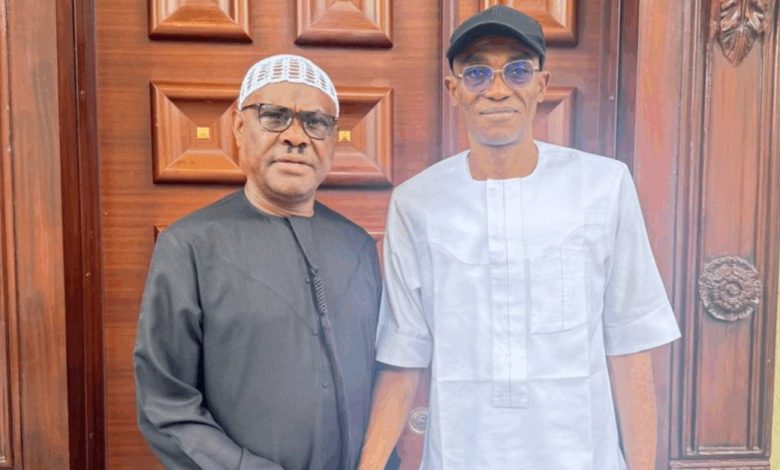
The embattled National Chairman of the Labour Party, Julius Abure, has broken his silence over the controversy surrounding his recent visit to the Minister of the Federal Capital Territory, Nyesom Wike.
The meeting, which was captured in photographs that quickly went viral, sparked widespread debate within political circles and provoked sharp reactions from members of his own party.
Abure addressed the issue during a high-level National Executive Committee meeting of the Labour Party held in Abuja. Speaking directly to party members and stakeholders, he clarified that the visit to the FCT Minister was strictly a private engagement that had no political undertones or implications. He insisted that his interaction with Wike was a personal matter, devoid of any hidden agenda or political negotiation.
According to him, his position as a citizen of Nigeria grants him the right to visit and engage with any public official, regardless of political affiliations. He maintained that residing in the Federal Capital Territory naturally brings him into proximity with government officials, and he dismissed the uproar over the visit as unnecessary and misguided. Abure explained that the meeting had been blown out of proportion by those he described as detractors who are eager to capitalise on any opportunity to malign his leadership.
Abure went further to remind the party of his contributions to the growth of the Labour Party under his leadership. He stated that the party has risen to become one of the most significant political forces in Nigeria today, a development he credited to the hard work, sacrifice, and dedication of his team. He warned against internal sabotage and cautioned party members to focus on building unity rather than fanning the flames of discord.
The visit, however, has intensified the already existing divisions within the Labour Party. A faction opposed to Abure’s leadership accused him of fraternising with political opponents, describing the visit as a betrayal of the party’s core principles. They argued that by engaging in private meetings with an official aligned with the ruling establishment, Abure has compromised the party’s stand as an opposition force. The faction further claimed that such actions undermine the credibility of the Labour Party’s struggle for political reform and social justice.
Despite the backlash, Abure remains resolute in his position, insisting that his visit to Wike was neither a political realignment nor a betrayal of the party’s values. He reaffirmed his commitment to the Labour Party’s ideals and assured members that he would continue to provide leadership that prioritises the party’s interests.
The controversy surrounding the visit comes at a time when the Labour Party is battling internal crises and factional disputes. The party has been riddled with leadership tussles, legal battles, and allegations of financial mismanagement. The latest incident has only deepened the cracks within the party, with rival factions seizing the moment to question Abure’s loyalty and leadership style.
Political observers believe that the growing tensions within the Labour Party could weaken its position ahead of future elections if not properly managed. They warn that internal wrangling, if left unresolved, might derail the party’s momentum and alienate its support base.
For now, Julius Abure has drawn a line in the sand, declaring that he will not be swayed by what he described as orchestrated attempts to tarnish his reputation. He urged party members to rise above petty politics and focus on the broader goal of positioning the Labour Party as a credible alternative in the Nigerian political landscape.