
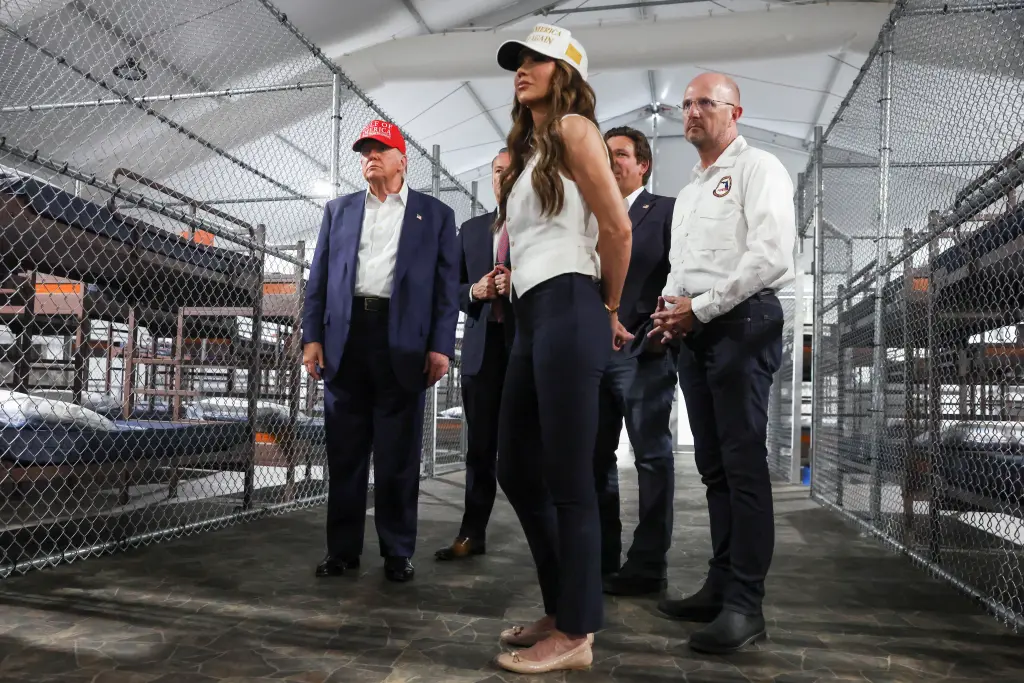
Photos have emerged from Alligator Alcatraz, the newly established immigration detention facility in the Florida Everglades. Built in just nine days at the Dade-Collier Training and Transition Airport, the site is designed to hold up to 5,000 migrants in tents and trailers.
It’s surrounded by swamps inhabited by alligators and pythons—an intentionally remote and imposing location.
President Trump recently toured the facility alongside Governor DeSantis and the DHS Secretary. He described the area as hazardous, saying it felt more like a deterrent than a refugee camp. He even joked that the only escape might be through deportation.
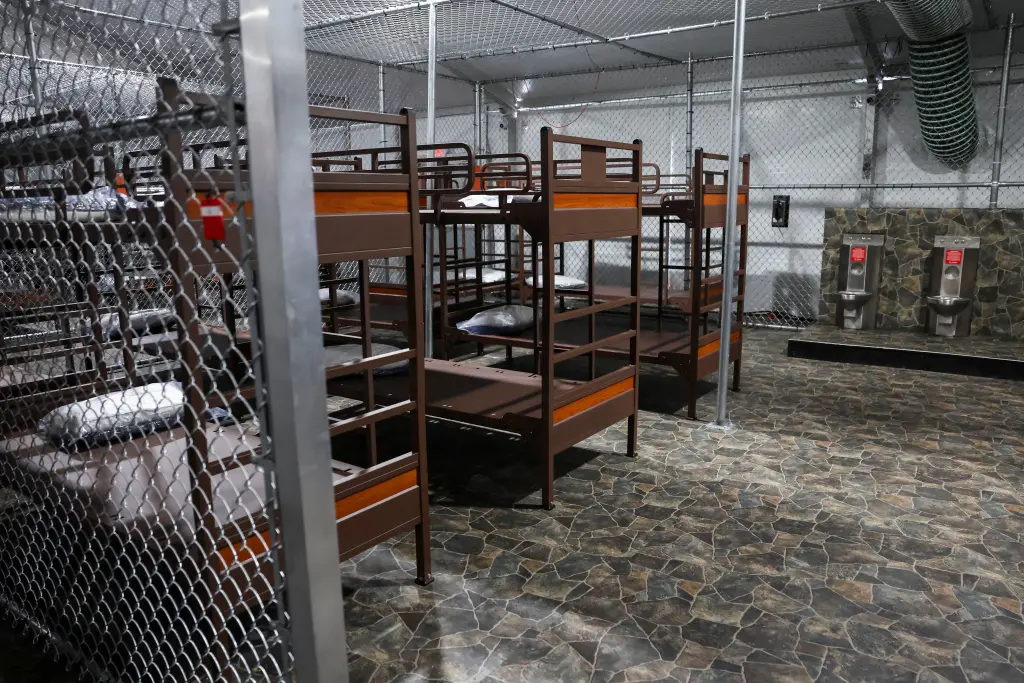
The site includes portable housing units, medical tents, showers, generators and high fencing. Officials say the natural wildlife and swamp surroundings serve as a “security perimeter” that’s both cost-effective and formidable.
Despite the official positioning, the facility has sparked heated controversy. Protesters gathered at the entrance with signs demanding humane treatment and an end to cage-like detention. Environmental groups and Indigenous communities have criticized the rushed construction, arguing it threatens the delicate Everglades ecosystem and may have bypassed essential environmental assessments.
There are growing legal challenges centered on the lack of environmental reviews and public consultation. Critics have also raised moral concerns, noting that many of the migrants are non-violent and that such harsh conditions forecast an urgent need for oversight.
As the camp begins operations, the debate intensifies over whether this model prioritises swift immigration control—or represents an extreme, ethically questionable strategy.

