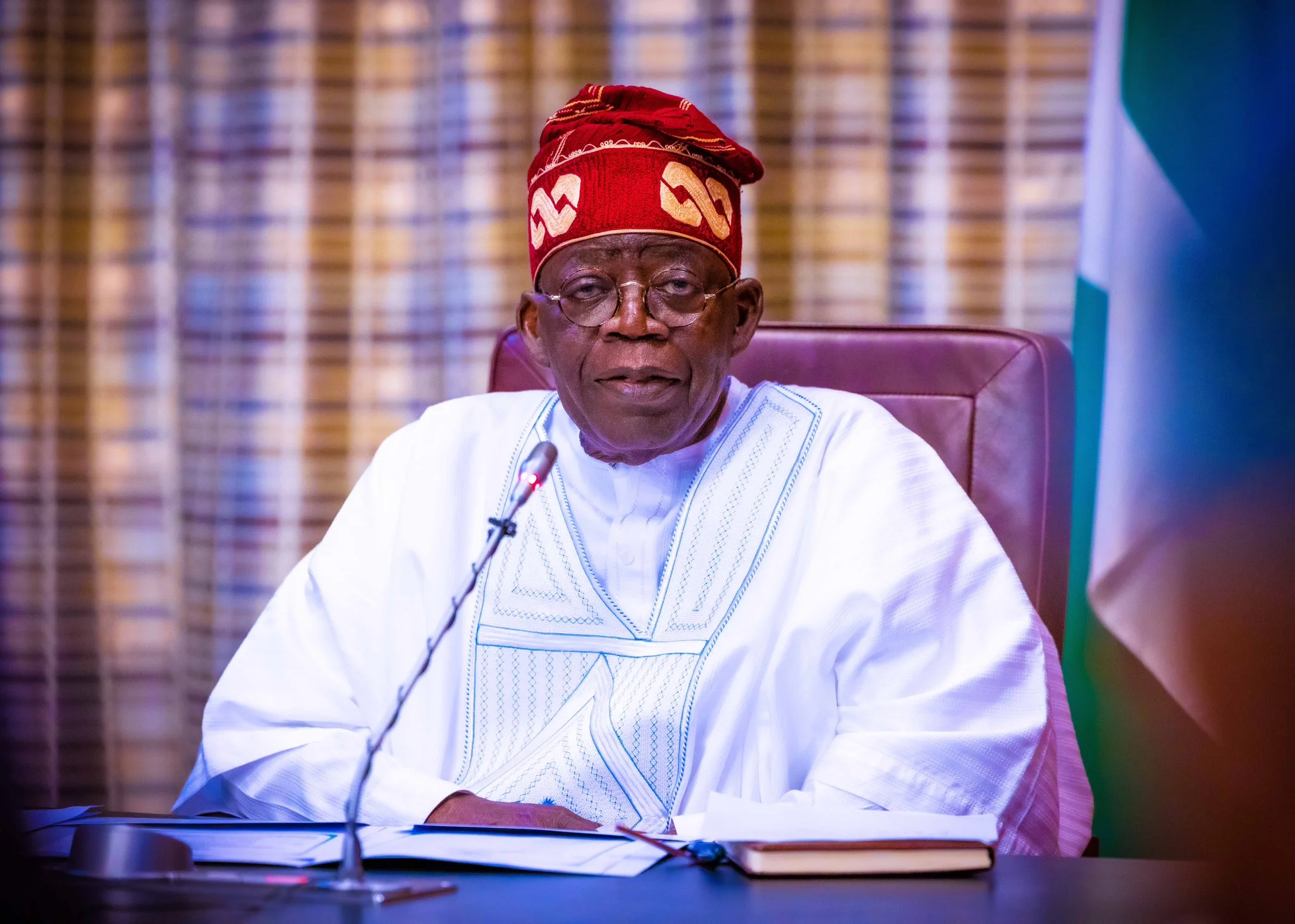
President Bola Tinubu has officially launched the Renewed Hope Conditional Cash Transfer Programme, designed to provide assistance to vulnerable groups in Nigeria, amid economic uncertainties and the removal of fuel subsidies.
The program is expected to cost at least N1.125 trillion over the next three months, benefiting approximately 62 million recipients with N75,000 each.
The initiative was unveiled to mark the International Day for the Eradication of Poverty at the Presidential Villa in Abuja.
President Tinubu revealed that the program specifically targets 15 million households, aiming to uplift the poor and vulnerable segments of the Nigerian population. He emphasized the government’s commitment to providing opportunities for dignified work and sustained social protection.
Key components of the initiative and investments announced by President Tinubu include:
– Investment of N100 billion for the purchase of 3,000 compressed natural gas (CNG) powered buses to enhance affordable transportation.
– Investment of N200 billion to cultivate 500,000 hectares of farmland to improve food security.
– Distribution of 2000 metric tons of grains from strategic grain reserves to households across the 36 states and the Federal Capital Territory.
– Distribution of 225,000 metric tons of fertilizer and seedlings to farmers.
– Release of N75 billion to support 100,000 small and medium-sized enterprises (SMEs) and startups.
– Launch of the Renewed Hope Shelter Programme for the Poor, Refugees & Internally Displaced Persons, benefiting one million households.
– Establishment of the Renewed Hope Business Grants & Loans for vulnerable market women, farmers, and traders.
– Introduction of the Renewed Hope Skill Acquisition Program for young Nigerians.
– Launch of the Renewed Hope National Home Grown School Feeding Programme, providing school meals for 10 million school children.
– Implementation of the Renewed Hope Alternate School Programme for 10 million out-of-school children.
– Development of programs for at-risk children, community and social development projects, and job creation schemes.
The President emphasized the importance of cooperation among citizens, the Ministry of Humanitarian Affairs and Poverty Alleviation, and development partners in the fight against poverty.
Betta Edu, the Minister of Humanitarian Affairs and Poverty Alleviation, warned that ignoring poverty alleviation would have severe consequences, and the president’s commitment to eradicating poverty in Nigeria by 2030 is a critical step in this direction. She encouraged public and private sector involvement to ensure the success of these programs.
President Tinubu also highlighted the various interventions designed to tackle different dimensions of poverty in the country and called on all stakeholders to work together to achieve the goal of poverty eradication in Nigeria.