
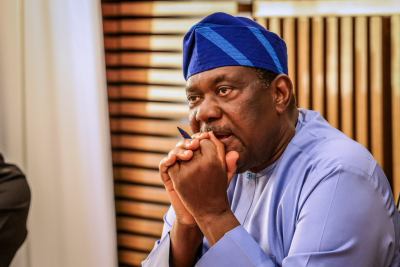
The Federal Government has warned that drug abuse and illicit trafficking pose a serious threat to Nigeria’s national development, public health and security, stressing that tackling the growing menace requires a coordinated national response involving all sectors of society.
The warning was delivered by the Secretary to the Government of the Federation, George Akume, who was represented by the Permanent Secretary, General Services Office, Ibrahim Kana, at the National Drug Use Summit jointly organised by the Federal Ministry of Health and Social Welfare, the National Drug Law Enforcement Agency (NDLEA) and the United Nations Office on Drugs and Crime (UNODC) in Abuja.
Speaking on the theme, “Addressing Illicit Drug Use and Trafficking: A Call to National Action,” Akume said combating illicit drugs could not be left to a single ministry or agency.
“It is a glaring call to every Nigerian in government and out of government to recognise that the fight against illicit drugs is not the burden of one agency, not the burden of one ministry, not the burden indeed of one sector alone. It is a national responsibility that calls for a national response,” he said.
He noted that drug abuse and trafficking have become major global threats affecting public health, national security, social cohesion and economic development, adding that Nigeria continues to face the devastating consequences of substance use disorders.
“We continue to witness with great concern the devastating toll of substance use disorders on our people, which includes rising cases of mental illness, broken families, interrupted education, unemployment and, of course, crime,” he said.
Akume identified young Nigerians as the group most vulnerable to drug abuse, warning that widespread addiction among the youth poses a direct threat to the country’s future.
“Their vulnerability to drug abuse and addiction is not merely a personal tragedy for each affected family. It is a direct threat to our national development,” he said.
He also raised concerns over the increasing links between illicit drug trafficking and organised crimes such as violent extremism, banditry, kidnapping and money laundering, noting that criminal networks continue to exploit vulnerable communities.
According to him, substance use disorders should not be viewed solely as criminal justice issues but as complex public health and social challenges requiring comprehensive interventions.
“No single institution, however capable, can address this problem in isolation. What is required, therefore, is a whole-of-government approach, a whole-of-society approach,” he said.
Akume called for stronger intelligence sharing among security agencies, improved inter-agency collaboration, enhanced research and data systems, and the development of resilient communities capable of responding effectively to drug-related challenges.
“No nation can achieve sustainable development when its young population is threatened by drug abuse and addiction,” he added.
In his welcome address, Chairman and Chief Executive Officer of the NDLEA, Brig. Gen. Buba Marwa (retd.), described the summit as a national platform for dialogue and collective action against the growing burden of drug abuse and substance use disorders.
Marwa acknowledged the agency’s successes in reducing both drug supply and demand but maintained that lasting progress would require broader collaboration across government and society.
“The scale of this challenge demands a whole-of-government and whole-of-society response, one that mobilises every stakeholder: government institutions, communities, families, development partners, the private sector, religious and traditional leaders, civil society and the media,” he said.
He explained that the summit provides an opportunity to develop a coordinated National Action Plan focused on prevention, treatment, rehabilitation, data collection, policy implementation and community resilience.
Highlighting the agency’s recent achievements, Marwa disclosed that over the last 18 months, the NDLEA arrested 29,262 suspected drug offenders, seized 5,305,484.88 kilograms of assorted illicit drugs valued at more than N1.5 trillion, and secured the conviction of 5,225 offenders.
He added that the agency conducted 6,645 drug prevention and awareness programmes across schools, worship centres, workplaces, markets, motor parks, communities and correctional facilities, reaching nearly five million Nigerians with anti-drug education.
Marwa further revealed that 13,508 drug users received counselling, treatment and rehabilitation through the agency’s 31 rehabilitation centres nationwide.
He also highlighted the NDLEA’s Alternative Development Initiative for Cannabis sativa growers, which supports farmers in transitioning from illegal cannabis cultivation to legitimate cash crop production and other sustainable livelihoods.
Expressing optimism about the country’s efforts, Marwa said sustained collaboration and shared responsibility would significantly reduce drug abuse and build a healthier, safer and more prosperous Nigeria.
Also speaking, the Minister of Health and Social Welfare, Prof. Ali Pate, urged stakeholders to ensure the summit produces tangible outcomes rather than remaining a platform for discussions alone.
“The measure of this summit will not be the communiqué. It will be the number of young people who choose not to start drugs. It will be the number of patients who sleep without pain. It will be the number of families restored. The Federal Ministry of Health stands ready to lead, to coordinate, to collaborate and to deliver,” he said.
The Country Representative of the United Nations Office on Drugs and Crime, Cheikh Toure, represented by Dr. Akanidomo Ibanga, commended the collaboration among government institutions, civil society organisations, development partners and the private sector.
He reaffirmed the United Nations’ commitment to supporting Nigeria in implementing a comprehensive, balanced and evidence-based strategy to address illicit drug use and trafficking.
The summit comes as Nigeria continues to intensify efforts to curb drug abuse, strengthen rehabilitation services and dismantle trafficking networks amid growing concerns over the links between illicit drugs, organised crime and insecurity.

