
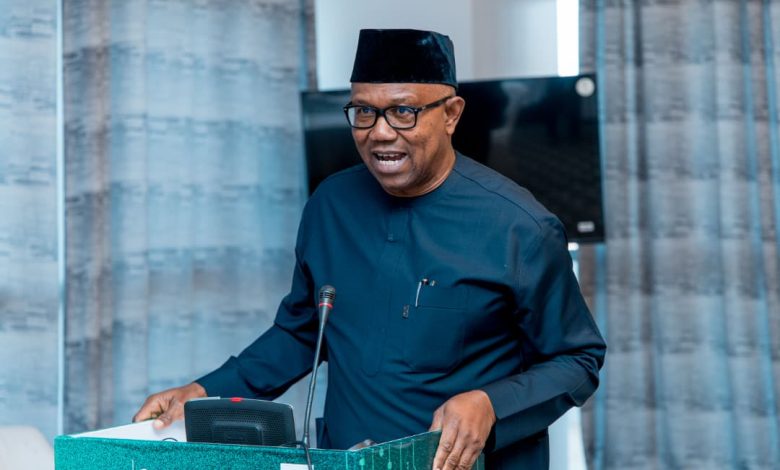
The presidential candidate of the Nigeria Democratic Congress, Peter Obi, has condemned the remand of activist and publisher Omoyele Sowore at the Kuje Correctional Centre, describing the development as a “dangerous regression for our democracy.”
Obi, in a statement released on Tuesday, expressed concern over the court decision and warned against what he described as the increasing use of state institutions in ways that could restrict dissent and weaken civic freedoms in Nigeria.
His reaction followed a ruling by the Federal High Court in Abuja on Monday, where Justice Mohammed Umar ordered Sowore to remain in custody pending the determination of his application seeking a stay of execution of an earlier order revoking his bail.
The court also dismissed an application filed by Sowore seeking the judge’s recusal over allegations of bias.
Reacting to the development, Obi said the judiciary remains an important institution for justice but stressed the need to protect democratic values and fundamental rights.
“Sowore being sent to prison: A dangerous regression for democracy. I have received, with deep concern, the news of the court’s remand of citizen activist Omoyele Sowore in Kuje Prison.
“While the judiciary remains the ultimate arbiter of justice, we must consistently guard against any trend that gives the appearance of state institutions being weaponised to systematically stifle dissent, muzzle the press, or shrink the legitimate space for civic engagement in Nigeria,” he said.
The former Anambra State governor stressed that democracy depends on the protection of citizens’ rights, including freedom of expression and peaceful assembly.
“A thriving democracy does not survive on the silencing of opposing voices; rather, it is anchored on the robust protection of fundamental human rights, most notably the freedoms of expression and peaceful assembly, as enshrined in our Constitution,” Obi added.
He warned that continued pressure on civic space could further weaken public confidence in government institutions, particularly amid ongoing challenges such as insecurity and economic hardship.
“Moreover, our society is already strained by insecurity and biting economic hardship; therefore, deliberate steps should be taken, even by the courts, to avoid inflaming the situation,” he said.
Obi also cautioned against viewing critics, activists and journalists as threats rather than participants in democratic accountability.
“When we begin to treat citizen critics, activists, and journalists as threats to state survival rather than as partners in building accountability, we signal a dangerous slide toward authoritarianism,” he stated.
He urged authorities to uphold constitutional safeguards and ensure that enforcement actions do not undermine democratic institutions.
“We cannot build a New Nigeria if we continue to undermine the very democratic structures meant to protect us all,” Obi said.
The development has also attracted criticism from rights groups, including the Socio-Economic Rights and Accountability Project, which argued that Sowore’s detention relates to the exercise of his civic rights.
The case continues to fuel debate over judicial independence, constitutional rights and the state of civic freedoms in Nigeria.

