
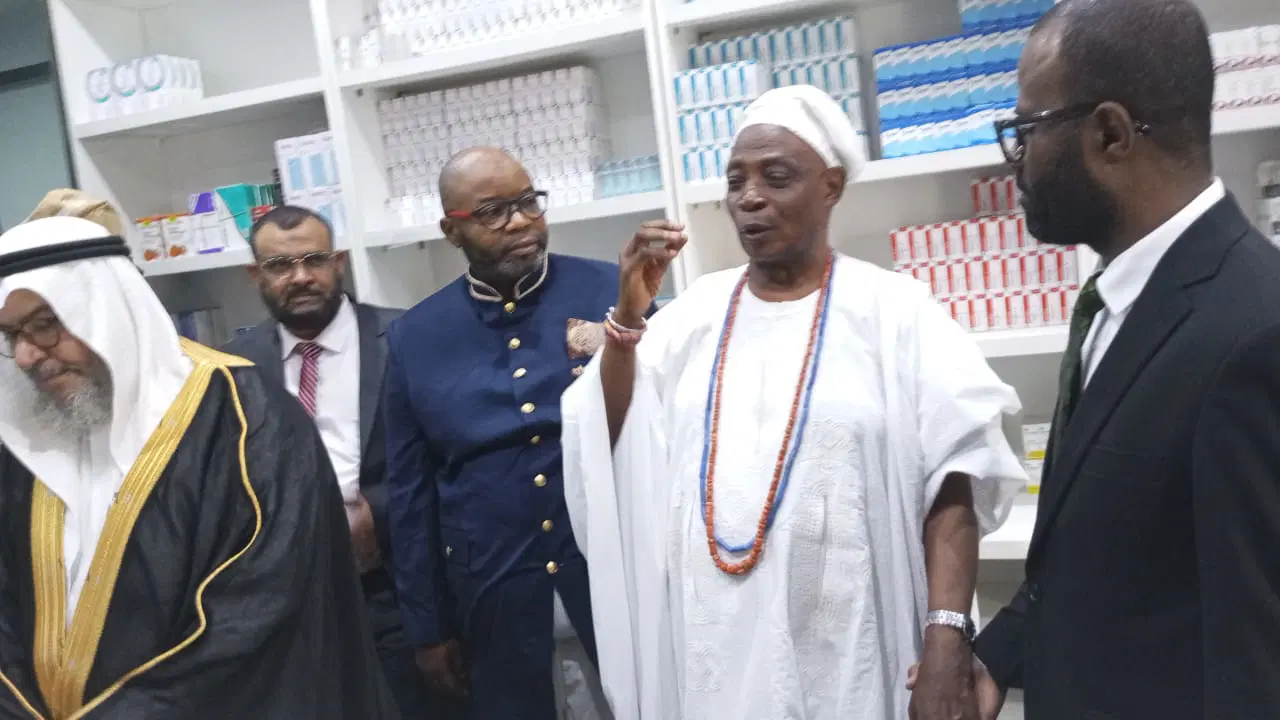
Efforts to reduce avoidable blindness and strengthen access to specialist eye care in Nigeria received a significant boost as Oyo State Governor, Seyi Makinde, the Olubadan of Ibadanland, Oba Rashidi Ladoja, and partners from Saudi Arabia commissioned the Makkah Specialist Eye Hospital in Ibadan.
The multi-million-naira facility, funded by the AlBasar International Foundation, is expected to expand access to advanced ophthalmic services, reduce cases of visual impairment and position Nigeria as a destination for specialist eye treatment within the West African sub-region.
The project reflects a long-standing partnership between Nigeria and the Kingdom of Saudi Arabia and highlights growing international collaboration in healthcare delivery and blindness prevention.
Represented by the Secretary to the State Government, Professor Musbau Babatunde, Governor Makinde described the hospital as a major addition to Oyo State’s healthcare infrastructure and a demonstration of his administration’s commitment to providing affordable, inclusive and quality healthcare through its universal health coverage agenda.
According to the governor, visual impairment remains a major public health challenge with far-reaching consequences for social inclusion, economic productivity and human capital development.
He said the state government has taken deliberate steps to institutionalise eye healthcare through the creation of a dedicated Eye Health Desk Office within the Directorate of Public Health and the deployment of desk officers across the 33 local government areas to coordinate grassroots implementation.
Makinde explained that the structure works alongside the Oyo State Eye Health Committee, chaired by a consultant ophthalmologist from the Ladoke Akintola University of Technology Teaching Hospital, Ogbomoso, to strengthen policy coordination and improve eye care services across the state.
The governor urged the management of the hospital to maintain close collaboration with relevant government agencies, particularly in the area of data sharing, to support evidence-based policymaking and effective allocation of healthcare resources.
He also commended the hospital’s leadership and development partners for their commitment to improving healthcare outcomes, reaffirming that the health sector remains a priority for his administration.
Speaking on the broader economic implications of the project, Professor Babatunde noted that vision loss imposes a significant social and economic burden, particularly on working-age citizens and elderly populations.
He said the specialist facility would contribute to improved educational outcomes for children, enhance workplace productivity and improve the quality of life of vulnerable groups.
According to him, access to world-class eye care services within Nigeria would help reduce medical tourism, retain healthcare spending within the country and generate economic benefits through job creation and increased local healthcare investments.
He also encouraged healthcare professionals at the facility to uphold the highest standards of professionalism and ethics while delivering compassionate care to patients.
In his remarks, the Olubadan of Ibadanland, Oba Rashidi Ladoja, reflected on the long journey that led to the completion of the project and commended the AlBasar International Foundation for its sustained humanitarian interventions.
The monarch recalled that during his tenure as governor of Oyo State between 2004 and 2005, the foundation conducted a large-scale free eye care outreach programme during which more than 500 surgeries were carried out within two weeks, restoring sight to numerous individuals, including people who had lived with blindness since birth.
Ladoja disclosed that nearly two decades ago he had proposed providing accommodation for the foundation if it could supply the required medical equipment, expressing satisfaction that the vision had eventually been realised.
He said the new specialist hospital, alongside the existing Eye Institute in Ibadan, would further strengthen the city’s position as a leading centre for ophthalmic care in West Africa.
The traditional ruler expressed optimism that advances in medical technology and sustained intervention programmes could significantly reduce avoidable blindness over the next decade.
Earlier, the Secretary-General of AlBasar International Foundation, Dr Adel Abdulaziz Al-Rushud, described Nigeria as a country he holds close to his heart, noting that every visit feels like returning home.
He explained that the hospital was the product of a shared vision pursued through collaboration among government institutions, non-governmental organisations and international stakeholders involved in the global fight against blindness.
According to him, the facility has been designed to work closely with both public and private healthcare institutions to improve access to specialist eye care services across the region.
Dr Al-Rushud expressed appreciation to the Al-Majid Public Establishment for equipping the hospital, as well as to Waqf Abna Nasir Ali Al-Suhaibani, the King Salman Humanitarian Aid and Relief Centre and international partners, including CBM, for supporting the project.
He said the successful completion of the facility reflected the commitment of all stakeholders to advancing humanitarian healthcare and preventing avoidable blindness.
A highlight of the commissioning ceremony was the presentation of awards to individuals recognised for their contributions to the successful completion of the project.
Members of the public also benefited from free eye care services during the event, including eye examinations, screenings and surgical procedures carried out by specialists at the newly commissioned hospital.
The commissioning comes at a time when governments and healthcare organisations are intensifying efforts to address avoidable blindness in Nigeria. Health experts have consistently identified early diagnosis, access to specialist care and sustained public awareness campaigns as critical measures for reducing vision impairment and improving overall eye health outcomes across the country.

