
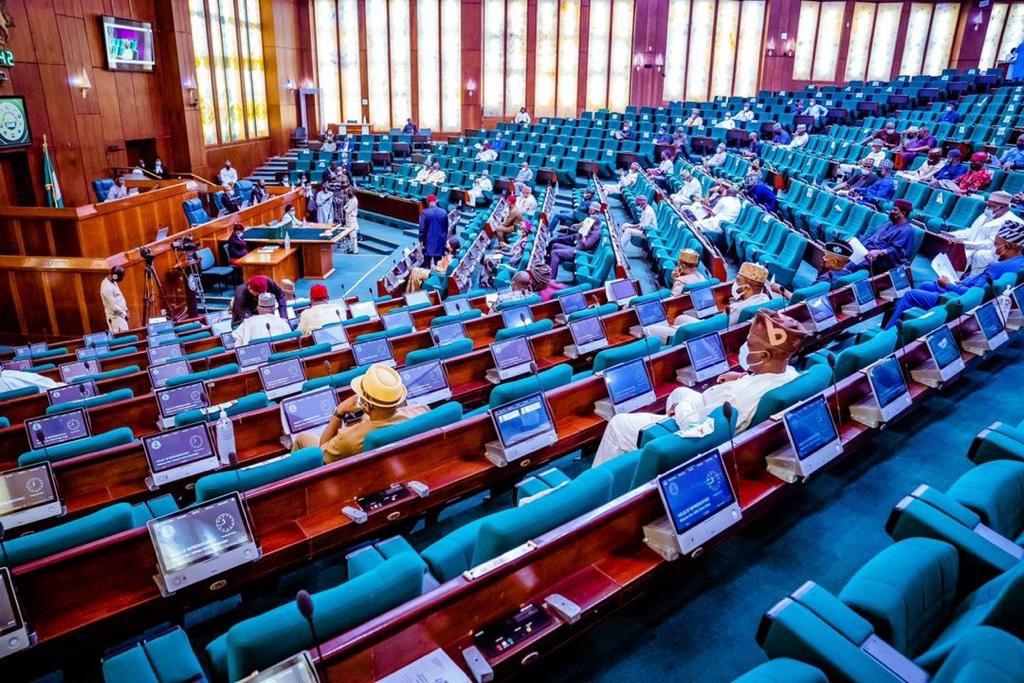
The House of Representatives Ad-hoc Committee investigating Pre-Shipment Inspection of Exports and the Non-Remittance of Crude Oil Proceeds has directed the Nigeria Customs Service, Central Bank of Nigeria, Nigerian Ports Authority and the Nigerian Association of Chambers of Commerce, Industry, Mines, and Agriculture to submit comprehensive documentation detailing their respective roles in pre-shipment processes as part of an ongoing legislative probe into revenue leakages.
Chairman of the committee, Seyi Sowunmi, issued the directive on Wednesday during a resumed investigative hearing held at the National Assembly Complex in Abuja. The investigation followed a resolution of the House to examine alleged lapses in the pre-shipment inspection regime and persistent concerns surrounding the non-remittance or under-remittance of crude oil revenues to the Federation Account.
Lawmakers had earlier raised concerns over revenue losses affecting both oil and non-oil exports, prompting the constitution of the ad-hoc committee to scrutinise institutional responsibilities within the export value chain and identify accountability gaps contributing to suspected financial leakages.
At the hearing, the committee noted that submissions previously made by the invited agencies were either incomplete or outdated, adding that fresh communication would be issued to notify stakeholders of new dates for further appearances before the panel.
Representatives of the agencies appearing before the committee outlined their statutory mandates in relation to pre-shipment activities involving oil and non-oil exports at various terminals across the country.
Presenting on behalf of the Comptroller-General of Customs, Bashir Adeniyi, the Deputy Comptroller-General of Customs, Caroline Diagwan, stated that the Nigeria Customs Service operates strictly within the framework of its establishment Act and existing laws governing export procedures.
She said, “Our role as regards export of food is we get what we call the Nigeria Export Proceeds Form (a mandatory electronic document for exporting goods from Nigeria) and then a certificate of inspection, as well as an export permit. We now make sure that those documents tally with what has been exported at the point of export. We do examination as well as physical inspection of food.
“That is the role we play. We make sure that what is being exported tallies with the documents sent to us by the CBN, that’s the NXP.
“We are there at the point of inspection. After inspection, that’s when they do the exportation. Customs are there with other government agencies.
“We don’t collect export duties, actually. And we don’t really know how much money they are paying to the government, because that’s not our purview. So as long as the documents they issue to us tally with what is there physically, they are good to go.”
She added, “The export takes place at export terminals under oil and gas command in Port Harcourt, as well as other commands in Edo and Delta States. The comptrollers of these commands send monthly returns to the headquarters on all the activities, which include all exports as well as imports.”
Representing the Governor of the Central Bank of Nigeria, Yemi Cardoso, a Director at the apex bank, Dr Musa Nakurji, explained that the CBN serves as the coordinating hub for export documentation through automated electronic platforms.
He said, “Regarding the issue of pre-shipment inspection, by the Act of 1992, the Central Bank is actually saddled with the responsibility of the administrative side of it. Let me first of all start by making a bit of a correction. If you look at the Pre-inspection Act, the Central Bank does not appoint the pre-inspection agent.
“The second thing again, in terms of the form NXP, we don’t send anything manually to Customs. The process is automated. And Customs latch on to that to get their report.
“In the Central Bank, we have the trade monetary system.
“And now there is what is referred to as a clean certificate of inspection. So anything that is going out, the pre-inspection agent will have to inspect that in terms of the quantity, the quality and the value. If they do that and they’re satisfied with what they have, they now issue a Certificate of Capital Importation.”
Also appearing before the panel, the General Manager, Tariff at the Nigerian Ports Authority, Ibrahim Lukman, who represented the Managing Director, Dr Abubakar Dantsoho, said the authority appoints agents stationed at export terminals who transmit operational data back to the NPA. He explained that the authority works collaboratively with other government agencies within clearly defined statutory limits governing port operations.
In his submission, a Director at NACCIMA, Dr Emmanuel Akeh, described the association as the umbrella body for chambers of commerce nationwide, clarifying that it plays no role in crude oil exports. He explained that the organisation’s responsibility is limited to issuing certificates of origin for non-oil exports to authenticate and certify the origin of goods leaving Nigeria.
In his remarks, Sowunmi described the investigation as a matter of national importance amid growing concerns about revenue leakages within the oil sector.
He said, “Part of the problem Mr President is trying to cure is that we should account for every kobo that accrues to the nation. This is what this committee seeks to achieve.”
The committee assured stakeholders that new dates for further appearances would be communicated and emphasised that all relevant documentation must be submitted to enable lawmakers determine whether procedural deficiencies or institutional overlaps contributed to the alleged non-remittance of crude oil proceeds to the Federation Account.

