The Federal Government has disclosed that a significant number of terrorists responsible for deadly attacks across northern Nigeria are foreign nationals who entered the country through weak and porous borders.
The disclosure was made by the Secretary to the Government of the Federation, George Akume, during a meeting with members of the Catholic Bishops’ Conference of Nigeria in Abuja on Sunday, where he addressed concerns over the country’s worsening security situation.
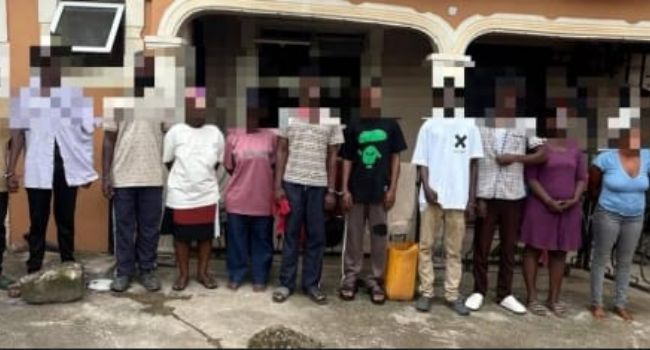
Akume said intelligence gathered by security agencies indicated that several suspects arrested after recent attacks were unable to communicate in English or Hausa, the dominant languages in many affected areas, but spoke French fluently.
“Do we speak French in Nigeria? No,” he said, noting that the linguistic evidence pointed to foreign involvement in ongoing attacks.
He explained that although Boko Haram originated within Nigeria, many of the fighters currently operating in forests and rural communities are believed to be non-Nigerians. He cited parts of Niger State and other locations within the North-Central region as areas where foreign fighters are reportedly active.
“Those who are doing the killings, most of them are from outside the country. I say what I know to be true based on security reports,” Akume stated.
The SGF described insecurity as a global phenomenon rather than a challenge unique to Nigeria, noting that several countries, including advanced economies, are confronting similar security threats.
He also highlighted increased cooperation between Nigeria and international partners aimed at strengthening counter-terrorism operations. According to him, the government has enhanced military capabilities through the acquisition of new equipment, including drones procured from Turkey, while discussions with the United States and other allied countries are ongoing to improve intelligence sharing and operational coordination.
Addressing reports about plans to reintegrate repentant terrorists into the military, Akume clarified that the proposal was rejected and was never implemented under the administration of President Bola Tinubu.
He called on religious leaders and civil society organisations to approach the security crisis with balance and understanding, adding that the insecurity challenges predate the current administration.
The remarks come amid continued attacks across several northern states, where banditry and insurgent violence remain active in forested areas and farming communities across Borno, Yobe, Sokoto, Niger and Kwara states, sustaining concerns over national security and regional stability.