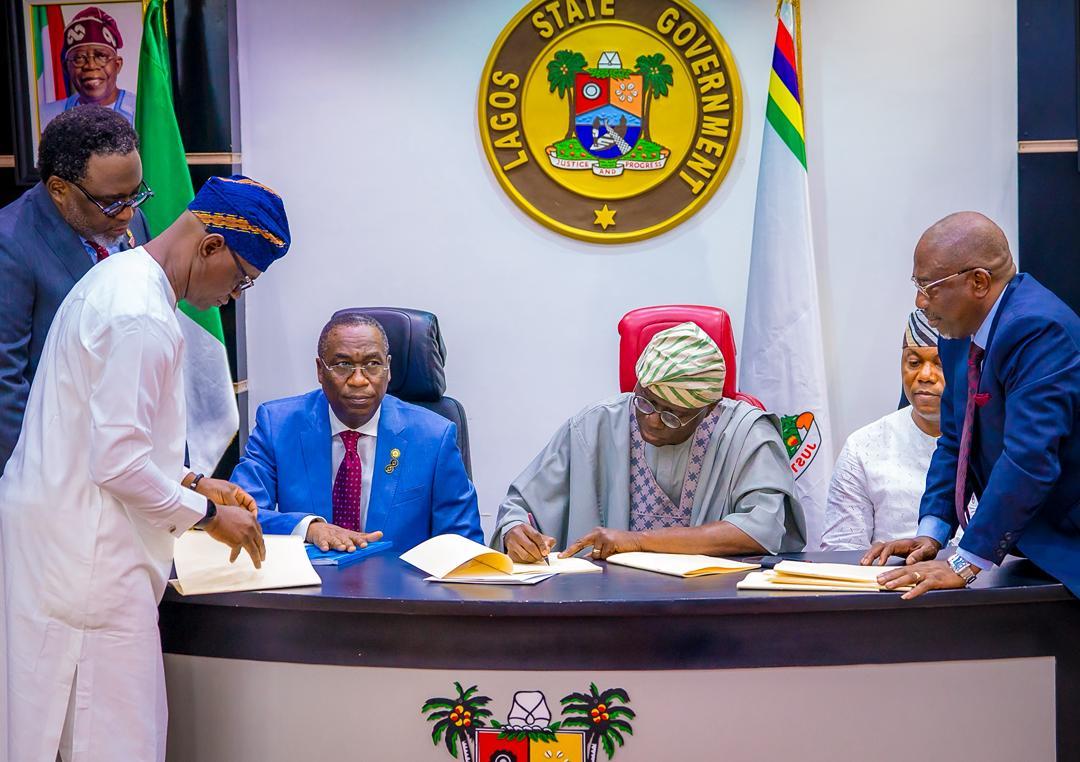
Lagos State’s 2026 Budget of Shared Prosperity has been signed into law by Governor Babajide Sanwo-Olu. The Governor signed the Appropriation Bill on Monday at a brief ceremony held in Alausa, the seat of power, marking the formal commencement of the fiscal framework for the year.
The budget, estimated at N4.444 trillion, was passed by the Lagos State House of Assembly on January 8 and subsequently transmitted to the Executive arm for assent. The signing completes the constitutional process required to operationalise the spending plan for the 2026 fiscal year.
Governor Sanwo-Olu said the budget represents a bold step by his administration to strengthen the foundations of governance, sustain the State’s competitiveness, and reposition Lagos for long-term growth. He explained that the fiscal plan was designed to ensure inclusive governance and deliver tangible benefits to residents across all sectors and communities.
According to the Governor, the State entered the year facing significant governance challenges, including the fire disaster at Balogun Market on Lagos Island and the ongoing demolition of shanties along the coastal line of Ebute Metta. He noted that these developments underscored the urgent need for improved infrastructure and more efficient service delivery.
Sanwo-Olu said the 2026 budget is expected to enhance the Government’s capacity to respond effectively to emerging challenges while improving overall living conditions across the State. He emphasised that the spending plan was structured to deliver measurable improvements in key sectors.
He said: “This is an inclusive budget designed to carry every resident and community along, irrespective of where they live in the State or sector in which they operate. Our residents will feel the touch and impact of governance across areas of our priorities, including education where we will build new schools, health sector where new facilities will be built. There are various interventions we will do to enhance and improve the quality of life.
“In security, we will be providing improved services to ensure Lagos remains safe for businesses and living. These are some of the ways in which the prosperity of our dear State will be achieved. This budget will be implemented responsibly; we will put up our A-grade in order to ensure accountability, while also ensuring that value for money is created. In the end, Lagosians will feel the impact of the great effort which the Executive and the House of Assembly have made.”
The Governor disclosed that the 2026 fiscal year would prioritise infrastructure renewal, transportation expansion, agricultural development, and other growth-enhancing initiatives. He said these focus areas are expected to stimulate productivity, support micro, small and medium enterprises, create jobs, and drive broad-based economic growth across the State.
Sanwo-Olu also expressed concern over indiscriminate dumping of waste across the metropolis, describing the situation as “completely unacceptable.” He urged residents to act more responsibly in protecting the environment, while assuring that the State Government would double the operational capacity of the Lagos State Waste Management Authority and private waste collectors.
Commissioner for Economic Planning and Budget, Mr. Ope George, said the 2026 appropriation framework reflects deliberate planning by the State Government to entrench a more resilient and people-centred governance model that would position Lagos for future growth. He described the Appropriation Law as a “bold, disciplined fiscal response to prevailing economic realities.”
George disclosed that the budget was reviewed upward from the N4.2 trillion initially proposed by the Executive. He explained that the approval process involved extensive legislative scrutiny by the House of Assembly, including detailed committee engagements with Ministries, Departments and Agencies.
He said: “The expenditure framework adopts a balanced structure, comprising N2.337 trillion in Capital Expenditure, representing 53 per cent, and N2.107 trillion in Recurrent Expenditure, which stands at 47 per cent. This balance reflects a clear policy choice, which is to sustain strategic infrastructure investment while ensuring the efficient delivery of essential government services that directly affect the daily lives of Lagosians.
“As the Ministry that has statutory responsibility for economic planning, budgeting, monitoring, and performance evaluation, we approach the implementation of the 2026 Budget of Shared Prosperity with a clear sense of ownership and responsibility. The recorded significant performance of the 2025 Budget provides a solid and credible foundation for the effective implementation of the 2026 Budget.”
The Speaker of the Lagos State House of Assembly, Rt. Hon. Mudashiru Obasa, represented at the event by the Majority Leader, Hon. Noheem Adams, said the legislature subjected the budget to thorough scrutiny. He noted that all relevant committees examined the document before its ratification to ensure it reflected the yearnings of Lagos residents.
“The budget has been well scrutinised and we have confidence in the capacity of the Executive to implement the document to the letter,” Hon. Adam said.