Sudan’s long-running civil conflict may be nearing a turning point as the Sudanese Armed Forces (SAF) and the paramilitary Rapid Support Forces (RSF) have agreed in principle to a U.S.-mediated humanitarian truce, signaling a potential breakthrough in a war that has ravaged the Northeast African country since April 2023.
U.S. Senior Adviser for Arab and African Affairs, Massad Boulos, confirmed that both factions had accepted the initial framework for the ceasefire. “Both parties have agreed in principle, and we have not recorded any initial objection from either side. We are now focusing on the fine details,” he stated.
The truce proposal, brokered under the umbrella of the International Quad—comprising the United States, Saudi Arabia, Egypt, and the United Arab Emirates—aims to serve two immediate purposes. The first is to allow humanitarian access through a three-month pause in hostilities, enabling the delivery of life-saving aid across Sudan, especially in El-Fasher, the capital of North Darfur, where humanitarian conditions are described as “very urgent and painful.”
The second goal is to pave a path toward a permanent ceasefire and a nine-month political transition culminating in a civilian-led government. Though direct negotiations between the two sides have yet to resume, U.S.-led channels are working behind the scenes to translate the broad agreement into a concrete plan capable of implementation on the ground.
The development has injected cautious optimism into a nation exhausted by relentless warfare. The conflict, which erupted in April 2023, has left thousands dead, displaced millions, and crippled essential services. Earlier regional and international peace efforts, including those spearheaded by the African Union and the Intergovernmental Authority on Development (IGAD), failed to achieve lasting progress due to deep mistrust and competing foreign interests.
Boulos emphasized that Washington’s priorities remain centered on addressing Sudan’s deepening humanitarian crisis, securing sustainable peace, and preserving the nation’s territorial integrity. The United States, through the Quad framework, seeks to create an environment where aid agencies can operate safely while restoring communication between Sudan’s warring sides.
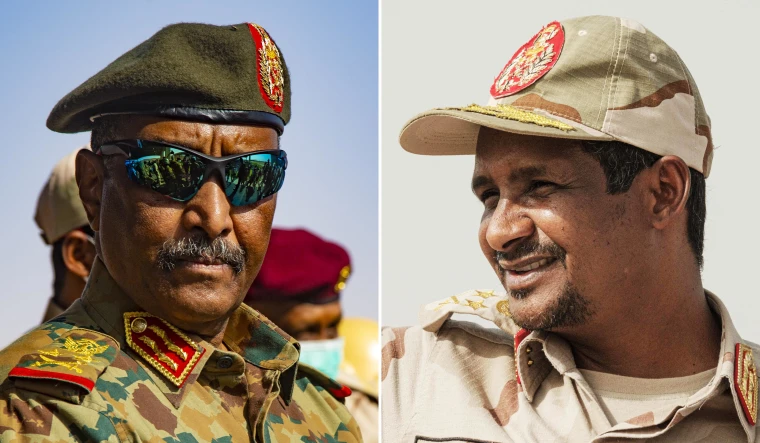
As Sudan’s rival generals—Abdel Fattah al-Burhan of the SAF and Mohamed Hamdan Dagalo, widely known as Hemedti, who leads the RSF—continue their battle for control, the success of this U.S.-led mediation will depend on whether both factions can translate this “agreement in principle” into firm commitments on the ground.
If the truce takes effect, it could provide the first real opportunity in nearly two years to stem the country’s humanitarian collapse and lay the foundation for national reconciliation and civilian governance.