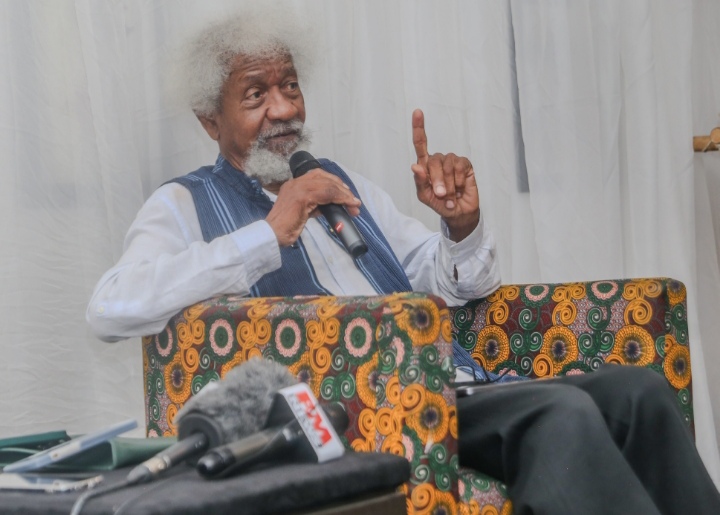
Nobel Laureate and globally acclaimed writer, Professor Wole Soyinka, has reacted to the permanent revocation of his United States visa by American authorities, describing the decision as a consequence of his refusal to attend a reinterview requested by the U.S. Consulate.
Speaking during a media parley at Freedom Park in Lagos on Tuesday, Soyinka explained that the move followed his long-standing protest against former U.S. President Donald Trump’s administration, recalling how he had torn his American green card at the start of Trump’s first term to register his opposition to what he called divisive and discriminatory leadership.
Following that decision, Soyinka said he began travelling to the U.S. with a B1/B2 visa. However, he was later invited for a revalidation interview by the consulate, which he ignored. On October 23, 2025, he received another letter requesting his presence at the consulate so that his visa could be officially stamped as “cancelled permanently.”
The professor stated that he would not honour the invitation, insisting there was no reason to assist in an action he considered unnecessary. “If they wish to cancel it, that is their business,” Soyinka said. “I will not go there to help them do it.”
Despite the revocation, he maintained that he held no grudge against the United States and would continue to interact with Americans on legitimate grounds. “I will continue to welcome any American to my home if they have anything legitimate to do with me,” he affirmed.
Soyinka also recounted two past encounters with U.S. authorities, which he described as minor misunderstandings rather than offences. The first, he said, occurred many years ago when he was fined $25 at an American airport for carrying undeclared chilli pepper from London. “The officials were just doing their job,” he said, laughing. “It was a harmless mistake I simply forgot to declare the chilli I had carried from London.”
The second incident, according to him, took place in the 1970s at Chicago Airport when he confronted an immigration officer over a racist remark, prompting police intervention. The situation, he said, was later calmed through the efforts of the late Chief Emeka Anyaoku, who would later become Secretary-General of the Commonwealth.
Reflecting on those incidents, Soyinka said, “I do not think those two incidents are enough to classify me as having a criminal record in the United States. They were simply misunderstandings that could happen to anyone.”
He emphasized that aside from those isolated cases, his relationship with the United States had remained cordial for many years until the political environment changed under Trump’s administration. Concluding his remarks, Soyinka urged people everywhere to oppose discrimination and injustice, warning that “silence in the face of prejudice is as dangerous as the act itself.”