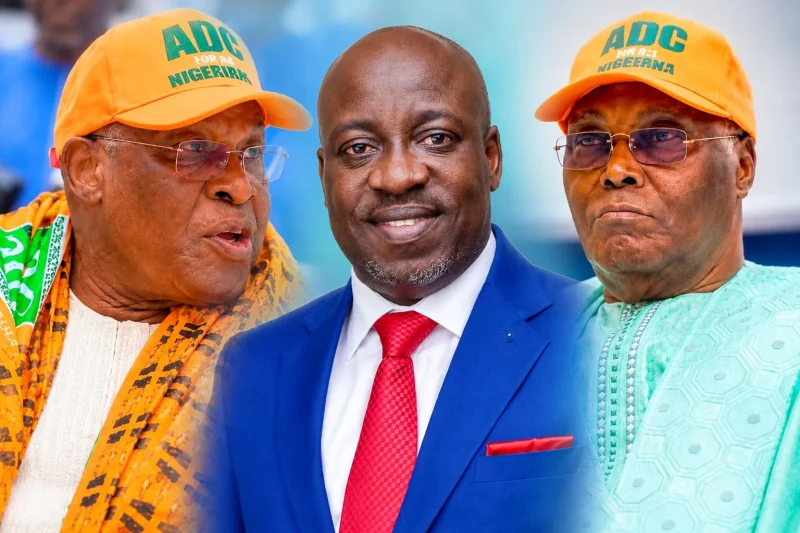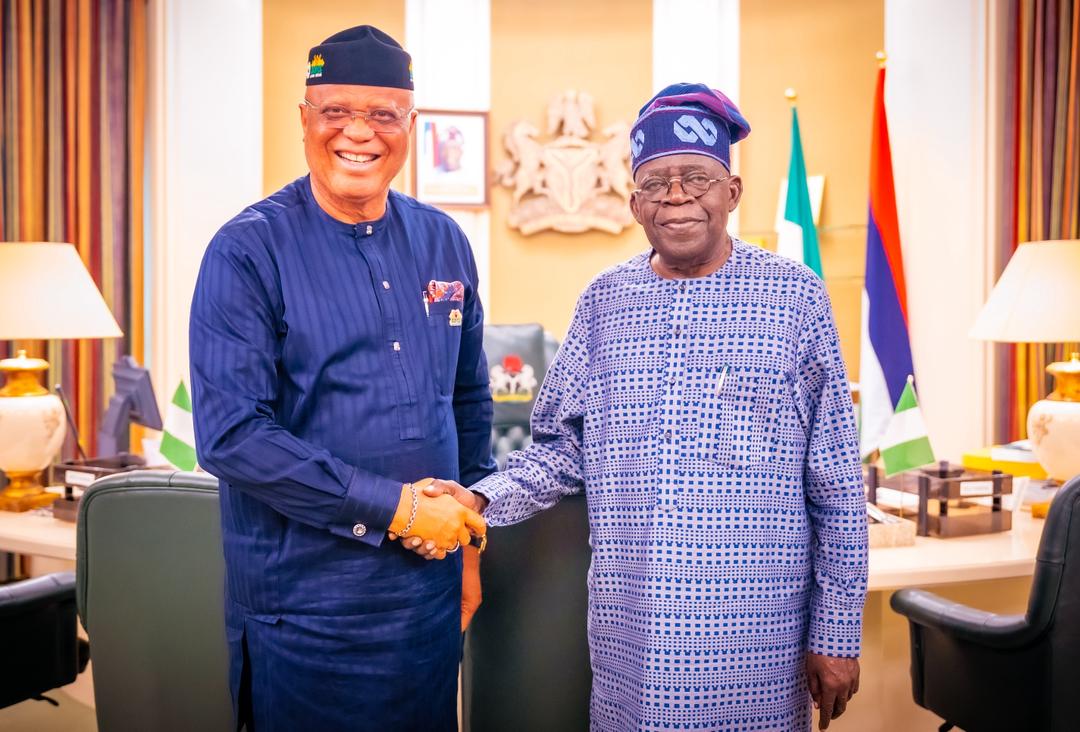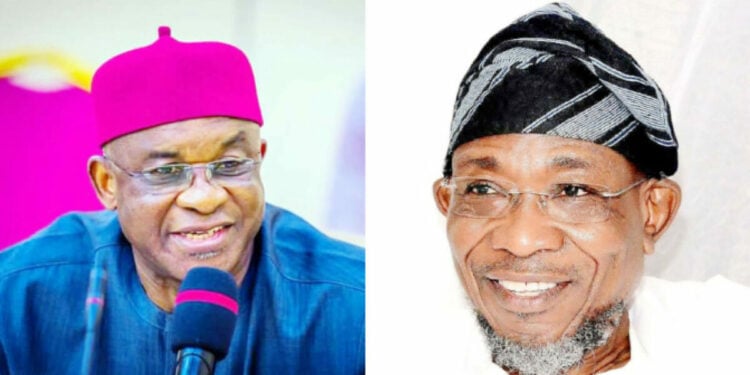
Indications have emerged that the African Democratic Congress is struggling to establish itself as a major political force in the South-West, despite appointing former Osun State governor and ex-minister Rauf Aregbesola as its national secretary.
The region remains President Bola Tinubu’s political stronghold, where the ruling All Progressives Congress continues to dominate.
Aregbesola, once a trusted ally of President Tinubu, has reportedly found it difficult to convince South-West voters to embrace the ADC as an alternative ahead of the 2027 general elections. Apart from Labour Party’s 2023 Lagos governorship candidate, Gbadebo Rhodes-Vivour, who recently joined the ADC with his supporters, no prominent South-West politician has publicly identified with the opposition party. A message sent to the party’s national publicity secretary, Bolaji Abdullahi, on the situation was not replied to.
Sources disclosed that while the ADC has attracted notable figures at the national level from the Peoples Democratic Party due to internal crisis in the PDP, its presence in the South-West remains weak. For instance, Osun State Governor Ademola Adeleke has denied rumours of plans to defect to the ADC. Similarly, a former governor of Ekiti State, Kayode Fayemi, distanced himself from reports linking him to the coalition.
The 2023 presidential election showed that Tinubu won four of six South-West states, polling 2,279,407 votes in the region, though he lost Lagos State to Labour Party’s Peter Obi. With 2027 approaching, Tinubu is working to consolidate his stronghold, targeting a clean sweep of the six states. His team is reportedly using appointments, political patronage, and independent support groups to mobilise for his re-election.
This consolidation has made it more difficult for Aregbesola to establish ADC’s relevance. In Ondo State, where he has deep political ties, Aregbesola attempted to tap into the crisis within the APC following Governor Lucky Aiyedatiwa’s assumption of office after the death of Rotimi Akeredolu. Some aggrieved APC leaders considered defecting but were persuaded to remain by the Minister of Interior, Olubunmi Tunji-Ojo, who intervened on the president’s instruction. He reminded them of their crucial role in Tinubu’s 2023 victory and urged unity.
Following this intervention, new pro-Tinubu support groups were established in Ondo: the Grassroots Movement for Tinubu led by Hon. Saka Yusuf, the Asiwaju Mandate Group headed by Olumuyiwa Asagunla, and the PBAT Continuity Project led by Pastor Femi Agagu. These groups have been mobilising for Tinubu ahead of 2027. Governor Aiyedatiwa has denied allegations of attempting to suppress these groups in favour of his own support platform, insisting instead that efforts should be harmonised with the party’s official structure.
For now, the ADC remains on the fringes in Tinubu’s home region, with Aregbesola facing an uphill task to give the party visibility. However, some party chieftains insist the picture is not entirely bleak. In Ekiti State, former Nigerian Ambassador to Canada, Chief Bejide Dare, maintained that the ADC is on firm footing and gaining popularity. He claimed that members of the APC, PDP, and other parties are defecting in large numbers, attracted by the ADC’s promise of transparent primaries and internal democracy.
According to him, “In APC, democracy has taken flight and so everybody wants to be at the place where democracy can flourish. And in ADC, we are going to conduct a transparent primary and I know other parties can’t do it because they will impose candidates on their people. Those that are aggrieved will come to ADC and we are talking to them.”
Despite such assurances, the ADC’s immediate challenge remains expanding its reach and competing against the entrenched political machinery of President Tinubu in the South-West.