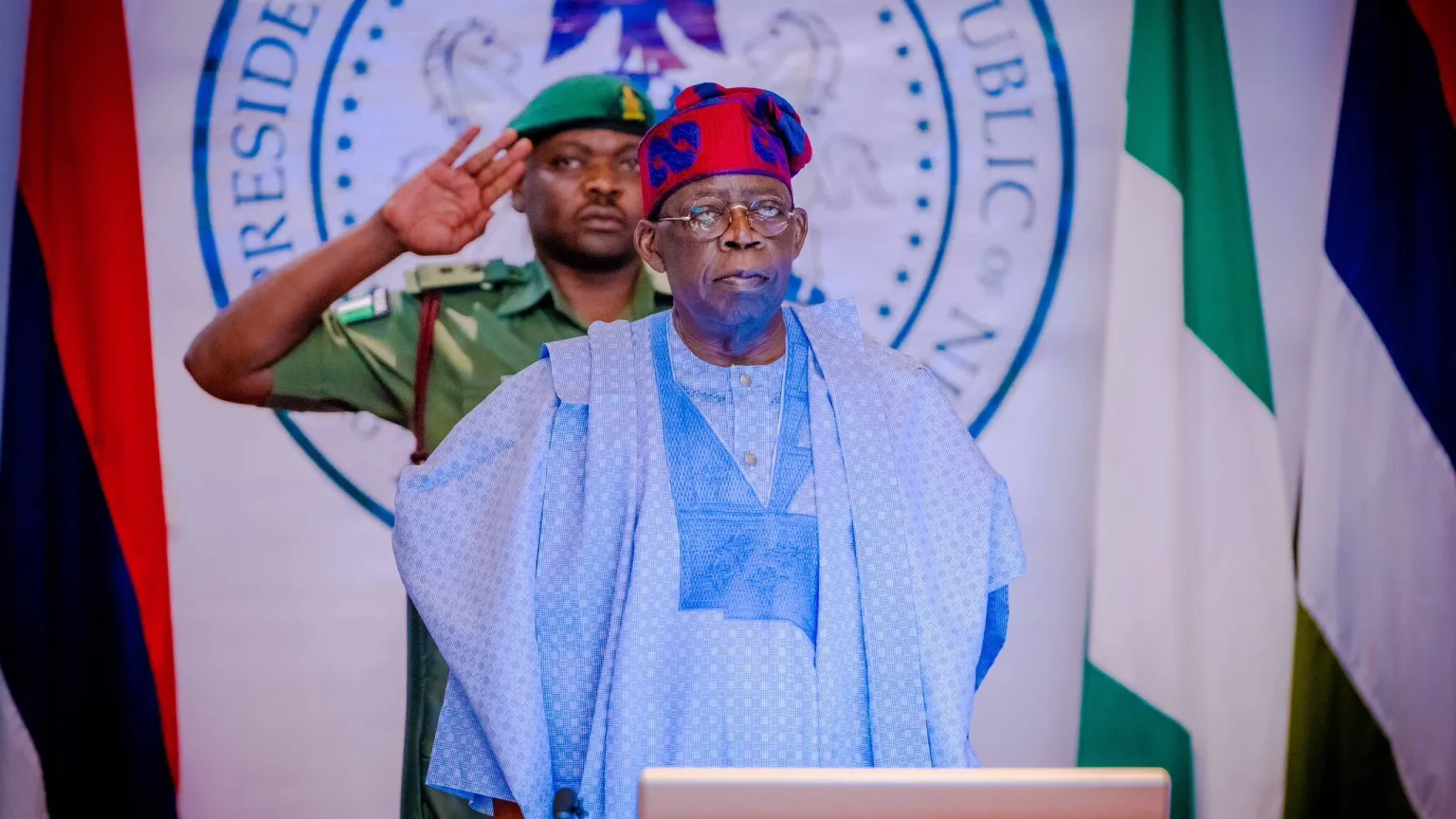
Nigeria will need an aggressive economic expansion drive to meet President Bola Tinubu’s $1 trillion GDP target by 2030, according to a new report by Afrinvest West Africa. The report noted that the economy must grow nominal GDP by at least 40% in both 2025 and 2026, while sustaining a real growth rate of 5%, for the president’s vision to be realised.
“For a 7.0 per cent real growth from 2027 to push the economy to $1.0tn by 2030, nominal GDP size must have surpassed $800.0bn by 2026-year-end – implying nominal growth of no less than 40.0 per cent in each of 2025 and 2026,” Afrinvest stated. It added, “Alternatively, assuming a real GDP growth cap of 5.0 per cent for 2025/2026 (based on World Bank and International Monetary Fund estimates), the naira/USD rate would need to strengthen to above N500.00/$ level from 2027 for the President’s call to crystallise.”
Tinubu has launched sweeping reforms—including the removal of fuel subsidies, the liberalisation of the naira, and a comprehensive tax overhaul—as part of his administration’s strategy to boost growth. His government has projected annual real GDP growth of 7% by 2027.
Nigeria’s economy has shown mixed signals in recent months. A rebasing exercise saw nominal GDP expand by more than 30% to N372.48 trillion, improving debt-to-GDP ratios from 52.1% in 2024 to 39.6%. However, in dollar terms, the economy contracted to $251 billion, its lowest in a decade, due to the sharp devaluation of the naira. In 2024, real GDP growth stood at 3.8%, the second-strongest pace since 2014, but growth slowed to 3.13% year-on-year in Q1 2025, according to the National Bureau of Statistics. This performance remains far below the trajectory required to achieve the trillion-dollar target. Multilateral lenders, including the IMF and World Bank, forecast growth between 3.4% and 3.6% in 2025, and around 3.8% by 2026–27.
Afrinvest analysts expressed caution, stating: “Notwithstanding the ongoing effort of the administration vis-à-vis mixed outcome of reforms thus far, the president’s call of a 7.0% GDP growth by 2027 and the quadrupling of the current GDP size to $1.0tn by 2030 lacks fundamental drivers.”
The report recommended several measures to strengthen the economy, including raising crude oil output to a baseline of 2.0 million barrels per day, implementing cost-reflective electricity tariffs with protections for low-income households, stabilising the foreign exchange market, fully executing tax reforms, and improving food security through social welfare programmes and enhanced security in farming regions.
Although the naira recently firmed to N1,495.25/$, its strongest level since February, it remains far from the N500/$ exchange rate Afrinvest suggested would be necessary for Tinubu’s growth agenda to succeed.