Lagos State Governor, Babajide Sanwo-Olu, has described the State Development Plan (2052) as a strategic national asset that aligns with President Bola Tinubu’s vision of transforming Nigeria into a $1 trillion economy by 2030.
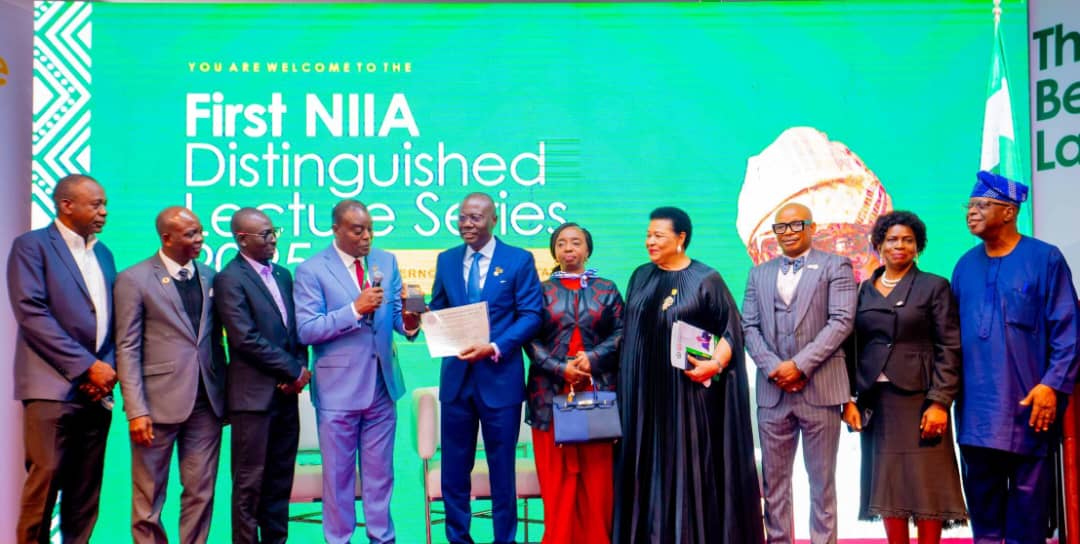
He gave the assurance while delivering the keynote address at the First Distinguished Lecture of 2025 organized by the Nigerian Institute of International Affairs (NIIA) in Lagos. The lecture, themed “Lagos, Nigeria 2030: Projections of a World Power,” was the first in the institute’s series to be delivered by a sitting Lagos Governor and attracted diplomats, scholars, policymakers, and civil society leaders.
Sanwo-Olu explained that the 30-year plan is built on four pillars: a Thriving Economy, Modern Infrastructure, a Human-Centric City, and Effective Governance. He said it defines Lagos’ ambition to become Africa’s Model Mega City and a Global Economic and Financial Hub that is safe, secure, functional, and productive. The Governor emphasized that Lagos, as Nigeria’s economic nerve centre, is positioned to play a central role in driving Tinubu’s trillion-dollar economy target, stressing that synergy between national and subnational strategies is vital for sustainable development.
Highlighting how Lagos’ long-term strategy aligns with national economic frameworks such as Vision 2010, Vision 2020, and Nigeria Agenda 2050, Sanwo-Olu said the city’s developmental agenda provides a model for transformative governance, innovation, and competitiveness. He also reaffirmed Tinubu’s 2030 targets, which include ending gas flaring in line with the Paris Climate Agreement, generating one-third of electricity from renewable energy, and growing the economy to $1 trillion.
Defining global power as multidimensional, the Governor noted that it goes beyond military might to include economic strength, diplomatic influence, technological capacity, cultural relevance, demographic advantage, and resource endowment. He argued that investment in technology, innovation, infrastructure, and human development is critical to positioning Nigeria among global powers. He also urged greater collaboration between federal, state, and local governments, stating that cities must take the lead in shaping Nigeria’s transformation journey.
In his welcome address, NIIA Director-General, Professor Eghosa Osaghae, described the lecture as historic, noting it was both the first Distinguished Lecture of the year and the first ever delivered by a sitting Lagos Governor. He said Lagos qualifies as Africa’s growth centre, pointing to its population of over 22 million as evidence of its global relevance. “There are very few global powers and Lagos ranks high among them,” Osaghae said, describing the city as a melting pot of civilization, enterprise, and commercial dynamism. He noted that though there are five cities named Lagos globally, Nigeria’s Lagos stands out as the flagship in terms of development and potential for leadership.
Osaghae also highlighted Lagos’ leadership in civil society movements, judiciary reforms, and economic dynamism, calling it a “model city and a hub for the entire universe of humanities.” He further announced that Governor Sanwo-Olu had accepted to endow a Foreign Policy School at the NIIA, which will be named the H.E. Babajide Sanwo-Olu School of International Affairs, a revelation that drew admiration from the audience.