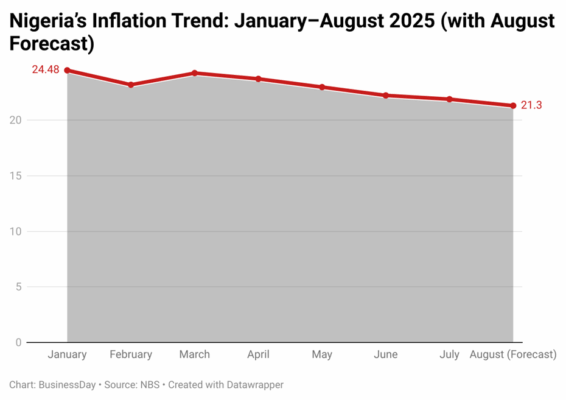
Nigeria’s inflation rate has continued to show signs of sustained relief, with headline inflation falling to 21.88 percent in July 2025 from 22.22 percent in June. This marks the fourth consecutive month of decline, raising cautious optimism that the country may be entering a period of more lasting stability in consumer prices.
Analysts at Access Bank have projected that the trend is likely to persist, with expectations that the August figure will reflect further moderation. The steady decline comes after years of persistent price pressures driven by currency depreciation, food supply challenges, energy costs, and other structural constraints that have kept inflation elevated.
The current trajectory is significant as inflation has long been one of Nigeria’s most pressing economic concerns, eroding household incomes and heightening the cost of living for millions. The recent easing provides some relief to consumers who have struggled with the sharp rise in prices of food and essential goods. For policymakers, the continued disinflation offers encouragement that recent interventions may be beginning to yield results, strengthening confidence in measures taken to stabilize the economy.
Despite the progress, analysts note that attention remains focused on core and food inflation, as these components most directly affect households. Sustained declines across these categories will be crucial in determining whether the relief is broad-based and impactful for the wider population.
The coming release of the August inflation data will be closely watched, as confirmation of another month of easing would reinforce confidence that Nigeria is on a path toward greater price stability. For now, the gradual cooling of inflation offers hope of a more stable economic environment, though its durability will depend on continued effective policy management and improvements in key sectors that drive consumer prices.