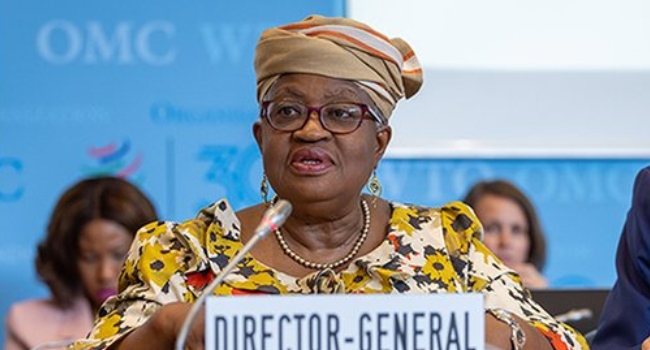
World Trade Organisation Director-General Dr. Ngozi Okonjo-Iweala, during a meeting with President Bola Tinubu at the Presidential Villa, commended the administration for implementing bold reforms aimed at stabilising the economy.
She noted that significant progress had been made in halting volatility and stressed that stability was a necessary foundation for recovery. According to her, “you cannot really improve an economy unless it is stable.” She explained that while the reforms were moving in the right direction, the next phase should focus on accelerating growth and strengthening social safety nets to protect vulnerable groups from the effects of policies such as fuel subsidy removal and exchange rate unification.
Adding clarity to the ongoing debate, Dr. Yemi Kale, Group Chief Economist and Managing Director of Research at Afreximbank and former Statistician-General of Nigeria, explained that economic stability does not necessarily mean an immediate improvement in living standards.
He described it as a technical term reflecting the absence of sharp fluctuations in key indicators such as inflation, exchange rates and GDP growth. Using inflation as an example, he noted that if inflation drops from 25 percent to 12 percent, the economy can be considered more stable, even though the cost of goods and services may remain high compared to previous years.
Kale pointed out that stability often benefits investors and businesses first, while households may not feel its impact immediately. He said stability builds confidence and predictability, which are critical for investment decisions and long-term growth, but the tangible effects on wages, job opportunities and affordability may take time. He likened it to “stopping a boat from rocking wildly, but recognising that hardships remain if the boat is still far from shore.”
Both Okonjo-Iweala and Kale emphasised that the return of macroeconomic stability provides a crucial springboard for sustained growth, but acknowledged that Nigerians will only begin to feel meaningful relief when stability translates into improved living conditions, stronger social protection, and expanded opportunities across the economy.